 Hi readers, it seems you use Catholic Online a lot; that's great! It's a little awkward to ask, but we need your help. If you have already donated, we sincerely thank you. We're not salespeople, but we depend on donations averaging $14.76 and fewer than 1% of readers give. If you donate just $5.00, the price of your coffee, Catholic Online School could keep thriving. Thank you. Help Now >
Richard Bristow
FREE Catholic Classes
Born at Worcester, 1538, died at Harrow-on-the-Hill, 1581. He went to the University of Oxford in 1555, probably as a member of Exeter College, though Wood doubts this. In 1559 he took his Bachelor's degree and proceeded to the degree of Master of Arts as a member of Christ Church in 1562. He was exceptionally brilliant and eloquent and so esteemed as an orator that, with the celebrated Edmund Campion, he was chosen to hold a public disputation before Queen Elizabeth in 1566. Shortly afterwards, having applied himself to theology and acquired a wide reputation for his learning he was made a Fellow of Exeter College (1567) by the interest of Sir William Petre, who had founded several fellowships there. His great ability would probably have won further promotion for him had not his religious opinions undergone a change, an indication of which was given in his argument with the Regius Professor of Divinity, whom he confuted. Two years after his appointment to the fellowship he left Oxford and proceeded to Louvain, where he met William (afterwards Cardinal ) Allen. . Recognizing his marked talent Allen secured him for his new college at Douai and appointed him its first prefect of studies. He was Allen's "right hand upon all occasions", acting as rector when he was absent and when the college was transferred (1578) to Reims.

Bristow is best known, however, as an earnest student, a powerful controversial writer, and, with Allen, as one of the revisers of the Douay Bible. His intense labours, while they earned for him the lasting gratitude of Catholics, told upon a constitution naturally weak, and he was obliged to relinquish his work in 1581. In May of the same year he went to Spa, but having obtained no advantage there he was advised, after two months, to return to England. This he did in September, staying until his death (18 October) with Mr. Jerome Bellamy, a Catholic of means, at Harrow-on-the-Hill . By his death the Catholic cause lost a zealous champion and a learned advocate. The Douai records speak of him in the highest terms as rivalling Allen in prudence, Stapleton in acumen, Campion in eloquence, Wright in theology, and Martin in languages. He wrote: (1) "A Briefe Treatise of diuerse and sure wayes to finde out the truthe in this doubtful and dangerous time of Heresie: conteyning sundry worthy Motives vnto the Catholic faith, or considerations to moue a man to beleue the Catholikes and not the Heretikes" (Third edition entitled "Motives inducing to the Catholike Faith "), (2) "Tabula in Summam Theologicam S. Thomae Aquinatis"; (3) "A Reply to Will. Fulke"; (4) "Demandes to be proponed of Catholikes to the Heretikes"; (5) "A Defence of the Bull of Pope Pius V"; (6) "Annotations on the Rheims translation of the New Testament "; (7) "Carmina Diversa"; (8) "Motiva Omnibus Catholicae Doctrinae Orthodoxis Cultoribus pernecessaria", the last two being in manuscript.
 Hi readers, it seems you use Catholic Online a lot; that's great! It's a little awkward to ask, but we need your help. If you have already donated, we sincerely thank you. We're not salespeople, but we depend on donations averaging $14.76 and fewer than 1% of readers give. If you donate just $5.00, the price of your coffee, Catholic Online School could keep thriving. Thank you. Help Now >
Join the Movement
When you sign up below, you don't just join an email list - you're joining an entire movement for Free world class Catholic education.


-

-
Mysteries of the Rosary
-
St. Faustina Kowalska
-
Litany of the Blessed Virgin Mary
-
Saint of the Day for Wednesday, Oct 4th, 2023
-
Popular Saints
-
St. Francis of Assisi
-
Bible
-
Female / Women Saints
-
7 Morning Prayers you need to get your day started with God
-
Litany of the Blessed Virgin Mary

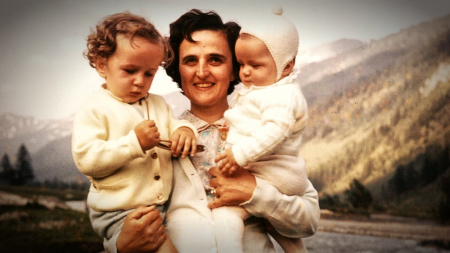
Sacrifices of Faith: The Pro-Life Legacies of St. Gianna and Jessica Hanna
-
How to love God by caring for our bodies
-
Pope Francis calls for negotiations to End Russia-Ukraine War
-
Pope Francis Contemplates Return to U.S. for United Nations Assembly Address
-
Pope Francis Calls on Faithful to Embrace Faith, Hope, and Charity in New Teaching Series


Daily Catholic
- Daily Readings for Sunday, April 28, 2024
- St. Peter Chanel: Saint of the Day for Sunday, April 28, 2024
- Prayer before a Crucifix: Prayer of the Day for Sunday, April 28, 2024
- Daily Readings for Saturday, April 27, 2024
- St. Zita: Saint of the Day for Saturday, April 27, 2024
- Prayer for the Dead # 2: Prayer of the Day for Saturday, April 27, 2024
 Daily Readings for Sunday, April 28, 2024
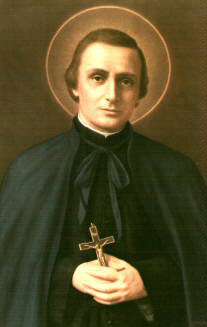 St. Peter Chanel: Saint of the Day for Sunday, April 28, 2024
 Prayer before a Crucifix: Prayer of the Day for Sunday, April 28, 2024


Copyright 2024 Catholic Online. All materials contained on this site, whether written, audible or visual are the exclusive property of Catholic Online and are protected under U.S. and International copyright laws, © Copyright 2024 Catholic Online. Any unauthorized use, without prior written consent of Catholic Online is strictly forbidden and prohibited.
Catholic Online is a Project of Your Catholic Voice Foundation, a Not-for-Profit Corporation. Your Catholic Voice Foundation has been granted a recognition of tax exemption under Section 501(c)(3) of the Internal Revenue Code. Federal Tax Identification Number: 81-0596847. Your gift is tax-deductible as allowed by law.