We ask you, humbly: don't scroll away.
Hi readers, it seems you use Catholic Online a lot; that's great! It's a little awkward to ask, but we need your help. If you have already donated, we sincerely thank you. We're not salespeople, but we depend on donations averaging $14.76 and fewer than 1% of readers give. If you donate just $5.00, the price of your coffee, Catholic Online School could keep thriving. Thank you.Help Now >
Antonio Bosio
FREE Catholic Classes
Known as "The Columbus of the Catacombs ", b. in the island of Malta about the year 1576; d. 1629. While still a boy he was sent to Rome and placed in charge of an uncle who represented the Knights of Malta in the Eternal City. In the Roman schools he studied literature, philosophy, and jurisprudence, but at the age of eighteen he gave up his legal studies and for the remaining thirty-six years of his life all his time was devoted to archaeological work in the Roman catacombs. The accidental discovery, in 1578, of an ancient subterranean cemetery on the Via Salaria had for the moment attracted general attention in Rome. Few, however, realized the importance of the discovery, and, with the exception of three foreign scholars, Ciacconio, De Winghe, and L'Heureux, no one seriously thought of pursuing further investigations. It was reserved for Bosio to begin the systematic exploration of subterranean Rome and thus to become the founder of the science of Christian archaeology. The young explorer from the beginning realized that in early Christian literature he would find an indispensable ally, and accordingly he began to study the Acts of the Martyrs and of the Councils, the writings of the Greek and the Latin Fathers, and in fact every species of document that might help to throw light on the obscurities of his subject. An idea of the vast scope of his reading may be obtained from the two great tomes of his manuscript notes in the Vallicelliana library at Rome, each of which contains about a thousand pages in folio.

The literary labours of Bosio account for only half of his time ; the other half was consumed in systematic efforts to utilize the information derived from his reading for his particular object. Thus, for example, after he had collected all the data possible relative to the location of a catacomb on one of the great roads leading from Rome, Bosio would betake himself to the place indicated, and go over every inch of ground carefully in the hope of discovering a forgotten stairway, or luminarium , of a cemetery. If fortune crowned his investigations with success, he would then descend to the subterranean abode of the long-forgotten dead, and, sometimes at the imminent danger of being lost in the labyrinth of galleries, commence his explorations. The great work achieved by Bosio was almost unknown till the publication three years after his death of his "Roma Sotterranea". The folio volume was brought out under the patronage of the Knights of Malta, by the Oratorian Severano, who had been entrusted with its editorship by Cardinal Francesco Barberini. Its full title is "Roma Sotterranea, opera postuma di Antonio Bosio Romano, antiquario ecclesiastico singolare de' suoi tempi. Compita, disposta, et accresciuta dal M. R. P. Giovanni Severani da S. Severino" (Rome, 1632). The great merit of the new publication was at once recognized. A Latin translation was undertaken by Severano, but never published. Aringhi's Latin translation appeared in 1651, but the liberties which this writer took with the original text were far from being improvements. Bosio's "Roma Sotterranea" is entirely devoted to a description of the cemeteries explored by the great archaeologist. His leading thought was to ascertain all that was possible regarding the history of each cemetery, by what name it was known in antiquity, who were its founders, what martyrs and illustrious Christians were interred there. Many of his conclusions have in modern times been found to be erroneous, but on the other hand, recent research has shown, in one important instance, that a conjecture of Bosio's, which de Rossi thought without foundation, was wholly correct. (See CHRISTIAN ARCHAEOLOGY.) Bosio's method is acknowledged by all to have been scientific ; his shortcomings were those of the age in which he lived. In view of the fact that numerous frescoes which existed in the early seventeenth century have since been destroyed, it is unfortunate that the copyists employed by Bosio were not equal to the task assigned to them. Wilpert states that the illustrations of "Roma Sotteranea" are of little use to the modern archaeologist.

 Hi readers, it seems you use Catholic Online a lot; that's great! It's a little awkward to ask, but we need your help. If you have already donated, we sincerely thank you. We're not salespeople, but we depend on donations averaging $14.76 and fewer than 1% of readers give. If you donate just $5.00, the price of your coffee, Catholic Online School could keep thriving. Thank you. Help Now >

Join the Movement
When you sign up below, you don't just join an email list - you're joining an entire movement for Free world class Catholic education.


-

-
Mysteries of the Rosary
-
St. Faustina Kowalska
-
Litany of the Blessed Virgin Mary
-
Saint of the Day for Wednesday, Oct 4th, 2023
-
Popular Saints
-
St. Francis of Assisi
-
Bible
-
Female / Women Saints
-
7 Morning Prayers you need to get your day started with God
-
Litany of the Blessed Virgin Mary


Sacrifices of Faith: The Pro-Life Legacies of St. Gianna and Jessica Hanna
-
How to love God by caring for our bodies
-
Pope Francis calls for negotiations to End Russia-Ukraine War
-
Pope Francis Contemplates Return to U.S. for United Nations Assembly Address
-
Pope Francis Calls on Faithful to Embrace Faith, Hope, and Charity in New Teaching Series


Daily Catholic
- Daily Readings for Sunday, April 28, 2024
- St. Peter Chanel: Saint of the Day for Sunday, April 28, 2024
- Prayer before a Crucifix: Prayer of the Day for Sunday, April 28, 2024
- Daily Readings for Saturday, April 27, 2024
- St. Zita: Saint of the Day for Saturday, April 27, 2024
- Prayer for the Dead # 2: Prayer of the Day for Saturday, April 27, 2024
 Daily Readings for Sunday, April 28, 2024
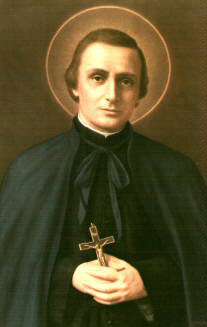 St. Peter Chanel: Saint of the Day for Sunday, April 28, 2024
 Prayer before a Crucifix: Prayer of the Day for Sunday, April 28, 2024
We ask you, humbly: don't scroll away.
Hi readers, it seems you use Catholic Online a lot; that's great! It's a little awkward to ask, but we need your help. If you have already donated, we sincerely thank you. We're not salespeople, but we depend on donations averaging $14.76 and fewer than 1% of readers give. If you donate just $5.00, the price of your coffee, Catholic Online School could keep thriving. Thank you.Help Now >



Copyright 2024 Catholic Online. All materials contained on this site, whether written, audible or visual are the exclusive property of Catholic Online and are protected under U.S. and International copyright laws, © Copyright 2024 Catholic Online. Any unauthorized use, without prior written consent of Catholic Online is strictly forbidden and prohibited.
Catholic Online is a Project of Your Catholic Voice Foundation, a Not-for-Profit Corporation. Your Catholic Voice Foundation has been granted a recognition of tax exemption under Section 501(c)(3) of the Internal Revenue Code. Federal Tax Identification Number: 81-0596847. Your gift is tax-deductible as allowed by law.