 Hi readers, it seems you use Catholic Online a lot; that's great! It's a little awkward to ask, but we need your help. If you have already donated, we sincerely thank you. We're not salespeople, but we depend on donations averaging $14.76 and fewer than 1% of readers give. If you donate just $5.00, the price of your coffee, Catholic Online School could keep thriving. Thank you. Help Now >
Jacques de Billy
FREE Catholic Classes
(Billi)
A French patristic scholar, theologian, jurist, linguist, and a Benedictine abbot, b. 1535 at Guise in Picardy; d. 25 December, 1581 at Paris. He began his studies at Paris, completed a course of philosophy and theology before he was eighteen years of age, and then, at the request of his parents went to Orléans and later to Poitiers to study jurisprudence. But having no inclination for law, he devoted most of his time to literature. The early death of his parents (Louis de Billy, of an old French family originally from Ile-de-France, and Marie de Brichanteau) gave him the opportunity he desired of pursuing unhampered his favourite study of letters. Quietly withdrawing to Lyons and later to Avignon, de Billy devoted himself, for a period, entirely to the study of Greek and Hebrew. He already held in commendam the Abbey of St.-Léonard of Ferrières in Anjou, and the Priory of Taussigny in Tourraine, when his older brother Jean, who had hitherto led a very worldly life, suddenly announced his intention of becoming a Carthusian, and resigned in favour of Jacques his two abbeys, Notre-Dame des Châtelliers and St.-Michel-en-l'Herme. After some hesitation de Billy accepted them, then entered the Order of St. Benedict, and later was made a regular abbot. Thenceforth he led a very ascetic life and governed his monasteries with great prudence. He was especially solicitous for the proper observance of monastic discipline and with that object in view renewed, in 1566, the statutes of his predecessor, Abbot Bertrand de Moussy. During the civil wars that devastated France at this period the monastery of St.-Michel-en-l'Herme was wholly destroyed. The abbot himself was frequently obliged to seek refuge from the ravages of war, and resided, for short periods, at Laon, Nantes, Paris, and in the Priory of Taussigny. The hardships he had to undergo in his journeyings, his incessant toil and study, and his ascetic observances gradually shattered his health, and while staying in Paris with his friend Gilbert Génébrard, he died at the comparatively early age of forty-six. He was buried in the choir of the church of Saint-Séverin.
We ask you, humbly: don't scroll away.
Hi readers, it seems you use Catholic Online a lot; that's great! It's a little awkward to ask, but we need your help. If you have already donated, we sincerely thank you. We're not salespeople, but we depend on donations averaging $14.76 and fewer than 1% of readers give. If you donate just $5.00, the price of your coffee, Catholic Online School could keep thriving. Thank you.Help Now >
From that day on which he entered the novitiate, de Billy set aside all profane studies and devoted himself exclusively to the study of the Fathers. His critical abilities and exceptional linguistic attainments (he wrote Greek and Latin with singular purity and precision) enabled him to do much for the emendation of the text and the correct interpretation of many obscure passages in the Church Fathers. His favourite among the Fathers was St. Gregory Nazianzen . His principal works are: (1) "S. Gregorii Nazianzeni opera omnia latine" (Paris, 1569); a second and better edition appeared in 1583. (2) "Consolations et instructions" (Paris, 1570). (3) "Récréations spirituelles" (Paris, 1573). (4) "S. Gregorii Nazianzeni opuscula" (Paris, 1575). (5) "Interpretatio Latina xviii priorum capitum S. Irenaei" (Paris, 1575). (6) "Antholigia sacra" (Paris, 1576). (7) "Joannis Damasceni opera" (Paris, 1577). (8) "Locutiones Graecae" (Paris, 1578). (9) "Opuscula aliqua S. Joannis Chrysostomi" (Paris, 1581). (10) "S. Isidori Pelusiotae epis. Libri tres" (Paris, 1585). (11) "S. Epiphanii opera" (Paris, 1612).


Join the Movement
When you sign up below, you don't just join an email list - you're joining an entire movement for Free world class Catholic education.


-

-
Mysteries of the Rosary
-
St. Faustina Kowalska
-
Litany of the Blessed Virgin Mary
-
Saint of the Day for Wednesday, Oct 4th, 2023
-
Popular Saints
-
St. Francis of Assisi
-
Bible
-
Female / Women Saints
-
7 Morning Prayers you need to get your day started with God
-
Litany of the Blessed Virgin Mary


Sacrifices of Faith: The Pro-Life Legacies of St. Gianna and Jessica Hanna
-
How to love God by caring for our bodies
-
Pope Francis calls for negotiations to End Russia-Ukraine War
-
Pope Francis Contemplates Return to U.S. for United Nations Assembly Address
-
Pope Francis Calls on Faithful to Embrace Faith, Hope, and Charity in New Teaching Series


Daily Catholic
- Daily Readings for Sunday, April 28, 2024
- St. Peter Chanel: Saint of the Day for Sunday, April 28, 2024
- Prayer before a Crucifix: Prayer of the Day for Sunday, April 28, 2024
- Daily Readings for Saturday, April 27, 2024
- St. Zita: Saint of the Day for Saturday, April 27, 2024
- Prayer for the Dead # 2: Prayer of the Day for Saturday, April 27, 2024
 Daily Readings for Sunday, April 28, 2024
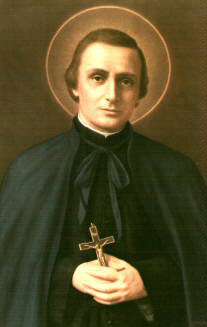 St. Peter Chanel: Saint of the Day for Sunday, April 28, 2024
 Prayer before a Crucifix: Prayer of the Day for Sunday, April 28, 2024
We ask you, humbly: don't scroll away.
Hi readers, it seems you use Catholic Online a lot; that's great! It's a little awkward to ask, but we need your help. If you have already donated, we sincerely thank you. We're not salespeople, but we depend on donations averaging $14.76 and fewer than 1% of readers give. If you donate just $5.00, the price of your coffee, Catholic Online School could keep thriving. Thank you.Help Now >

Copyright 2024 Catholic Online. All materials contained on this site, whether written, audible or visual are the exclusive property of Catholic Online and are protected under U.S. and International copyright laws, © Copyright 2024 Catholic Online. Any unauthorized use, without prior written consent of Catholic Online is strictly forbidden and prohibited.
Catholic Online is a Project of Your Catholic Voice Foundation, a Not-for-Profit Corporation. Your Catholic Voice Foundation has been granted a recognition of tax exemption under Section 501(c)(3) of the Internal Revenue Code. Federal Tax Identification Number: 81-0596847. Your gift is tax-deductible as allowed by law.