We ask you, humbly: don't scroll away.
Hi readers, it seems you use Catholic Online a lot; that's great! It's a little awkward to ask, but we need your help. If you have already donated, we sincerely thank you. We're not salespeople, but we depend on donations averaging $14.76 and fewer than 1% of readers give. If you donate just $5.00, the price of your coffee, Catholic Online School could keep thriving. Thank you.Help Now >
Henri François Xavier de Belsunce de Castelmoron
FREE Catholic Classes
Bishop of Marseilles, b. 1671 at the Château de la Force, in Périgord; d. 1755 at Marseilles. His father was Armand de Belsunce, Marquis de Castelmoron and his mother Anne de Caumont de Lausun. He studied classics in Paris at the College de Clermont or Louis-le-grand and then entered the Society of Jesus. In 1699 he left the Society to become Vicar-General of Agen. The "Vie de Suzanne de Foix", his aunt, was written by him and published while at Agen, 1709. That same year he was made Bishop of Marseilles. The heroic charity he displayed during the plague of 1720 and 1721 has made his name a household word and won for him the title of "Good Bishop ". When the plague broke out a large fleet was taking the Princess of Orléans to Italy where she was to marry the Duke of Modena. The suite of the princess took to flight, and with them all the notables of the city, but Bishop Belsunce remained with a few heroic friends, and together they battled against the plague with heroic self-sacrifice and devotion, till they conquered it. In his address to the Assembly of the Clergy in 1725, Belsunce stated that more than 250 priests and religious perished in their mission of Christian charity. But he was the soul of the rescuers and the praises bestowed on him by Pope and Millevoye ("Essay on Man " and "Belsunce ou la peste de Marseille") are not above his real merits. The King of France offered him, by way of recognition, the See of Laon to which was attached the first ecclesiastical peerage of the realm and afterwards the metropolitan See of Bordeaux . Belsunce refused both and contented himself with accepting the pallium sent him by Clement XII. During his incumbency Belsunce fought against another plague called Jansenism. He attended, 1727, the Synod of Embrun where Soanen was condemned. He opposed with all his power Colbert of Pamiers. In spite of the protest of the Parliament of Provence, he instructed his priests to refuse absolution to the appellants against the Bull "Unigenitus". Nearly all his pastoral instructions are against Jansenism. Belsunce was a writer of no mean power. Besides the "Vie de Suzanne de Foix" (Agen, 1709), and his pastoral instructions, we have from his pen "Le combat chrétien" translated from St. Augustin's "De Agone Christiano" and "L'art de bien mourir" translated from Bellarmine 's "De Arte Bene Moriendi", also "Antiquités de l'Eglise de Marseille" (Marseilles, 1747-51). All these writings have been published by Jauffret under the title of "Oeuvres de Belsunce" (Metz, 1822).
We ask you, humbly: don't scroll away.
Hi readers, it seems you use Catholic Online a lot; that's great! It's a little awkward to ask, but we need your help. If you have already donated, we sincerely thank you. We're not salespeople, but we depend on donations averaging $14.76 and fewer than 1% of readers give. If you donate just $5.00, the price of your coffee, Catholic Online School could keep thriving. Thank you.Help Now >

 Hi readers, it seems you use Catholic Online a lot; that's great! It's a little awkward to ask, but we need your help. If you have already donated, we sincerely thank you. We're not salespeople, but we depend on donations averaging $14.76 and fewer than 1% of readers give. If you donate just $5.00, the price of your coffee, Catholic Online School could keep thriving. Thank you. Help Now >
Join the Movement
When you sign up below, you don't just join an email list - you're joining an entire movement for Free world class Catholic education.


-

-
Mysteries of the Rosary
-
St. Faustina Kowalska
-
Litany of the Blessed Virgin Mary
-
Saint of the Day for Wednesday, Oct 4th, 2023
-
Popular Saints
-
St. Francis of Assisi
-
Bible
-
Female / Women Saints
-
7 Morning Prayers you need to get your day started with God
-
Litany of the Blessed Virgin Mary


Sacrifices of Faith: The Pro-Life Legacies of St. Gianna and Jessica Hanna
-
How to love God by caring for our bodies
-
Pope Francis calls for negotiations to End Russia-Ukraine War
-
Pope Francis Contemplates Return to U.S. for United Nations Assembly Address
-
Pope Francis Calls on Faithful to Embrace Faith, Hope, and Charity in New Teaching Series


Daily Catholic
- Daily Readings for Sunday, April 28, 2024
- St. Peter Chanel: Saint of the Day for Sunday, April 28, 2024
- Prayer before a Crucifix: Prayer of the Day for Sunday, April 28, 2024
- Daily Readings for Saturday, April 27, 2024
- St. Zita: Saint of the Day for Saturday, April 27, 2024
- Prayer for the Dead # 2: Prayer of the Day for Saturday, April 27, 2024
 Daily Readings for Sunday, April 28, 2024
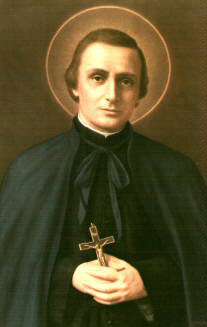 St. Peter Chanel: Saint of the Day for Sunday, April 28, 2024
 Prayer before a Crucifix: Prayer of the Day for Sunday, April 28, 2024


Copyright 2024 Catholic Online. All materials contained on this site, whether written, audible or visual are the exclusive property of Catholic Online and are protected under U.S. and International copyright laws, © Copyright 2024 Catholic Online. Any unauthorized use, without prior written consent of Catholic Online is strictly forbidden and prohibited.
Catholic Online is a Project of Your Catholic Voice Foundation, a Not-for-Profit Corporation. Your Catholic Voice Foundation has been granted a recognition of tax exemption under Section 501(c)(3) of the Internal Revenue Code. Federal Tax Identification Number: 81-0596847. Your gift is tax-deductible as allowed by law.