Cajetan Bedini
FREE Catholic Classes
Italian Cardinal and diplomat; born at Sinigaglia, Italy, 15 May, 1806; died at Viterbo, 6 September, 1864. He was appointed in 1849 by Pope Pius IX, Commissary Extraordinary at Bologna, one of the four Papal Provinces then recently in revolt and in which the Government of the Holy See was being maintained with the aid of the military power of Austria. He retired from this office in 1852 and after serving in various diplomatic posts was promoted to be titular Archbishop of Thebes. In 1853, upon his appointment as Apostolic Nuncio to the Court of Brazil, he was commissioned by the Holy Father to visit the United States to examine into the state of ecclesiastical affairs and, incidentally, to call on the President and present to him the compliments and good wishes of the pope. Arriving in New York in June, 1853, he at once visited Washington and called upon President Franklin Pierce, by whom he was received with great courtesy and to whom he presented an autograph letter of the Holy Father. This visit, purely one of courtesy, was afterwards distorted into an attempt to gain official recognition of himself as the diplomatic representative of the pope in the United States. His arrival in this country was the signal for a series of anti-Catholic demonstrations against him lasting throughout his tour. In New York the colony of Italian revolutionists who had fled to this country, urged on by the apostate priest Gavazzi, and aided by the Know-nothing element, held a mass meeting and denounced the nuncio. A plot to assassinate him was formed, but was defeated through a warning given by one of the conspirators, Sassi, who himself was stabbed to death by one of his associates in New York City a day or two after.

Monsignor Bedini traveled extensively throughout the country and participated in many public religious ceremonies. In many of the larger cities, notably Pittsburgh, Louisville, and Cincinnati, his visit excited hostile comment and demonstration, chiefly by the adherents of Know-nothingism, which was then rampant. In Cincinnati, particularly, this element, co-operating with some German infidel revolutionary exiles, plotted to do violence to him and to attack the cathedral where he was to officiate, but this design was frustrated by the vigilance of the city authorities, not, however, without bloodshed and rioting in which a number of the rioters lost their lives. He remained in this country until January 1854, when he returned to Rome. So apprehensive of personal violence had he become, that when about to depart from New York, he left the city secretly and journeyed to Staten Island, five miles distant, where a tug carried him to the outgoing steamer. Later, he was elevated to the rank of cardinal and received the appointment to the See of Viterbo and Toscanella .

We ask you, humbly: don't scroll away.
Hi readers, it seems you use Catholic Online a lot; that's great! It's a little awkward to ask, but we need your help. If you have already donated, we sincerely thank you. We're not salespeople, but we depend on donations averaging $14.76 and fewer than 1% of readers give. If you donate just $5.00, the price of your coffee, Catholic Online School could keep thriving. Thank you.Help Now >
Join the Movement
When you sign up below, you don't just join an email list - you're joining an entire movement for Free world class Catholic education.


-

-
Mysteries of the Rosary
-
St. Faustina Kowalska
-
Litany of the Blessed Virgin Mary
-
Saint of the Day for Wednesday, Oct 4th, 2023
-
Popular Saints
-
St. Francis of Assisi
-
Bible
-
Female / Women Saints
-
7 Morning Prayers you need to get your day started with God
-
Litany of the Blessed Virgin Mary


Sacrifices of Faith: The Pro-Life Legacies of St. Gianna and Jessica Hanna
-
How to love God by caring for our bodies
-
Pope Francis calls for negotiations to End Russia-Ukraine War
-
Pope Francis Contemplates Return to U.S. for United Nations Assembly Address
-
Pope Francis Calls on Faithful to Embrace Faith, Hope, and Charity in New Teaching Series


Daily Catholic
- Daily Readings for Sunday, April 28, 2024
- St. Peter Chanel: Saint of the Day for Sunday, April 28, 2024
- Prayer before a Crucifix: Prayer of the Day for Sunday, April 28, 2024
- Daily Readings for Saturday, April 27, 2024
- St. Zita: Saint of the Day for Saturday, April 27, 2024
- Prayer for the Dead # 2: Prayer of the Day for Saturday, April 27, 2024
 Daily Readings for Sunday, April 28, 2024
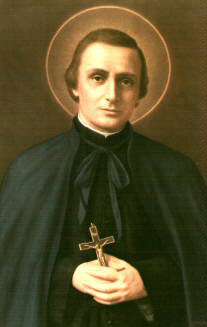 St. Peter Chanel: Saint of the Day for Sunday, April 28, 2024
 Prayer before a Crucifix: Prayer of the Day for Sunday, April 28, 2024
We ask you, humbly: don't scroll away.
Hi readers, it seems you use Catholic Online a lot; that's great! It's a little awkward to ask, but we need your help. If you have already donated, we sincerely thank you. We're not salespeople, but we depend on donations averaging $14.76 and fewer than 1% of readers give. If you donate just $5.00, the price of your coffee, Catholic Online School could keep thriving. Thank you.Help Now >


Copyright 2024 Catholic Online. All materials contained on this site, whether written, audible or visual are the exclusive property of Catholic Online and are protected under U.S. and International copyright laws, © Copyright 2024 Catholic Online. Any unauthorized use, without prior written consent of Catholic Online is strictly forbidden and prohibited.
Catholic Online is a Project of Your Catholic Voice Foundation, a Not-for-Profit Corporation. Your Catholic Voice Foundation has been granted a recognition of tax exemption under Section 501(c)(3) of the Internal Revenue Code. Federal Tax Identification Number: 81-0596847. Your gift is tax-deductible as allowed by law.