Jacob Balde
FREE Catholic Classes
A German poet, b. 4 January, 1604, in the Imperial free town of Ensisheim in Upper Alsace; d. at Neuburg, 9 August, 1668. He studies the classics and rhetoric in the Jesuit college of his native town, philosophy and law at the University Ingolstadt, where on 1 July, 1624, he was admitted into the Society of Jesus. Having undergone the usual ascetical and literary training he taught classics and rhetoric in the colleges of Munich and Innsbruck, and in his leisure hours composed the Latin mock-heroic poem "Batrachomyomachia" (The Battle of the Frogs and the Mice). After completing his theological studies at Ingolstadt, where he was ordained priest in 1633, he was appointed professor of eloquence in the university. Called to Munich a few years later to educate the sons of Duke Albert, he soon after received the office of court preacher to the elector Maximilian. Owing to failing health he was, in 1654, sent to Neuburg on the Danube, where he became the intimate friend and adviser of the Count Palatine Philipp Wilhelm. Here he died. The poetical works of Balde are marked by a brilliant imagination, noble thoughts, wit and humour, strength and tenderness of feeling, great learning, love of nature, and knowledge of the human heart. His mastery of classical Latin was such that he wielded it with astonishing power and originality, and he used the ancient metres and poetical forms with consummate ease and skill. His poetical themes are the world and religion, friendship and fatherland, art and letters. His patriotic accents, says Herder, have made him a German poet for all time. He witnessed the horrors of the Thirty Years War, and the devastation and disruption of his country, and while lamenting the fate of Germany, sought the re-awaken in the hearts of the people the old national spirit.
Balde was above all a lyric poet, many of his odes to the Virgin Mother of God being of surpassing beauty, but he has also written epic and pastoral poems, satires, elegies, and drams. During his lifetime he was acclaimed "the German Horace", but soon after his death he fell into neglect, until Herder, towards the end of the eighteenth century, by his translation of many of Balde's lyrics, published in the periodical "Terpsichore", revived the poet's memory and the fame of his genius among scholars. Balde, however, could never have become a popular poet in the wider sense of the word, as nearly all his works were written in Latin, which was in his time the international language of the cultured classes, whereas German was too unwieldy and crude a vehicle of poetical expression. Balde's poetry is not faultless; he occasionally offends against good taste, burdens his verses with mythological lore, and odes not always keep his luxuriant imagination under control. The only complete edition of his works was published in eight volumes at Munich in 1729.

 Hi readers, it seems you use Catholic Online a lot; that's great! It's a little awkward to ask, but we need your help. If you have already donated, we sincerely thank you. We're not salespeople, but we depend on donations averaging $14.76 and fewer than 1% of readers give. If you donate just $5.00, the price of your coffee, Catholic Online School could keep thriving. Thank you. Help Now >
Join the Movement
When you sign up below, you don't just join an email list - you're joining an entire movement for Free world class Catholic education.


-

-
Mysteries of the Rosary
-
St. Faustina Kowalska
-
Litany of the Blessed Virgin Mary
-
Saint of the Day for Wednesday, Oct 4th, 2023
-
Popular Saints
-
St. Francis of Assisi
-
Bible
-
Female / Women Saints
-
7 Morning Prayers you need to get your day started with God
-
Litany of the Blessed Virgin Mary


Sacrifices of Faith: The Pro-Life Legacies of St. Gianna and Jessica Hanna
-
How to love God by caring for our bodies
-
Pope Francis calls for negotiations to End Russia-Ukraine War
-
Pope Francis Contemplates Return to U.S. for United Nations Assembly Address
-
Pope Francis Calls on Faithful to Embrace Faith, Hope, and Charity in New Teaching Series

Daily Catholic
- Daily Readings for Sunday, April 28, 2024
- St. Peter Chanel: Saint of the Day for Sunday, April 28, 2024
- Prayer before a Crucifix: Prayer of the Day for Sunday, April 28, 2024
- Daily Readings for Saturday, April 27, 2024
- St. Zita: Saint of the Day for Saturday, April 27, 2024
- Prayer for the Dead # 2: Prayer of the Day for Saturday, April 27, 2024
 Daily Readings for Sunday, April 28, 2024
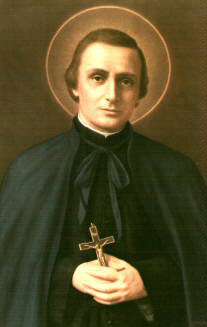 St. Peter Chanel: Saint of the Day for Sunday, April 28, 2024
 Prayer before a Crucifix: Prayer of the Day for Sunday, April 28, 2024
We ask you, humbly: don't scroll away.
Hi readers, it seems you use Catholic Online a lot; that's great! It's a little awkward to ask, but we need your help. If you have already donated, we sincerely thank you. We're not salespeople, but we depend on donations averaging $14.76 and fewer than 1% of readers give. If you donate just $5.00, the price of your coffee, Catholic Online School could keep thriving. Thank you.Help Now >


Copyright 2024 Catholic Online. All materials contained on this site, whether written, audible or visual are the exclusive property of Catholic Online and are protected under U.S. and International copyright laws, © Copyright 2024 Catholic Online. Any unauthorized use, without prior written consent of Catholic Online is strictly forbidden and prohibited.
Catholic Online is a Project of Your Catholic Voice Foundation, a Not-for-Profit Corporation. Your Catholic Voice Foundation has been granted a recognition of tax exemption under Section 501(c)(3) of the Internal Revenue Code. Federal Tax Identification Number: 81-0596847. Your gift is tax-deductible as allowed by law.