 Hi readers, it seems you use Catholic Online a lot; that's great! It's a little awkward to ask, but we need your help. If you have already donated, we sincerely thank you. We're not salespeople, but we depend on donations averaging $14.76 and fewer than 1% of readers give. If you donate just $5.00, the price of your coffee, Catholic Online School could keep thriving. Thank you. Help Now >
Ninian Winzet
FREE Catholic Classes
Benedictine abbot and controversial writer, b. at Renfrew, Scotland, 1518; d. at Ratisbon, 21 Sept., 1592. Educated (probably, though not certainly) at Glasgow University, he was ordained priest in 1540, and about 1551 became master of Linlithgow grammar school, and a little later provost of the collegiate church of St. Michael. When John Knox's "rascal multitude" was devastating the churches of Scotland in 1559, Winzet is said by Bishop Leslie to have publicly disputed with Knox at Linlithgow. After the change of religion in 1560 he was, with other ecclesiastics and teachers who refused to conform to Protestantism, ejected from his office. On Queen Mary's arrival in Edinburgh he went thither, at once threw himself into combat against the new doctrines, and published in 1562 his most famous work, "Certane Tractatis" -- the first addressed to the queen, clergy, and nobles, the second to Knox, and the third to the provost and magistrates of Edinburgh. Their ability and erudition made an immediate impression. Winzet, who seems for a time to have been Mary's confessor, was just bringing out his "Last Blast of the Trompet of Godis Worde", when it was stopped by the civil authority, and the author fled from Scotland, reaching Louvain in Sept., 1562. Here he wrote a preface to his "Buke of Four Scoir Thre Questions" (collected from his earlier polemical writings in manuscript ), which was published at Antwerp in Oct., 1563, with a postscript addressed to Knox ; and a little later his translation of the "Commonitorium" of Vincent of Lérins, dedicated to Queen Mary, also appeared at Antwerp. From 1565 to 1570 Winzet resided in Paris, prosecuting his studies at the university and apparently doing tutorial work also, as well as acting for a time as proctor for the "natio Anglicana seu Germanica".

In 1571 he was attached by Queen Mary , then a captive in England, to the service of Bishop Leslie, her ambassador in London ; but on Leslie's committal to the Tower Winzet returned to France, and stayed for a time at Douai. From 1575 to 1577 he was in Rome, and in June, 1577, Pope Gregory XIII appointed him abbot of St. James's Scots monastery at Ratisbon, dispensing him from the regular year's novitiate. He received the abbatial blessing in Rome from Goldwell, the exiled Bishop of St. Asaph , at once entered on his new duties, and succeeded by his energy and zeal in repairing the shattered fortunes of St. James's, which had suffered greatly in the upheaval of the Reformation. By his wise administration and efforts in the cause of education he won the favour and regard both of the Emperor Rudolph VI and of the Duke of Bavaria. During his fifteen years' tenure of the abbacy he continued his literary labours, publishing his "Flagellum Sectariorum" and "Velitatio in Georgium Buchananum" in 1581, as well as other works, some of then now lost. He died at Ratisbon, and was buried in the sanctuary of St. James's Church, where a monument with a eulogistic Latin epitaph marks his grave.


Join the Movement
When you sign up below, you don't just join an email list - you're joining an entire movement for Free world class Catholic education.


-

-
Mysteries of the Rosary
-
St. Faustina Kowalska
-
Litany of the Blessed Virgin Mary
-
Saint of the Day for Wednesday, Oct 4th, 2023
-
Popular Saints
-
St. Francis of Assisi
-
Bible
-
Female / Women Saints
-
7 Morning Prayers you need to get your day started with God
-
Litany of the Blessed Virgin Mary

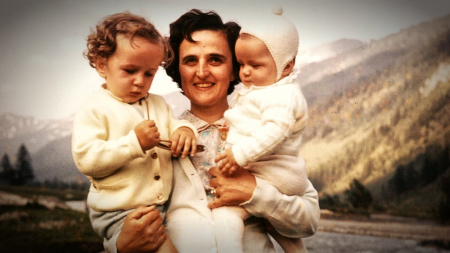
Sacrifices of Faith: The Pro-Life Legacies of St. Gianna and Jessica Hanna
-
How to love God by caring for our bodies
-
Pope Francis calls for negotiations to End Russia-Ukraine War
-
Pope Francis Contemplates Return to U.S. for United Nations Assembly Address
-
Pope Francis Calls on Faithful to Embrace Faith, Hope, and Charity in New Teaching Series


Daily Catholic
- Daily Readings for Monday, April 29, 2024
- St. Catherine of Siena: Saint of the Day for Monday, April 29, 2024
- Prayer for the Dead # 3: Prayer of the Day for Monday, April 29, 2024
- Daily Readings for Sunday, April 28, 2024
- St. Peter Chanel: Saint of the Day for Sunday, April 28, 2024
- Prayer before a Crucifix: Prayer of the Day for Sunday, April 28, 2024
 Daily Readings for Monday, April 29, 2024
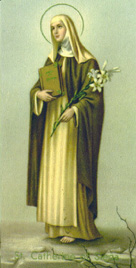 St. Catherine of Siena: Saint of the Day for Monday, April 29, 2024
 Prayer for the Dead # 3: Prayer of the Day for Monday, April 29, 2024


Copyright 2024 Catholic Online. All materials contained on this site, whether written, audible or visual are the exclusive property of Catholic Online and are protected under U.S. and International copyright laws, © Copyright 2024 Catholic Online. Any unauthorized use, without prior written consent of Catholic Online is strictly forbidden and prohibited.
Catholic Online is a Project of Your Catholic Voice Foundation, a Not-for-Profit Corporation. Your Catholic Voice Foundation has been granted a recognition of tax exemption under Section 501(c)(3) of the Internal Revenue Code. Federal Tax Identification Number: 81-0596847. Your gift is tax-deductible as allowed by law.