We ask you, humbly: don't scroll away.
Hi readers, it seems you use Catholic Online a lot; that's great! It's a little awkward to ask, but we need your help. If you have already donated, we sincerely thank you. We're not salespeople, but we depend on donations averaging $14.76 and fewer than 1% of readers give. If you donate just $5.00, the price of your coffee, Catholic Online School could keep thriving. Thank you.Help Now >
Tower of Babel
FREE Catholic Classes
The "Tower of Babel" is the name of the building mentioned in Genesis 11:19 .
History of the Tower
The descendants of Noah had migrated from the "east" ( Armenia ) first southward, along the course of the Tigris, then westward across the Tigris into "a plain in the land of Sennar". As their growing number forced them to live in localities more and more distant from their patriarchal homes, "they said: Come, let us make a city and a tower, the top whereof may reach to heaven ; and let us make our name famous before we be scattered abroad into all lands." The work was soon fairly under way; "and they had brick instead of stones, and slime (asphalt) instead of mortar." But God confounded their tongue, so that they did not understand one another's speech, and thus scattered them from that place into all lands, and they ceased to build the city.
This is the Biblical account of the Tower of Babel. Thus far no Babylonian document has been discovered which refers clearly to the subject. Authorities like George Smith, Chad Boscawen, and Sayce believed they had discovered a reference to the Tower of Babel; but Frd. Delitzch pointed out that the translation of the precise words which determine the meaning of the text is most uncertain (Smith-Delitzsch. "Chaldaische Genesis", 1876, 120-124; Anmerk., p. 310).
Oppert finds an allusion to the Tower of Babel in a text of Nabuchodonosor ; but this opinion is hardly more than a theory (cf. "The Cuneiform Inscriptions of Western Asia ", I, pl. 38, col. 2, line 62; pl. 41, col. 1, I. 27, col. 2, 1. 15; Nikel, "Genesis und Keilschriftforschung", 188 sqq.; Bezold, "Ninive und Babylon", 128; Jeremias, "Das alte Testament im Lichte des alten Orients", 2nd ed., Leipzig, 1906, 286; Kaulen, "Assyrien und Babylonien", 89).
A more probable reference to the Tower of Babel we find in the "History" of Berosus as it is handed down to us in two variations by Abydenus and Alexander Polyhistor respectively ("Histor. Graec. Fragm.", ed. Didot, II, 512; IV, 282; Euseb., "Chron.", I, 18, in P.G., XIX, 123; "Praep. Evang.", IX, 14, in P.G., XXI, 705). Special interest attaches to this reference, since Berosus is now supposed to have drawn his material from Babylonian sources.
Site of the Tower of Babel
Both the inspired writer of Genesis and Berosus place the Tower of Babel somewhere in Babylon. But there are three principal opinions as to its precise position in the city.
(1) Pietro della Valle ("Viaggi descritti", Rome, 1650) located the tower in the north of the city, on the left bank of the Euphrates, where now lie the ruins called Babil. Schrader inclines to the same opinion in Riehm's "Handworterbuch des biblischen Altertums" (I, 138), while in "The Cuneiform Inscriptions" (I, 108) he leaves to his reader the choice between Babil and the temple of Borsippa. The position of Babil within the limits of the ancient Babylon agrees with the Biblical location of the tower; the name Babil itself may be regarded as a traditional relic of the name Babel interpreted by the inspired writer as referring to the confusion of tongues.
(2) Rawlinson (Smith-Sayce, "Chaldean account of the Genesis", 1880, pp. 74, 171) places the tower on the ruins of Tell-Amram, regarded by Oppert as the remnants of the hanging gardens. These ruins are situated on the same side of the Euphrates as those of the Babil, and also within the ancient city limits. The excavations of the German Orientgesellschaft have laid bare on this spot the ancient national sanctuary Esagila, sacred to Marduk-Bel, with the documentary testimony that the top of the building had been made to reach Heaven. This agrees with the description of the Tower of Babel as found in Genesis 11:4: "The top whereof may reach to heaven ". To this locality belongs also the tower Etemenanki, or house of the foundation of Heaven and earth, which is composed of six gigantic steps.

(3) Sayce (Lectures on the Religion of the Ancient Babylonians, p. 112-3, 405-7), Oppert ("Expédition en Mésopotamie", I, 200-16; "Études assyriennes", pp. 91-132), and others follow the more common opinion which identifies the tower of Babel with the ruins of the Birs-Nimrud, in Borsippa, situated on the right side of the Euphrates, some seven or eight miles from the ruins of the city proper. They are the ruins of the temple Ezida, sacred to Nebo, which according to the above-cited inscription of Nabuchodonosor, was repaired and completed by that king; for it had been left incomplete by a former ruler in far distant days. These data are too vague to form the basis of an apodictic argument. The Babylonian Talmud (Buxtorf, "Lexicon talmudicum", col. 313) connects Borsippa with the confusion of tongues; but a long period elapsed from the time of the composition of Genesis 11 to the time of the Babylonian Talmud. Besides, the Biblical account seems to imply that the tower was within the city limits, while it is hardly probably that the city limits extended to Borsippa in very ancient times. The historical character of the tower is not impaired by our inability to point out its location with certainty.
Form of the Tower of Babel
The form of the tower must have resembled the constructions which today exist only in a ruined condition in Babylonia ; the most ancient pyramids of Egypt present a vestige of the same form. Cubic blocks of masonry, decreasing in size, are piled one on top of the other, thus forming separate stories; an inclined plane or stairway leads from one story to the other. The towers of Ur and Arach contained only two or three stories, but that of Birs-Nimrud numbered seven, not counting the high platform on which the building was erected. Each story was painted in its own peculiar colour according to the planet to which it was dedicated. Generally the corners of these towers faced the four points of the compass, while in Egypt this position was held by the sides of the pyramids. On top of these constructions there was a sanctuary, so that they served both as temples and observatories. Their interior consisted of sun-dried clay, but the outer walls were coated with fire-baker brick. The asphalt peculiar to the Babylonian neighbourhood served as mortar; all these details are in keeping with the report of Genesis. Though some writers maintain that every Babylonian city possessed such a tower, or zikkurat (meaning "pointed" according to Schrader, "raised on high" according to Haupt, "memorial" according to Vigouroux), no complete specimen has been preserved to us. The Tower of Khorsabad is perhaps the best preserved, but Assyrian sculpture supplements our knowledge of even this construction. The only indication of the time at which the Tower of Babel was erected, we find in the name of Phaleg ( Genesis 11:10-17 ), the grandnephew of Heber; this places the date somewhere between 101 and 870 years after the Flood. The limits are so unsatisfactory, because the Greek Version differs in its numbers from the Massoretic text.
 Hi readers, it seems you use Catholic Online a lot; that's great! It's a little awkward to ask, but we need your help. If you have already donated, we sincerely thank you. We're not salespeople, but we depend on donations averaging $14.76 and fewer than 1% of readers give. If you donate just $5.00, the price of your coffee, Catholic Online School could keep thriving. Thank you. Help Now >
We ask you, humbly: don't scroll away.
Hi readers, it seems you use Catholic Online a lot; that's great! It's a little awkward to ask, but we need your help. If you have already donated, we sincerely thank you. We're not salespeople, but we depend on donations averaging $14.76 and fewer than 1% of readers give. If you donate just $5.00, the price of your coffee, Catholic Online School could keep thriving. Thank you.Help Now >
Join the Movement
When you sign up below, you don't just join an email list - you're joining an entire movement for Free world class Catholic education.


-

-
Mysteries of the Rosary
-
St. Faustina Kowalska
-
Litany of the Blessed Virgin Mary
-
Saint of the Day for Wednesday, Oct 4th, 2023
-
Popular Saints
-
St. Francis of Assisi
-
Bible
-
Female / Women Saints
-
7 Morning Prayers you need to get your day started with God
-
Litany of the Blessed Virgin Mary


Sacrifices of Faith: The Pro-Life Legacies of St. Gianna and Jessica Hanna
-
How to love God by caring for our bodies
-
Pope Francis calls for negotiations to End Russia-Ukraine War
-
Pope Francis Contemplates Return to U.S. for United Nations Assembly Address
-
Pope Francis Calls on Faithful to Embrace Faith, Hope, and Charity in New Teaching Series


Daily Catholic
- Daily Readings for Sunday, April 28, 2024
- St. Peter Chanel: Saint of the Day for Sunday, April 28, 2024
- Prayer before a Crucifix: Prayer of the Day for Sunday, April 28, 2024
- Daily Readings for Saturday, April 27, 2024
- St. Zita: Saint of the Day for Saturday, April 27, 2024
- Prayer for the Dead # 2: Prayer of the Day for Saturday, April 27, 2024
 Daily Readings for Sunday, April 28, 2024
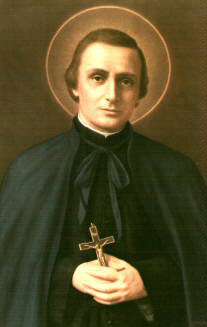 St. Peter Chanel: Saint of the Day for Sunday, April 28, 2024
 Prayer before a Crucifix: Prayer of the Day for Sunday, April 28, 2024

Copyright 2024 Catholic Online. All materials contained on this site, whether written, audible or visual are the exclusive property of Catholic Online and are protected under U.S. and International copyright laws, © Copyright 2024 Catholic Online. Any unauthorized use, without prior written consent of Catholic Online is strictly forbidden and prohibited.
Catholic Online is a Project of Your Catholic Voice Foundation, a Not-for-Profit Corporation. Your Catholic Voice Foundation has been granted a recognition of tax exemption under Section 501(c)(3) of the Internal Revenue Code. Federal Tax Identification Number: 81-0596847. Your gift is tax-deductible as allowed by law.