Tintern Abbey
FREE Catholic Classes
This abbey, in Monmouthshire, England [actually Wales -- Ed. ], was founded in 1131 by Walter de Clare for Cistercian monks, who came from the Abbey of Aumone, in the Diocese of Chartres, itself founded only ten years before. Walter's son Gilbert, first earl of Pembroke, and probably also his grandson Richard Strongbow, conqueror of Ireland under Henry II, were buried at Tintern, the magnificent church of which dates from the end of the thirteenth century. They abbey received rich benefactions not only from the family of its founder but from other noble houses; and lists of its possessions, both from the taxation-roll of 1291, and at the time of the Dissolution under Henry VIII, are given in detail by Dugdale. The accounts submitted by the last abbot, Richard Wych, in 1535, place the net income at under 200 pounds a year; and the abbey, containing at that time thirteen monks, was suppressed under the Act of 1536 which dissolved the smaller monasteries. The king granted it in 1537 to Henry, Earl of Worcester, in whose family (afterwards dukes of Beaufort) it remained until the sale of his Monmouthshire property by the ninth duke, when it was acquired by the Crown.
The ruins of Tintern, which stands on the right bank of the river Wye, backed by a semicircle of wooded hills, ranks with Fountains Abbey in Yorkshire as the most beautiful in England. The church, measuring 245 feet in length, with transepts of 110 feet, is almost perfect, though roofless, the architecture being of the transitional style from Early English to Decorated. The window-tracery is especially fine. Hardly anything remains of the domestic buildings of the abbey, the stone having been used for cottages and farm buildings in the neighborhood.



Join the Movement
When you sign up below, you don't just join an email list - you're joining an entire movement for Free world class Catholic education.


-

-
Mysteries of the Rosary
-
St. Faustina Kowalska
-
Litany of the Blessed Virgin Mary
-
Saint of the Day for Wednesday, Oct 4th, 2023
-
Popular Saints
-
St. Francis of Assisi
-
Bible
-
Female / Women Saints
-
7 Morning Prayers you need to get your day started with God
-
Litany of the Blessed Virgin Mary


Sacrifices of Faith: The Pro-Life Legacies of St. Gianna and Jessica Hanna
-
How to love God by caring for our bodies
-
Pope Francis calls for negotiations to End Russia-Ukraine War
-
Pope Francis Contemplates Return to U.S. for United Nations Assembly Address
-
Pope Francis Calls on Faithful to Embrace Faith, Hope, and Charity in New Teaching Series


Daily Catholic
- Daily Readings for Sunday, April 28, 2024
- St. Peter Chanel: Saint of the Day for Sunday, April 28, 2024
- Prayer before a Crucifix: Prayer of the Day for Sunday, April 28, 2024
- Daily Readings for Saturday, April 27, 2024
- St. Zita: Saint of the Day for Saturday, April 27, 2024
- Prayer for the Dead # 2: Prayer of the Day for Saturday, April 27, 2024
 Daily Readings for Sunday, April 28, 2024
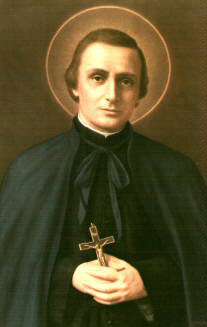 St. Peter Chanel: Saint of the Day for Sunday, April 28, 2024
 Prayer before a Crucifix: Prayer of the Day for Sunday, April 28, 2024
We ask you, humbly: don't scroll away.
Hi readers, it seems you use Catholic Online a lot; that's great! It's a little awkward to ask, but we need your help. If you have already donated, we sincerely thank you. We're not salespeople, but we depend on donations averaging $14.76 and fewer than 1% of readers give. If you donate just $5.00, the price of your coffee, Catholic Online School could keep thriving. Thank you.Help Now >



Copyright 2024 Catholic Online. All materials contained on this site, whether written, audible or visual are the exclusive property of Catholic Online and are protected under U.S. and International copyright laws, © Copyright 2024 Catholic Online. Any unauthorized use, without prior written consent of Catholic Online is strictly forbidden and prohibited.
Catholic Online is a Project of Your Catholic Voice Foundation, a Not-for-Profit Corporation. Your Catholic Voice Foundation has been granted a recognition of tax exemption under Section 501(c)(3) of the Internal Revenue Code. Federal Tax Identification Number: 81-0596847. Your gift is tax-deductible as allowed by law.