We ask you, humbly: don't scroll away.
Hi readers, it seems you use Catholic Online a lot; that's great! It's a little awkward to ask, but we need your help. If you have already donated, we sincerely thank you. We're not salespeople, but we depend on donations averaging $14.76 and fewer than 1% of readers give. If you donate just $5.00, the price of your coffee, Catholic Online School could keep thriving. Thank you.Help Now >
Arius
FREE Catholic Classes
An heresiarch, born about A.D.ú died 336. He is said to have been a Libyan by descent. His father's name is given as Ammonius. In 306, Arius, who had learnt his religious views from Lucian, the presbyter of Antioch, and afterwards the martyr, took sides with Meletius, an Egyptian schismatic, against Peter, Bishop of Alexandria. But a reconciliation followed, and Peter ordained Arius deacon. Further disputes led the Bishop to excommunicate his restless churchman, who, however, gained the friendship of Achillas, Peter's successor, was made presbyter by him in 313, and had the charge of a well-known district in Alexandria called Baucalis. This entitled Arius to expound the Scriptures officially, and he exercised much influence when, in 318, his quarrel with Bishop Alexander broke out over the fundamental truth of Our Lord's divine Sonship and substance. (See ARIANISM.) While many Syrian prelates followed the innovator, he was condemned at Alexandria in 321 by his diocesan in a synod of nearly one hundred Egyptian and Libyan bishops. Deprived and excommunicated, the heresiarch fled to Palestine. He addressed a thoroughly unsound statement of principles to Eusebius of Nicomedia , who yet became his lifelong champion and who had won the esteem of Constantine by his worldly accomplishments. In his house the proscribed man, always a ready writer, composed in verse and prose a defence of his position which he termed "Thalia". A few fragments of it survive. He is also said to have published songs for sailors, millers, and travellers, in which his creed was illustrated. Tall above the common, thin, ascetical, and severe, he has been depicted in lively colours by Epiphanius (Heresies, 69, 3); but his moral character was never impeached except doubtfully of ambition by Theodoret. He must have been of great age when, after fruitless negotiations and a visti to Egypt, he appeared in 325 at Nic&aea, where the confession of faith which he presented was torn in pieces. With his writings and followers he underwent the anathemas subscribed by more than 300 bishops. He was banished into Illyricum. Two prelates shared his fate, Tehonas of Marmarica and Secundus of Ptolemais. His books were burnt. The Arians, joined by their old Meletian friends, created troubles in Alexandria. Eusebius persuaded Constantine to recall the exile by indulgent letters in 328; and the emperor not only permitted his return to Alexandria in 331, but ordered Athanasius to reconcile him with the Church. On the saint's refusal more disturbance ensued. The packed and partisan Synod of Tyre deposed Athanasius on a series of futile charges in 335. Catholics were now persecuted ; Arius had an interview with Constantine and submitted a creed which the emperor judged to be orthodox. By imperial rescript Arius required Alexander of Constantinople to give him Communion; but the stroke of xxyyyk.htm">Providence defeated an attempt which Catholics looked upon as sacrilege. The heresiarch died suddenly, and was buried by his own people. He had winning manners, an evasive style, and a disputatious temper. But in the controversy which is called after his name, Arius counted only at the beginning. He did not represent the tradition of Alexandria but the topical subtleties of Antioch. Hence, his disappearance from the scene neither stayed the combatants nor ended the quarrel which he had rashly provoked. A party-theologian, he exhibited no features of genius; and he was the product, not the founder, of a school.


 Hi readers, it seems you use Catholic Online a lot; that's great! It's a little awkward to ask, but we need your help. If you have already donated, we sincerely thank you. We're not salespeople, but we depend on donations averaging $14.76 and fewer than 1% of readers give. If you donate just $5.00, the price of your coffee, Catholic Online School could keep thriving. Thank you. Help Now >
Join the Movement
When you sign up below, you don't just join an email list - you're joining an entire movement for Free world class Catholic education.


-

-
Mysteries of the Rosary
-
St. Faustina Kowalska
-
Litany of the Blessed Virgin Mary
-
Saint of the Day for Wednesday, Oct 4th, 2023
-
Popular Saints
-
St. Francis of Assisi
-
Bible
-
Female / Women Saints
-
7 Morning Prayers you need to get your day started with God
-
Litany of the Blessed Virgin Mary


Sacrifices of Faith: The Pro-Life Legacies of St. Gianna and Jessica Hanna
-
How to love God by caring for our bodies
-
Pope Francis calls for negotiations to End Russia-Ukraine War
-
Pope Francis Contemplates Return to U.S. for United Nations Assembly Address
-
Pope Francis Calls on Faithful to Embrace Faith, Hope, and Charity in New Teaching Series


Daily Catholic
- Daily Readings for Sunday, April 28, 2024
- St. Peter Chanel: Saint of the Day for Sunday, April 28, 2024
- Prayer before a Crucifix: Prayer of the Day for Sunday, April 28, 2024
- Daily Readings for Saturday, April 27, 2024
- St. Zita: Saint of the Day for Saturday, April 27, 2024
- Prayer for the Dead # 2: Prayer of the Day for Saturday, April 27, 2024
 Daily Readings for Sunday, April 28, 2024
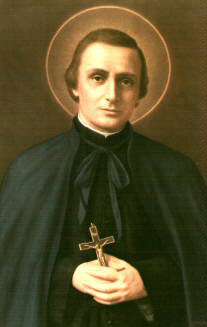 St. Peter Chanel: Saint of the Day for Sunday, April 28, 2024
 Prayer before a Crucifix: Prayer of the Day for Sunday, April 28, 2024



Copyright 2024 Catholic Online. All materials contained on this site, whether written, audible or visual are the exclusive property of Catholic Online and are protected under U.S. and International copyright laws, © Copyright 2024 Catholic Online. Any unauthorized use, without prior written consent of Catholic Online is strictly forbidden and prohibited.
Catholic Online is a Project of Your Catholic Voice Foundation, a Not-for-Profit Corporation. Your Catholic Voice Foundation has been granted a recognition of tax exemption under Section 501(c)(3) of the Internal Revenue Code. Federal Tax Identification Number: 81-0596847. Your gift is tax-deductible as allowed by law.