 Hi readers, it seems you use Catholic Online a lot; that's great! It's a little awkward to ask, but we need your help. If you have already donated, we sincerely thank you. We're not salespeople, but we depend on donations averaging $14.76 and fewer than 1% of readers give. If you donate just $5.00, the price of your coffee, Catholic Online School could keep thriving. Thank you. Help Now >
Julius Caesar Scaliger
FREE Catholic Classes
(It., DELLA SCALA).
Humanist, b. at Riva on Lake Garda in 1484; d. at Agen, France, 21 Oct., 1558. He was brought to France as physician to Antonio de la Rovera, Bishop of Agen, and became a French citizen under the name of Jules Cesar de l'Escale de Bordonis. He took part in the discussion concerning Ciceronianism and began his career as a humanist by a violent work against Erasmus, "Oratio pro Cicerone contra Erasmum" (Paris 1531). He defended the absolute perfection of Cicero's style and denounced Erasmus as a mere proof corrector, a parasite, and a parricide. Erasmus kept silence. In 1536 Scaliger issued a still more violent discourse. The two discourses were combined: "Adversus D. Erasmum orationes duae eloquentiae romanae vindices cum auctoris opusculis" (Toulouse, 1621). He wrote a more solid work in a calmer tone in "De causis linguae latinae libri XIII" (Lyons, 1540; Geneva, 1580), in which he analyzed the correct style of Cicero and indicated 634 mistakes of Valla and his predecessors. He was the first to attempt a systematic treatise on poetry: "Poetices libri octo" (Lyons, 1561; Leyden, 1581; Heidelberg, 1607). The general principles of this work are derived from Aristotle whom he calls "imperator noster; omnium bonarum artium dictator perpetuus". Like Aristotle he makes imitation the basis of all poetry. He spoiled his work by exaggerations; not only does he place Virgil above Homer but he places the Homeric epics below the "Hero and Leander" of Musaeus, a poet of the Byzantine period; it is true that Scaliger identifies him with the legendary Musaeus, a disciple of Orpheus (Poet., V, 2). He declared that Seneca was not surpassed in grandeur by any of the Greek tragedians. This last opinion was not without its consequences; it explains the excessive liking of Shakespeare, Corneille, and many of their contemporaries for the tragedies of Seneca.

Scaliger is also the author of the following works: "De comicis dimensionibus" (Lyons, 1539); "Exotericarum exercitationum de subtilitate ad H. Cardanum" (Paris, 1537; Basle, 1560); "Poemata" (Geneva, 1574; Heidelberg, 1600); "Epistolae et Orationes " (Leyden, 1600). He translated into Latin Aristotle's "Natural History" (Toulouse 1619), the "Insomniae" of Hippocrates, and wrote commentaries on the treatises on plants of Theophrastes and Aristotle. As a physician he was much interested in botany; he demonstrated the necessity of abandoning the classification of plants based on their properties and of establishing one based on their distinctive characteristics. He was violent, vain, and given to exaggeration. His faults spoiled pleasing natural gifts and wide learning.

We ask you, humbly: don't scroll away.
Hi readers, it seems you use Catholic Online a lot; that's great! It's a little awkward to ask, but we need your help. If you have already donated, we sincerely thank you. We're not salespeople, but we depend on donations averaging $14.76 and fewer than 1% of readers give. If you donate just $5.00, the price of your coffee, Catholic Online School could keep thriving. Thank you.Help Now >
Join the Movement
When you sign up below, you don't just join an email list - you're joining an entire movement for Free world class Catholic education.


-

-
Mysteries of the Rosary
-
St. Faustina Kowalska
-
Litany of the Blessed Virgin Mary
-
Saint of the Day for Wednesday, Oct 4th, 2023
-
Popular Saints
-
St. Francis of Assisi
-
Bible
-
Female / Women Saints
-
7 Morning Prayers you need to get your day started with God
-
Litany of the Blessed Virgin Mary


Sacrifices of Faith: The Pro-Life Legacies of St. Gianna and Jessica Hanna
-
How to love God by caring for our bodies
-
Pope Francis calls for negotiations to End Russia-Ukraine War
-
Pope Francis Contemplates Return to U.S. for United Nations Assembly Address
-
Pope Francis Calls on Faithful to Embrace Faith, Hope, and Charity in New Teaching Series


Daily Catholic
- Daily Readings for Sunday, April 28, 2024
- St. Peter Chanel: Saint of the Day for Sunday, April 28, 2024
- Prayer before a Crucifix: Prayer of the Day for Sunday, April 28, 2024
- Daily Readings for Saturday, April 27, 2024
- St. Zita: Saint of the Day for Saturday, April 27, 2024
- Prayer for the Dead # 2: Prayer of the Day for Saturday, April 27, 2024
 Daily Readings for Sunday, April 28, 2024
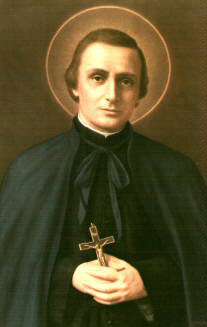 St. Peter Chanel: Saint of the Day for Sunday, April 28, 2024
 Prayer before a Crucifix: Prayer of the Day for Sunday, April 28, 2024
We ask you, humbly: don't scroll away.
Hi readers, it seems you use Catholic Online a lot; that's great! It's a little awkward to ask, but we need your help. If you have already donated, we sincerely thank you. We're not salespeople, but we depend on donations averaging $14.76 and fewer than 1% of readers give. If you donate just $5.00, the price of your coffee, Catholic Online School could keep thriving. Thank you.Help Now >



Copyright 2024 Catholic Online. All materials contained on this site, whether written, audible or visual are the exclusive property of Catholic Online and are protected under U.S. and International copyright laws, © Copyright 2024 Catholic Online. Any unauthorized use, without prior written consent of Catholic Online is strictly forbidden and prohibited.
Catholic Online is a Project of Your Catholic Voice Foundation, a Not-for-Profit Corporation. Your Catholic Voice Foundation has been granted a recognition of tax exemption under Section 501(c)(3) of the Internal Revenue Code. Federal Tax Identification Number: 81-0596847. Your gift is tax-deductible as allowed by law.