 Dear readers, Catholic Online was de-platformed by Shopify for our pro-life beliefs. They shut down our Catholic Online, Catholic Online School, Prayer Candles, and Catholic Online Learning Resources essential faith tools serving over 2.2 million students and millions of families worldwide. Our founders, now in their 70's, just gave their entire life savings to protect this mission. But fewer than 2% of readers donate. If everyone gave just $5, the cost of a coffee, we could rebuild stronger and keep Catholic education free for all. Stand with us in faith. Thank you. DONATE TODAY >
Saliva Indians
FREE Catholic Classes
The principal of a small group of tribes constituting a distinct linguistic stock (the Salivan), centring in the eighteenth century, about and below the junction of the Meta and Orinoco, in Venezuela, but believed to have come from farther up the Orinoco, about the confluence of the Guaviare in Columbian territory. They were of kindly and sociable disposition, and especially given to music, but followed the common barbarous practice of killing the aged and feeble. They disinterred the bones of the dead after a year, burned them, and mixed the ashes with their drinking water. In their ceremonies they blew upon the batuto , or great clay trumpet common to the tribes of the region. A grammar of their language was composed by the Jesuit Father Anisson. In 1669 the Jesuit Fathers Monteverde and Castan established the first mission in the tribe, under the name of Nuestra Señora de los Salibas, but both dying within a year the Indians again dispersed to the forest. In 1671 other Jesuit missions were established in the same general region, at Carichana, Sinameo and San Lorenzo, together with a small garrison of twelve soldiers at the first-named station, but were all destroyed by two successive invasions of the savage Carib from below in 1684 and 1693. In these two attacks four priests lost their lives, together with the captain of the garrison, his two sons, and others. Forty years later the missions were restored, the principal one, of the Saliva, being established in 1734 at Carichana on the Orinoco, just below the junction of the Meta. Its founder was Father Manuel Roman, superior of the Jesuit missions of the Orinoco, and discoverer of the Casiquiare connexion with the Amazon. The tribe numbered at that time about 4000 souls, only a small part resided at the mission. It was visited and described by Humboldt in 1800. Another Saliva mission, San Miguel de Macuco, on the Meta, had at one time 900 souls. On the expulsion of the Jesuits in 1767-68 the Orinoco missions were placed in charge of Franciscan fathers, but fell into decline. The revolutionary war and the withdrawal of help from the Spanish Government completed their ruin. The mission property was seized, the Indians scattered, and the tribe is now virtually extinct.

Come Grow With Us
Sign up and walk the Catholic journey with millions around the world.
Receive inspiring emails on saints, daily readings, and free faith-building resources—no cost, ever.
An important update for our readers.
Please Watch
- 7 Morning Prayers
- Mysteries of the Rosary
- Litany of the Bl. Virgin Mary
- Popular Saints
- Popular Prayers
- Female Saints
- Saint Feast Days by Month
- Stations of the Cross
- St. Francis of Assisi
- St. Michael the Archangel
- The Apostles' Creed
- Unfailing Prayer to St. Anthony
- Pray the Rosary







Copyright 2026 Catholic Online. All materials contained on this site, whether written, audible or visual are the exclusive property of Catholic Online and are protected under U.S. and International copyright laws, © Copyright 2026 Catholic Online. Any unauthorized use, without prior written consent of Catholic Online is strictly forbidden and prohibited.
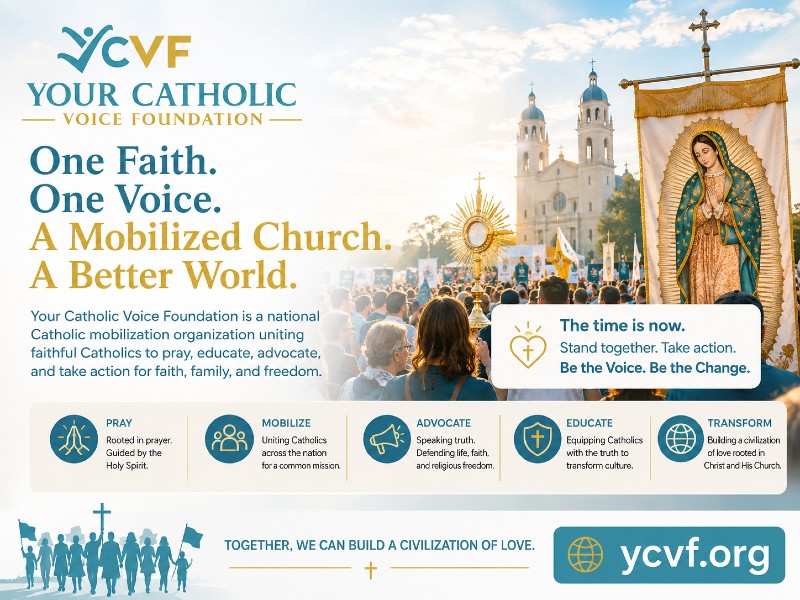
Catholic Online is a Project of Your Catholic Voice Foundation, a Not-for-Profit Corporation. Your Catholic Voice Foundation has been granted a recognition of tax exemption under Section 501(c)(3) of the Internal Revenue Code. Federal Tax Identification Number: 81-0596847. Your gift is tax-deductible as allowed by law.
