We ask you, humbly: don't scroll away.
Hi readers, it seems you use Catholic Online a lot; that's great! It's a little awkward to ask, but we need your help. If you have already donated, we sincerely thank you. We're not salespeople, but we depend on donations averaging $14.76 and fewer than 1% of readers give. If you donate just $5.00, the price of your coffee, Catholic Online School could keep thriving. Thank you.Help Now >
Orders of St. George
FREE Catholic Classes
Knights of St. George appear at different historical periods and in different countries as mutually independent bodies having nothing in common but the veneration of St. George , the patron of knighthood. St. George of Lydda, a martyr of the persecution of Diocletian in the fourth century, is one of those military saints whom Byzantine iconography represented as a horseman armed cap-à-pie, like the flower of the Roman armies after the military reform of Justinian in the sixth century. The pilgrim knights of Europe, encountering in the East these representations of St. George , recognized their own accoutrements and at once adopted him as the patron of their noble calling. This popularity of St. George in the West gave rise to numerous associations both secular and religious. Among secular orders of this name which still exist must be mentioned the English Order of the Garter, which has always had St. George for its patron. Though Protestantism suppressed his cult, the chapel of St. George at Windsor has remained the official seat of the order, where its chapters assemble and where each knight is entitled to a stall over which his banner is hung. A second royal order under the double patronage of St. Michael and St. George was founded in England in 1818 to reward services rendered in foreign or colonial relations. In Bavaria a secular Order of St. George has existed since 1729, and owes its foundation to the prince elector, better known by the title of Charles VII which he bore as emperor for a brief period. The present Russian Order of St. George dates from 1769, having been founded in the reign of Catherine II, as a military distinction.

There formerly existed regular orders of St. George. The Kingdom of Aragon was placed under his patronage, and in gratitude for his assistance to its armies King Pedro II founded (1201) the Order of St. George of Alfama in the district of that name. Nevertheless this order received the approbation of the Holy See only in 1363 and had but a brief existence. With the approval of antipope Benedict XIII it was amalgamated with the Aragonese Order of Montesa, and thereafter known as the Order of Montesa and St. George of Alfama. Equally short-lived was the Order of St. George founded in Austria by the Emperor Frederick III and approved by Paul II in 1464. This needy prince was unable to assure a sufficient endowment for the support of his knights, and the pope gave him permission to transfer to the new order the property of a commandery of St. John and a Benedictine abbey in the town of Milestadt, to which the emperor added some parishes in his patronage. Nevertheless the knights had to rely for support on their personal possession, therefore they did not make a vow of poverty, but simply of obedience and chastity, and, owing to this lack of resources, the order did not survive its founder. It was succeeded by a secular Confraternity of St. George founded under the Emperor Maximilian I with the approbation of Alexander VI in 1494, which likewise disappeared, in the disturbances of the sixteenth century.

We ask you, humbly: don't scroll away.
Hi readers, it seems you use Catholic Online a lot; that's great! It's a little awkward to ask, but we need your help. If you have already donated, we sincerely thank you. We're not salespeople, but we depend on donations averaging $14.76 and fewer than 1% of readers give. If you donate just $5.00, the price of your coffee, Catholic Online School could keep thriving. Thank you.Help Now >
Join the Movement
When you sign up below, you don't just join an email list - you're joining an entire movement for Free world class Catholic education.


-

-
Mysteries of the Rosary
-
St. Faustina Kowalska
-
Litany of the Blessed Virgin Mary
-
Saint of the Day for Wednesday, Oct 4th, 2023
-
Popular Saints
-
St. Francis of Assisi
-
Bible
-
Female / Women Saints
-
7 Morning Prayers you need to get your day started with God
-
Litany of the Blessed Virgin Mary


Sacrifices of Faith: The Pro-Life Legacies of St. Gianna and Jessica Hanna
-
How to love God by caring for our bodies
-
Pope Francis calls for negotiations to End Russia-Ukraine War
-
Pope Francis Contemplates Return to U.S. for United Nations Assembly Address
-
Pope Francis Calls on Faithful to Embrace Faith, Hope, and Charity in New Teaching Series


Daily Catholic
- Daily Readings for Sunday, April 28, 2024
- St. Peter Chanel: Saint of the Day for Sunday, April 28, 2024
- Prayer before a Crucifix: Prayer of the Day for Sunday, April 28, 2024
- Daily Readings for Saturday, April 27, 2024
- St. Zita: Saint of the Day for Saturday, April 27, 2024
- Prayer for the Dead # 2: Prayer of the Day for Saturday, April 27, 2024
 Daily Readings for Sunday, April 28, 2024
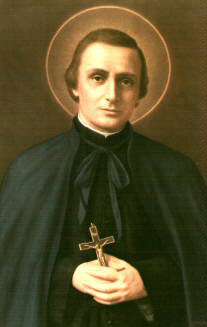 St. Peter Chanel: Saint of the Day for Sunday, April 28, 2024
 Prayer before a Crucifix: Prayer of the Day for Sunday, April 28, 2024


Copyright 2024 Catholic Online. All materials contained on this site, whether written, audible or visual are the exclusive property of Catholic Online and are protected under U.S. and International copyright laws, © Copyright 2024 Catholic Online. Any unauthorized use, without prior written consent of Catholic Online is strictly forbidden and prohibited.
Catholic Online is a Project of Your Catholic Voice Foundation, a Not-for-Profit Corporation. Your Catholic Voice Foundation has been granted a recognition of tax exemption under Section 501(c)(3) of the Internal Revenue Code. Federal Tax Identification Number: 81-0596847. Your gift is tax-deductible as allowed by law.