 Hi readers, it seems you use Catholic Online a lot; that's great! It's a little awkward to ask, but we need your help. If you have already donated, we sincerely thank you. We're not salespeople, but we depend on donations averaging $14.76 and fewer than 1% of readers give. If you donate just $5.00, the price of your coffee, Catholic Online School could keep thriving. Thank you. Help Now >
Claude de Sainctes
FREE Catholic Classes
French controversialist, b. at Perche, 1525; d. at Crèvecoeur, 1591. At the age of fifteen he joined the Canons Regular of Saint-Cheron, and was sent to the College of Navarre in Paris, where he received the degree of Doctor of Theology (1555) On account of the erudition of his early works and the aptitude which he showed for controversy, he was called to the Conference of Poissy held in 1561 between the Catholics and the Huguenots, at which Theodore of Beza and Father Lainez, general of the Jesuits, were present. He was afterwards deputed to the Council of Trent to represent, with Simon Vigor, the University of Paris. Upon his return he acquired a notable reputation by his sermons and his discussions with Protestants. He published a work against their spoliation of Catholic churches and a vigorous declaration against the doctrines of Calvin and Theodore of Beza; the latter replied and drew upon himself a new attack from Claude de Sainctes. At the same time he charged the King of France by his treatise on "L'ancien naturel des Français" never to tolerate heretics and against these latter he defended the dogma of the Church by an exhaustive treatise on the Eucharist. Through the patronage of the Cardinal of Lorraine, he was appointed to the Bishopric of Evreux (1575). He was very zealous in his efforts to convert Protestants. He assisted at the provincial Council of Rouen (1581) and published its records in French. When the League became active he took sides with it and worked to gain partisans, but the royal troops took possession of Evreux and the bishop was forced to flee. Unfortunately for him there were found among his papers writings in which he approved the murder of Henry III and maintained that one could likewise kill his successor. Arrested and arraigned before the Parlement of Caen, he was condemned to death as guilty of high treason. At the request of the Cardinal of Bourbon and of several bishops, Henry IV commuted his sentence to life imprisonment, and he was confined in the château of Crèvecoeur where he died two months later. His works were published, some in Latin and others in French. The more important are: "Liturgiae sive missae SS. Patrum Jacobi, Basilii J. Chrysostomi" (Greek-Latin, Paris, 1560); "Discours sur le saccagement des églises catholiques par les hérétiques anciens et nouveaux calvinistes" (Paris, 1562); "Traité de l'ancien naturel des Français en la religion chrétienne" (Paris, 1567); "Déclaration d'anciens athéismes de la doctrine de Calvin et de Bèze contre les premiers fondements de la chrétienté" (Paris, 1567); "De rebus Eucharistiae controversis libri X" (Paris, 1575).



Join the Movement
When you sign up below, you don't just join an email list - you're joining an entire movement for Free world class Catholic education.


-

-
Mysteries of the Rosary
-
St. Faustina Kowalska
-
Litany of the Blessed Virgin Mary
-
Saint of the Day for Wednesday, Oct 4th, 2023
-
Popular Saints
-
St. Francis of Assisi
-
Bible
-
Female / Women Saints
-
7 Morning Prayers you need to get your day started with God
-
Litany of the Blessed Virgin Mary


Sacrifices of Faith: The Pro-Life Legacies of St. Gianna and Jessica Hanna
-
How to love God by caring for our bodies
-
Pope Francis calls for negotiations to End Russia-Ukraine War
-
Pope Francis Contemplates Return to U.S. for United Nations Assembly Address
-
Pope Francis Calls on Faithful to Embrace Faith, Hope, and Charity in New Teaching Series


Daily Catholic
- Daily Readings for Sunday, April 28, 2024
- St. Peter Chanel: Saint of the Day for Sunday, April 28, 2024
- Prayer before a Crucifix: Prayer of the Day for Sunday, April 28, 2024
- Daily Readings for Saturday, April 27, 2024
- St. Zita: Saint of the Day for Saturday, April 27, 2024
- Prayer for the Dead # 2: Prayer of the Day for Saturday, April 27, 2024
 Daily Readings for Sunday, April 28, 2024
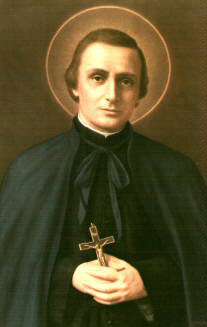 St. Peter Chanel: Saint of the Day for Sunday, April 28, 2024
 Prayer before a Crucifix: Prayer of the Day for Sunday, April 28, 2024


Copyright 2024 Catholic Online. All materials contained on this site, whether written, audible or visual are the exclusive property of Catholic Online and are protected under U.S. and International copyright laws, © Copyright 2024 Catholic Online. Any unauthorized use, without prior written consent of Catholic Online is strictly forbidden and prohibited.
Catholic Online is a Project of Your Catholic Voice Foundation, a Not-for-Profit Corporation. Your Catholic Voice Foundation has been granted a recognition of tax exemption under Section 501(c)(3) of the Internal Revenue Code. Federal Tax Identification Number: 81-0596847. Your gift is tax-deductible as allowed by law.