Sabrata
FREE Catholic Classes
A titular see in Tripolitana. Sabrata was a Phoenician town on the northern coast of Africa, between the two Syrta. With Oca and Leptis Magna it caused the Greek name Tripolis to be given to the region. Its Phoenician name, which occurs on coins and in an inscription at Thevesta, was hellenized Abrotomon, though Pliny (V, 4) makes these two separate towns. Sabrata became a Roman colony; Flavia Domitilla, Vespasian's first wife, was the daughter of Statilius Capella of Sabrata. Justinian fortified the town and built there a beautiful church. In the Middle Ages it continued to be an important market, to which the natives of the interior brought their corn; the Arab writers call it Sabrat en-Nefousa, from a powerful tribe, the Nefousa, formerly Christian. Sabrata is now represented by Zouagha, a small town called by Europeans Tripoli Vecchia, in the vilayet of Tripoli, fifty miles west of the town of Tripoli. Its ruins lie a little north of the village; they consist of crumbled ramparts, an amphitheatre, and landing-stage. Four of its bishops are known: Pompey in 233; Nados, present at the Conference of Carthage , 411; Vincent, exiled by Genseric about 450; Leo, exiled by Huneric after the Conference of Carthage , 484.


Join the Movement
When you sign up below, you don't just join an email list - you're joining an entire movement for Free world class Catholic education.


-

-
Mysteries of the Rosary
-
St. Faustina Kowalska
-
Litany of the Blessed Virgin Mary
-
Saint of the Day for Wednesday, Oct 4th, 2023
-
Popular Saints
-
St. Francis of Assisi
-
Bible
-
Female / Women Saints
-
7 Morning Prayers you need to get your day started with God
-
Litany of the Blessed Virgin Mary


Sacrifices of Faith: The Pro-Life Legacies of St. Gianna and Jessica Hanna
-
How to love God by caring for our bodies
-
Pope Francis calls for negotiations to End Russia-Ukraine War
-
Pope Francis Contemplates Return to U.S. for United Nations Assembly Address
-
Pope Francis Calls on Faithful to Embrace Faith, Hope, and Charity in New Teaching Series


Daily Catholic
- Daily Readings for Sunday, April 28, 2024
- St. Peter Chanel: Saint of the Day for Sunday, April 28, 2024
- Prayer before a Crucifix: Prayer of the Day for Sunday, April 28, 2024
- Daily Readings for Saturday, April 27, 2024
- St. Zita: Saint of the Day for Saturday, April 27, 2024
- Prayer for the Dead # 2: Prayer of the Day for Saturday, April 27, 2024
 Daily Readings for Sunday, April 28, 2024
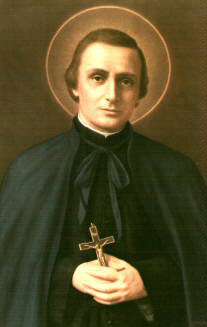 St. Peter Chanel: Saint of the Day for Sunday, April 28, 2024
 Prayer before a Crucifix: Prayer of the Day for Sunday, April 28, 2024


Copyright 2024 Catholic Online. All materials contained on this site, whether written, audible or visual are the exclusive property of Catholic Online and are protected under U.S. and International copyright laws, © Copyright 2024 Catholic Online. Any unauthorized use, without prior written consent of Catholic Online is strictly forbidden and prohibited.
Catholic Online is a Project of Your Catholic Voice Foundation, a Not-for-Profit Corporation. Your Catholic Voice Foundation has been granted a recognition of tax exemption under Section 501(c)(3) of the Internal Revenue Code. Federal Tax Identification Number: 81-0596847. Your gift is tax-deductible as allowed by law.
