 Hi readers, it seems you use Catholic Online a lot; that's great! It's a little awkward to ask, but we need your help. If you have already donated, we sincerely thank you. We're not salespeople, but we depend on donations averaging $14.76 and fewer than 1% of readers give. If you donate just $5.00, the price of your coffee, Catholic Online School could keep thriving. Thank you. Help Now >
Council of Rimini
FREE Catholic Classes
The second Formula of Sirmium (357) stated the doctrine of the Anomoeans, or extreme Arians. Against this the Semi-Arian bishops, assembled at Ancyra, the episcopal city of their leader Basilius, issued a counter formula, asserting that the Son is in all things like the Father, afterwards approved by the Third Synod of Sirmium (358). This formula, though silent on the term "homousios" , consecrated by the Council of Nicaea, was signed by a few orthodox bishops, and probably by Pope Liberius, being, in fact, capable of an orthodox interpretation. The Emperor Constantius cherished at that time the hope of restoring peace between the orthodox and the Semi-Arians by convoking a general council. Failing to convene one either at Nicaea or at Nicomedia, he was persuaded by Patrophilus, Bishop of Scythopolis, and Narcissus, Bishop of Neronias, to hold two synods, one for the East at Seleucia, in Isauria, the other for the West at Rimini, a proceeding justified by diversity of language and by expense. Before the convocation of the councils, Ursacius and Valens had Marcus, Bishop of Arethusa, designated to draft a formula (the Fourth of Sirmium ) to be submitted to the two synods. It declared that the Son was born of the Father before all ages (agreeing so far with the Third Formula); but it added that when God is spoken of, the word ousia , "essence ', should be avoided, not being found in Scripture and being a cause of scandal to the faithful; by this step they intended to exclude the similarity of essence.
The Council of Rimini was opened early in July, 359, with over four hundred bishops. About eighty Semi-Arians, including Ursacius, Germinius, and Auxentius, withdrew from the orthodox bishops, the most eminent of whom was Restitutus of Carthage; Liberius, Eusebius, Dionysius, and others were still in exile. The two parties sent separate deputations to the emperor, the orthodox asserting clearly their firm attachment to the faith of Nicaea, while the Arian minority adhered to the imperial formula. But the inexperienced representatives of the orthodox majority allowed themselves to be deceived, and not only entered into communion with the heretical delegates, but even subscribed, at, Nice in Thrace, a formula to the effect merely that the Son is like the Father according to the Scriptures (the words "in all things" being omitted). On their return to Rimini, they were met with the unanimous protests of their colleagues. But the threats of the consul Taurus, the remonstrances of the Semi-Arians against hindering peace between East and West for a word not contained in Scripture, their privations and their homesickness--all combined to weaken the constancy of the orthodox bishops. And the last twenty were induced to subscribe when Ursacius had an addition made to the formula of Nice, declaring that the Son is not a creature like other creatures. Pope Liberius, having regained his liberty, rejected this formula, which was thereupon repudiated by many who had signed it. In view of the hasty manner of its adoption and the 1ack of approbation by the Holy See, it could have no authority. In any case, the council was a sudden defeat of orthodoxy, and St. Jerome could say: "The whole world groaned in astonishment to find itself Arian ".
Join the Movement
When you sign up below, you don't just join an email list - you're joining an entire movement for Free world class Catholic education.


-

-
Mysteries of the Rosary
-
St. Faustina Kowalska
-
Litany of the Blessed Virgin Mary
-
Saint of the Day for Wednesday, Oct 4th, 2023
-
Popular Saints
-
St. Francis of Assisi
-
Bible
-
Female / Women Saints
-
7 Morning Prayers you need to get your day started with God
-
Litany of the Blessed Virgin Mary

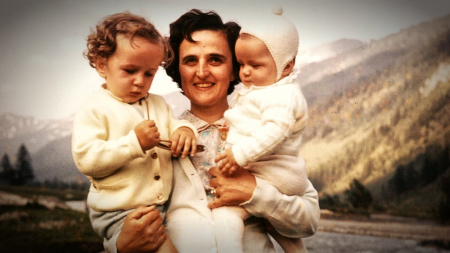
Sacrifices of Faith: The Pro-Life Legacies of St. Gianna and Jessica Hanna
-
How to love God by caring for our bodies
-
Pope Francis calls for negotiations to End Russia-Ukraine War
-
Pope Francis Contemplates Return to U.S. for United Nations Assembly Address
-
Pope Francis Calls on Faithful to Embrace Faith, Hope, and Charity in New Teaching Series


Daily Catholic
- Daily Readings for Sunday, April 28, 2024
- St. Peter Chanel: Saint of the Day for Sunday, April 28, 2024
- Prayer before a Crucifix: Prayer of the Day for Sunday, April 28, 2024
- Daily Readings for Saturday, April 27, 2024
- St. Zita: Saint of the Day for Saturday, April 27, 2024
- Prayer for the Dead # 2: Prayer of the Day for Saturday, April 27, 2024
 Daily Readings for Sunday, April 28, 2024
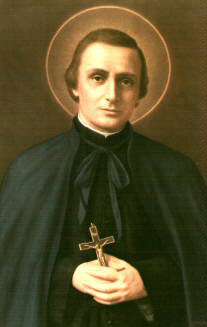 St. Peter Chanel: Saint of the Day for Sunday, April 28, 2024
 Prayer before a Crucifix: Prayer of the Day for Sunday, April 28, 2024
We ask you, humbly: don't scroll away.
Hi readers, it seems you use Catholic Online a lot; that's great! It's a little awkward to ask, but we need your help. If you have already donated, we sincerely thank you. We're not salespeople, but we depend on donations averaging $14.76 and fewer than 1% of readers give. If you donate just $5.00, the price of your coffee, Catholic Online School could keep thriving. Thank you.Help Now >


Copyright 2024 Catholic Online. All materials contained on this site, whether written, audible or visual are the exclusive property of Catholic Online and are protected under U.S. and International copyright laws, © Copyright 2024 Catholic Online. Any unauthorized use, without prior written consent of Catholic Online is strictly forbidden and prohibited.
Catholic Online is a Project of Your Catholic Voice Foundation, a Not-for-Profit Corporation. Your Catholic Voice Foundation has been granted a recognition of tax exemption under Section 501(c)(3) of the Internal Revenue Code. Federal Tax Identification Number: 81-0596847. Your gift is tax-deductible as allowed by law.