Because of You, 2.2 Million Students Are Being Formed in the Faith
Because of generous supporters like you, Catholic Online School has already delivered free, faithful Catholic education to over 2.2 million students across 193 countries. In an age of noise and algorithms, you are helping form souls with truth, prayer, Scripture, and Christ.
If everyone who reads this gave just $5 — the cost of a coffee — we could reach even more families and keep this life-changing formation free for all. Be Courageous. Be Catholic. Stand with us today.
DONATE TODAY >>Sacraments of the Catholic Church
Seven Sacraments
Shop the Seven Sacraments
The liturgical life of the Catholic Church revolves around the Eucharistic sacrifice and the sacraments. There are seven sacraments in the Church: Baptism, Confirmation, Eucharist, Penance, Anointing of the Sick, Matrimony, and Holy Orders.
The purpose of the sacraments is to make people holy, to build up the body of Christ, and finally, to give worship to God; but being signs, they also have a teaching function. They not only presuppose faith, but by words and object, they also nourish, strengthen, and express it; that is why they are called "sacraments of faith." The sacraments impart grace, but, in addition, the very act of celebrating them disposes the faithful most effectively to receive this grace in a fruitful manner, to worship God rightly, and to practice charity.
Worship is integral to our lives as Christians. When we engage in the prayer and ritual of the Church, we are formed as Church. Our sacramental rites are of primary importance while we are gathered.
The history of human salvation is the history of the way God came to men. The first step on this way was the bridging of the gulf separating God and man in the person of the one Mediator Jesus Christ and by his work of redemption. By means of his Church Christ makes his grace available to all. Only in this application of redemption to mankind is the redemptive action of Christ completed. The doctrine of the sacraments is the doctrine of the second part of God's way of salvation to us. It deals with the holy signs which Christ instituted as the vehicles of his grace.
The great mystery of the union in Christ of a human nature with the second Person of the Godhead is that the human actions and sufferings of Christ are divine actions and sufferings. The sacraments are a living continuation of this mystery. There are earthly, external signs here which, of themselves, could never acquire any supernatural significance, but the signs of the sacraments have been made by Christ into vehicles of his grace. They effect in men the grace for which Christ made them the sign.
So there are two fundamental ideas which constantly recur in the Church's teaching, on the sacraments. First there is the Church's concern for these instituted by Christ, their number, and their proper preservation and administration; then the grace which Christ has for all time linked with these signs and which is communicated by them.
The second is the effect of the sacraments. They are the signs of Christ's work; the effectiveness of Christ's continuing work in his Church cannot be dependent on man's inadequacy. A sacrament, administered properly in the way established by Christ and with the proper intention, gives the grace it signifies. It is effective not by reason of the power of intercession of priestly prayer nor on account of the worthiness of the recipient, but solely by the power of Christ. The power of Christ lives in the sacraments. The effect of the sacrament is independent of the sinfulness or unworthiness of the minister. The Church has never tolerated any subjective qualification of the objective effectiveness of the sacraments ex opere operato. This would ultimately be to conceive the way of salvation as being man's way to God and not God's way to man.
The Church Thus Teaches: There are seven sacraments. They were instituted by Christ and given to the Church to administer. They are necessary for salvation. The sacraments are the vehicles of grace which they convey. They are validly administered by the carrying out of the sign with the proper intention. Not all are equally qualified to administer all the sacraments. The validity of the sacrament is independent of the worthiness of the minister. Three sacraments imprint an indelible character.
Sacramentals are instituted by the Church and are effective by virtue of the Church's intercession. Institution and alteration of them is reserved to the Holy See.
Although it is not a sacrament, Christian Burial will be addressed in this section.
Baptism
Baptism, the first and fundamental sacrament and the gate to the other sacraments, is the purifying and sanctifying sacrament of rebirth. It is the means by which its recipients are incorporated into the church in a sacramental bond of unity.
Confirmation
By a signing with the gift of the Spirit, confirmation enriches the baptized with the Holy Spirit, binding them more perfectly to the Church, and strengthening them in their witness to Christ by word and deed and in their work to bring to its fullness the Body of Christ. Confirmation is conferred through anointing with chrism and the laying on of hands.
Eucharist
The Eucharist is the most august sacrament, in which Christ himself is contained, offered and received, and by which the Church constantly lives and grows. The Eucharistic Sacrifice, the memorial of the death and resurrection of the Lord, in which the sacrifice of the cross is perpetuated over the centuries, is the summit and source of all Christian life and worship; it signifies and effects the unity of the people of God and achieves the building up of the Body of Christ.
As children reach the age of reason, generally around age seven, the Church extends to them an invitation to celebrate the sacrament of Eucharist. The initiation into the Christian community that took place at baptism is further extended by inviting children to enter fully into the heart of Christian faith through participation in the Eucharist.
Penance
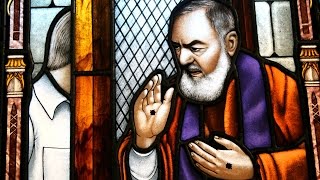
Through penance, the faithful receive pardon through God's mercy for the sins they have committed. At the same time, they are reconciled with the Church community. The confession, or disclosure, of sins frees us and facilitates our reconciliation with others.
Anointing of the Sick
Through the sacrament of anointing, Christ strengthens the faithful who are afflicted by illness, providing them with the strongest means of support. Jesus showed great concern for the bodily and spiritual welfare of the sick and commanded his followers to do the same. The celebration of this sacrament is an opportunity for the deepening of the faith of the community who are able to witness the faith and devotion of those being anointed.
Marriage
The Church has a rich tradition in its teaching on sacramental marriage and covenantal union. The Old Testament authors write of God making a covenant with the chosen people and promising them that they will never be forsaken. The New Testament authors write of Jesus as the new covenant and compare the relationship of Jesus with the Church to the relationship of a husband and wife. The matrimonial covenant, by which a man and a woman establish between themselves a partnership for the whole of life, is by its nature ordered toward the good of the spouses and the procreation and education of offspring.
Holy Orders
Holy Orders is the sacrament by which bishops, priests and deacons are ordained and receive the power and grace to perform their sacred duties. The sacred rite by which orders are conferred is called ordination. The apostles were ordained by Jesus at the Last Supper so that others could share in his priesthood.
Christian Burial
The Church asks spiritual assistance for the departed, honors their bodies, and at the same time brings solace of hope to the living. The celebration of the Christian funeral brings hope and consolation to the living. While proclaiming the Gospel of Jesus Christ and witnessing to the Christian hope in the resurrection, the funeral rites also recall to all who take part in them God's mercy and judgement and meet the human need to turn always to God in times of crisis.
Rite of Christian Initiation of Adults
The Rite of Christian Initiation of Adults includes the celebration of the sacraments of baptism, confirmation and Eucharist, but also all of the rites of the catechumenate. The initiation of adults is a gradual process that takes place within the community of the faithful.
Together with the catechumens, the faithful reflect upon the value of the paschal mystery, renew their own conversion, and by their example lead the catechumens to obey the Holy Spirit more generously.
More Prayers
Need Prayer? Pray With Father James
Donate Now
Keep This Prayer Resource Free
Your support helps millions encounter Christ through prayer every day.


Advent Prayers
Angel Prayers
Ash Wednesday Prayers
Babies Prayers
Baptism Prayers
Basic Prayers
Biblical Prayers
Birthday Prayers
Career Prayers
Children Prayers
Christ Prayers
Christmas Prayers
Communion Prayers
Confession Prayers
Congregation of the Blessed Sacrament Prayers
Consolation Prayers
Crucifix Prayers
Danger Prayers
Devotion Prayers
Disasters Prayers
Divinity Prayers
Dying Prayers
Easter Prayers
en Español Prayers
Evening Prayers
Faith Prayers
Family Prayers
Forgiveness Prayers
God Prayers
Grace Prayers
Guardian Angel Prayers
Guidance Prayers
Haiku Prayers
Healing Prayers
Holiday Prayers
Holiness Prayers
Holy Spirit Prayers
Home Prayers
Hope Prayers
Inspiration Prayers
Intercession Prayers
Invocation Prayers
Jesus Christ Prayers
Lent Prayers
Life Prayers
Litanies Prayers
Love Prayers
Marian (Mary) Prayers
Marriage Prayers
Martyrs Prayers
Mass Prayers
Meals Prayers
Morning Prayers
Motherhood Prayers
Other Prayers
Peace Prayers
Perseverance Prayers
Pope Prayers
Pope Francis I Prayers
Pope Leo XIII Prayers
Pope Pius XII Prayers
Praise Prayers
Prayers as Blessings
Prayers by Pope John Paul II
Prayers by St. Francis de Sales
Prayers for the Pope
Prayers in French
Prayers in German
Prayers in Latin
Prayers in Spanish
Prayers of the Church
Prayers of the Cross
Priests Prayers
Pro Life Prayers
Prosperity Prayers
Protection Prayers
Purgatory Prayers
Repentance Prayers
Requests Prayers
Saint Prayers
Salvation Prayers
Sick Prayers
Special Intentions Prayers
St. Anthony of Padua Prayers
St. Gregory the Great Prayers
St. Joseph Prayers
St. Patrick Prayers
St. Valentine Prayers
Stewardship Prayers
Strength Prayers
Study Prayers
Thanks Prayers
The Rosary in Croation
The Rosary in Dutch
The Rosary in English
The Rosary in French
The Rosary in German
The Rosary in Irish-Gaelic
The Rosary in Italian
The Rosary in Latin
The Rosary in Polish
Travel Prayers
Trust Prayers
Virtue Prayers
Vocation Prayers
Wedding Prayers
Wisdom Prayers
Come Grow With Us
Sign up and walk the Catholic journey with millions around the world.
Receive inspiring emails on saints, daily readings, and free faith-building resources—no cost, ever.
Catholic Online Is Free. But We Need Your Help.
Please Watch
- 7 Morning Prayers
- Mysteries of the Rosary
- Litany of the Bl. Virgin Mary
- Popular Saints
- Popular Prayers
- Female Saints
- Saint Feast Days by Month
- Stations of the Cross
- St. Francis of Assisi
- St. Michael the Archangel
- The Apostles' Creed
- Unfailing Prayer to St. Anthony
- Pray the Rosary








Copyright 2026 Catholic Online. All materials contained on this site, whether written, audible or visual are the exclusive property of Catholic Online and are protected under U.S. and International copyright laws, © Copyright 2026 Catholic Online. Any unauthorized use, without prior written consent of Catholic Online is strictly forbidden and prohibited.
Catholic Online is a Project of Your Catholic Voice Foundation, a Not-for-Profit Corporation. Your Catholic Voice Foundation has been granted a recognition of tax exemption under Section 501(c)(3) of the Internal Revenue Code. Federal Tax Identification Number: 81-0596847. Your gift is tax-deductible as allowed by law.