Commentary on Artificial Hydration and Nutrition
FREE Catholic Classes
The Sick "Have the Right to Basic Health Care"
VATICAN CITY, SEPT. 16, 2007 (Zenit) - Here is a commentary issued today by the Congregation for the Doctrine of the Faith on "Responses to Certain Questions of the United States Conference of Catholic Bishops Concerning Artificial Nutrition and Hydration."
* * *
The Congregation for the Doctrine of the Faith has formulated responses to questions presented by His Excellency the Most Reverend William S. Skylstad, president of the United States Conference of Catholic Bishops, in a letter of July 11, 2005, regarding the nutrition and hydration of patients in the condition commonly called a "vegetative state."
The object of the questions was whether the nutrition and hydration of such patients, especially if provided by artificial means, would constitute an excessively heavy burden for the patients, for their relatives, or for the health care system, to the point where it could be considered, also in the light of the moral teaching of the Church, a means that is extraordinary or disproportionate and therefore not morally obligatory.
The address of Pope Pius XII to a congress on anesthesiology, given on Nov. 24, 1957, is often invoked in favor of the possibility of abandoning the nutrition and hydration of such patients. In this address, the Pope restated two general ethical principles. On the one hand, natural reason and Christian morality teach that, in the case of a grave illness, the patient and those caring for him or her have the right and the duty to provide the care necessary to preserve health and life.

On the other hand, this duty in general includes only the use of those means which, considering all the circumstances, are ordinary, that is to say, which do not impose an extraordinary burden on the patient or on others. A more severe obligation would be too burdensome for the majority of persons and would make it too difficult to attain more important goods. Life, health and all temporal activities are subordinate to spiritual ends. Naturally, one is not forbidden to do more than is strictly obligatory to preserve life and health, on condition that one does not neglect more important duties.
One should note, first of all, that the answers given by Pius XII referred to the use and interruption of techniques of resuscitation. However, the case in question has nothing to do with such techniques. Patients in a "vegetative state" breathe spontaneously, digest food naturally, carry on other metabolic functions, and are in a stable situation. But they are not able to feed themselves. If they are not provided artificially with food and liquids, they will die, and the cause of their death will be neither an illness nor the "vegetative state" itself, but solely starvation and dehydration.
At the same time, the artificial administration of water and food generally does not impose a heavy burden either on the patient or on his or her relatives. It does not involve excessive expense; it is within the capacity of an average health care system, does not of itself require hospitalization, and is proportionate to accomplishing its purpose, which is to keep the patient from dying of starvation and dehydration. It is not, nor is it meant to be, a treatment that cures the patient, but is rather ordinary care aimed at the preservation of life.
What may become a notable burden is when the "vegetative state" of a family member is prolonged over time. It is a burden like that of caring for a quadriplegic, someone with serious mental illness, with advanced Alzheimer's disease, and so on. Such persons need continuous assistance for months or even for years. But the principle formulated by Pius XII cannot, for obvious reasons, be interpreted as meaning that in such cases those patients, whose ordinary care imposes a real burden on their families, may licitly be left to take care of themselves and thus abandoned to die. This is not the sense in which Pius XII spoke of extraordinary means.

Everything leads to the conclusion that the first part of the principle enunciated by Pius XII should be applied to patients in a "vegetative state": in the case of a serious illness, there is the right and the duty to provide the care necessary for preserving health and life. The development of the teaching of the Church's magisterium, which has closely followed the progress of medicine and the questions which this has raised, fully confirms this conclusion.
The Declaration on Euthanasia, published by the Congregation for the Doctrine of the Faith on May 5, 1980, explained the distinction between proportionate and disproportionate means, and between therapeutic treatments and the normal care due to the sick person: "When inevitable death is imminent in spite of the means used, it is permitted in conscience to take the decision to refuse forms of treatment that would only secure a precarious and burdensome prolongation of life, so long as the normal care due to the sick person in similar cases is not interrupted" (Part IV).
Still less can one interrupt the ordinary means of care for patients who are not facing an imminent death, as is generally the case of those in a "vegetative state"; for these people, it would be precisely the interruption of the ordinary means of care which would be the cause of their death.
On June 27, 1981, the Pontifical Council Cor Unum published a document entitled "Some Ethical Questions Relating to the Gravely Ill and the Dying," in which, among other things, it is stated, "There remains the strict obligation to administer at all costs those means which are called 'minimal': that is, those that normally and in usual conditions are aimed at maintaining life (nourishment, blood transfusions, injections, etc.). The discontinuation of these minimal measures would mean in effect willing the end of the patient's life" (No. 2.4.4.).
In an address to participants in an international course on forms of human preleukemia on Nov. 15, 1985, Pope John Paul II, recalling the Declaration on Euthanasia, stated clearly that, in virtue of the principle of proportionate care, one may not relinquish "the commitment to valid treatment for sustaining life nor assistance with the normal means of preserving life," which certainly includes the administration of food and liquids. The Pope also noted that those omissions are not licit which are aimed "at shortening life in order to spare the patient or his family from suffering."
In 1995 the Pontifical Council for Pastoral Assistance to Health Care Workers published the Charter for Health Care Workers, paragraph 120 of which explicitly affirms: "The administration of food and liquids, even artificially, is part of the normal treatment always due to the patient when this is not burdensome for him or her; their undue interruption can have the meaning of real and true euthanasia."
The Address of John Paul II to a group of bishops from the United States of America on a visit "ad limina," on Oct. 2, 1998, is quite explicit: Nutrition and hydration are to be considered as normal care and ordinary means for the preservation of life. It is not acceptable to interrupt them or to withhold them, if from that decision the death of the patient will follow. This would be euthanasia by omission (cf. No. 4).
In his address of March 20, 2004, to the participants of an international congress on "Life-sustaining Treatments and the Vegetative State: Scientific Progress and Ethical Dilemmas," John Paul II confirmed in very clear terms what had been said in the documents cited above, clarifying also their correct interpretation. The Pope stressed the following points:
1) "The term permanent vegetative state has been coined to indicate the condition of those patients whose 'vegetative state' continues for over a year. Actually, there is no different diagnosis that corresponds to such a definition, but only a conventional prognostic judgment, relative to the fact that the recovery of patients, statistically speaking, is ever more difficult as the condition of vegetative state is prolonged in time" (No. 2).[1]
2) In response to those who doubt the "human quality" of patients in a "permanent vegetative state," it is necessary to reaffirm that "the intrinsic value and personal dignity of every human being do not change, no matter what the concrete circumstances of his or her life. A man, even if seriously ill or disabled in the exercise of his highest functions, is and always will be a man, and he will never become a 'vegetable' or an 'animal'" (No. 3).
3) "The sick person in a vegetative state, awaiting recovery or a natural end, still has the right to basic health care (nutrition, hydration, cleanliness, warmth, etc.), and to the prevention of complications related to his confinement to bed. He also has the right to appropriate rehabilitative care and to be monitored for clinical signs of possible recovery. I should like particularly to underline how the administration of water and food, even when provided by artificial means, always represents a natural means of preserving life, not a medical act. Its use, furthermore, should be considered, in principle, ordinary and proportionate, and as such morally obligatory, to the extent to which, and for as long as, it is shown to accomplish its proper finality, which in the present case consists in providing nourishment to the patient and alleviation of his suffering" (No. 4).
We ask you, humbly: don't scroll away.
Hi readers, it seems you use Catholic Online a lot; that's great! It's a little awkward to ask, but we need your help. If you have already donated, we sincerely thank you. We're not salespeople, but we depend on donations averaging $14.76 and fewer than 1% of readers give. If you donate just $5.00, the price of your coffee, Catholic Online School could keep thriving. Thank you.Help Now >
4) The preceding documents were taken up and interpreted in this way: "The obligation to provide the 'normal care due to the sick in such cases' (Congregation for the Doctrine of the Faith, Declaration on Euthanasia, p. IV) includes, in fact, the use of nutrition and hydration (cf. Pontifical Council Cor Unum, "Some Ethical Questions Relating to the Gravely Ill and the Dying," No. 2, 4, 4; Pontifical Council for Pastoral Assistance to Health Care Workers, Charter for Health Care Workers, No. 120).
The evaluation of probabilities, founded on waning hopes for recovery when the vegetative state is prolonged beyond a year, cannot ethically justify the cessation or interruption of minimal care for the patient, including nutrition and hydration. Death by starvation or dehydration is, in fact, the only possible outcome as a result of their withdrawal. In this sense it ends up becoming, if done knowingly and willingly, true and proper euthanasia by omission" (No. 4).
Therefore, the responses now given by the Congregation for the Doctrine of the Faith continue the direction of the documents of the Holy See cited above, and in particular the Address of John Paul II of March 20, 2004. The basic points are two.
It is stated, first of all, that the provision of water and food, even by artificial means, is in principle an ordinary and proportionate means of preserving life for patients in a "vegetative state": "It is therefore obligatory, to the extent to which, and for as long as, it is shown to accomplish its proper finality, which is the hydration and nourishment of the patient."
It is made clear, secondly, that this ordinary means of sustaining life is to be provided also to those in a "permanent vegetative state," since these are persons with their fundamental human dignity.
When stating that the administration of food and water is morally obligatory in principle, the Congregation for the Doctrine of the Faith does not exclude the possibility that, in very remote places or in situations of extreme poverty, the artificial provision of food and water may be physically impossible, and then "ad impossibilia nemo tenetur."
However, the obligation to offer the minimal treatments that are available remains in place, as well as that of obtaining, if possible, the means necessary for an adequate support of life. Nor is the possibility excluded that, due to emerging complications, a patient may be unable to assimilate food and liquids, so that their provision becomes altogether useless. Finally, the possibility is not absolutely excluded that, in some rare cases, artificial nourishment and hydration may be excessively burdensome for the patient or may cause significant physical discomfort, for example resulting from complications in the use of the means employed.
 Hi readers, it seems you use Catholic Online a lot; that's great! It's a little awkward to ask, but we need your help. If you have already donated, we sincerely thank you. We're not salespeople, but we depend on donations averaging $14.76 and fewer than 1% of readers give. If you donate just $5.00, the price of your coffee, Catholic Online School could keep thriving. Thank you. Help Now >
These exceptional cases, however, take nothing away from the general ethical criterion, according to which the provision of water and food, even by artificial means, always represents a natural means for preserving life, and is not a therapeutic treatment. Its use should therefore be considered ordinary and proportionate, even when the "vegetative state" is prolonged.
[1] Terminology concerning the different phases and forms of the "vegetative state" continues to be discussed, but this is not important for the moral judgment involved.
[Original text: English]
Contact
Catholic Online
https://www.catholic.org
CA, US
Catholic Online - Publisher, 661 869-1000
info@yourcatholicvoice.org
Keywords
Vatican, Dignity, Artificial, Vegetative, Hydration

More Catholic PRWire
Showing 1 - 50 of 4,716
A Recession Antidote
Randy Hain
Monaco & The Vatican: Monaco's Grace Kelly Exhibit to Rome--A Review of Monegasque-Holy See Diplomatic History
Dna. Maria St. Catherine Sharpe, t.o.s.m., T.O.SS.T.
The Why of Jesus' Death: A Pauline Perspective
Jerom Paul
A Royal Betrayal: Catholic Monaco Liberalizes Abortion
Dna. Maria St.Catherine De Grace Sharpe, t.o.s.m., T.O.SS.T.
Embrace every moment as sacred time
Mary Regina Morrell
My Dad
JoMarie Grinkiewicz
Letting go is simple wisdom with divine potential
Mary Regina Morrell
Father Lombardi's Address on Catholic Media
Catholic Online
Pope's Words to Pontifical Latin American College
Catholic Online
Prelate: Genetics Needs a Conscience
Catholic Online
State Aid for Catholic Schools: Help or Hindrance?
Catholic Online
Scorsese Planning Movie on Japanese Martyrs
Catholic Online
2 Nuns Kidnapped in Kenya Set Free
Catholic Online
Holy See-Israel Negotiation Moves Forward
Catholic Online
Franchising to Evangelize
Catholic Online
Catholics Decry Anti-Christianity in Israel
Catholic Online
Pope and Gordon Brown Meet About Development Aid
Catholic Online
Pontiff Backs Latin America's Continental Mission
Catholic Online
Cardinal Warns Against Anti-Catholic Education
Catholic Online
Full Circle
Robert Gieb

Three words to a deeper faith
Paul Sposite
Relections for Lent 2009
chris anthony
Wisdom lies beyond the surface of life
Mary Regina Morrell
World Food Program Director on Lent
Catholic Online
Moral Clarity
DAN SHEA
Pope's Lenten Message for 2009
Catholic Online
A Prayer for Monaco: Remembering the Faith Legacy of Prince Rainier III & Princess Grace and Contemplating the Moral Challenges of Prince Albert II
Dna. Maria St. Catherine Sharpe
Keeping a Lid on Permissiveness
Sally Connolly
Glimpse of Me
Sarah Reinhard
The 3 stages of life
Michele Szekely
Sex and the Married Woman
Cheryl Dickow
A Catholic Woman Returns to the Church
Cheryl Dickow
Modernity & Morality
Dan Shea
Just a Minute
Sarah Reinhard
Catholic identity ... triumphant reemergence!
Hugh McNichol
Edging God Out
Paul Sposite
Burying a St. Joseph Statue
Cheryl Dickow
George Bush Speaks on Papal Visit
Catholic Online
Sometimes moving forward means moving the canoe
Mary Regina Morrell
Action Changes Things: Teaching our Kids about Community Service
Lisa Hendey
We ask you, humbly: don't scroll away.
Hi readers, it seems you use Catholic Online a lot; that's great! It's a little awkward to ask, but we need your help. If you have already donated, we sincerely thank you. We're not salespeople, but we depend on donations averaging $14.76 and fewer than 1% of readers give. If you donate just $5.00, the price of your coffee, Catholic Online School could keep thriving. Thank you.Help Now >
Easter... A Way of Life
Paul Spoisite
Papal initiative...peace and harmony!
Hugh McNichol
Proclaim the mysteries of the Resurrection!
Hugh McNichol
Jerusalem Patriarch's Easter Message
Catholic Online
Good Friday Sermon of Father Cantalamessa
Catholic Online
Papal Address at the End of the Way of the Cross
Catholic Online
Cardinal Zen's Meditations for Via Crucis
Catholic Online
Interview With Vatican Aide on Jewish-Catholic Relations
Catholic Online
Pope Benedict XVI On the Easter Triduum
Catholic Online
Holy Saturday...anticipation!
Hugh McNichol

Join the Movement
When you sign up below, you don't just join an email list - you're joining an entire movement for Free world class Catholic education.


-

-
Mysteries of the Rosary
-
St. Faustina Kowalska
-
Litany of the Blessed Virgin Mary
-
Saint of the Day for Wednesday, Oct 4th, 2023
-
Popular Saints
-
St. Francis of Assisi
-
Bible
-
Female / Women Saints
-
7 Morning Prayers you need to get your day started with God
-
Litany of the Blessed Virgin Mary


Three things that should be in every Catholic home - How many do you have?
-
Encouraging Scripture for the Single Mom on Mother's Day
-
New York Judge Halts Constitutional Amendment on Abortion Due to Procedural Flaws
-
Special Ways to Celebrate Mom This Mother's Day
-
Discalced Carmelites ask for Edith Stein to be declared 'Doctor of Truth'


Daily Catholic
- Daily Readings for Friday, May 10, 2024
- St. Damien of Molokai: Saint of the Day for Friday, May 10, 2024
- Prayer to St. Gabriel, for Others: Prayer of the Day for Friday, May 10, 2024
- Daily Readings for Thursday, May 09, 2024
- St. Pachomius: Saint of the Day for Thursday, May 09, 2024
- Prayer for Travelers: Prayer of the Day for Thursday, May 09, 2024
 Daily Readings for Friday, May 10, 2024
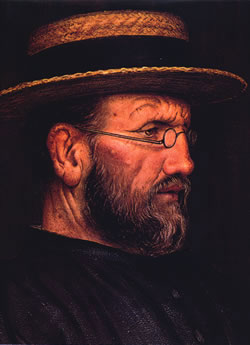 St. Damien of Molokai: Saint of the Day for Friday, May 10, 2024
 Prayer to St. Gabriel, for Others: Prayer of the Day for Friday, May 10, 2024

Copyright 2024 Catholic Online. All materials contained on this site, whether written, audible or visual are the exclusive property of Catholic Online and are protected under U.S. and International copyright laws, © Copyright 2024 Catholic Online. Any unauthorized use, without prior written consent of Catholic Online is strictly forbidden and prohibited.
Catholic Online is a Project of Your Catholic Voice Foundation, a Not-for-Profit Corporation. Your Catholic Voice Foundation has been granted a recognition of tax exemption under Section 501(c)(3) of the Internal Revenue Code. Federal Tax Identification Number: 81-0596847. Your gift is tax-deductible as allowed by law.