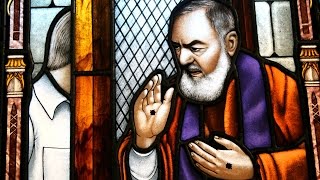
Explanatory Letter on 'Summorum Pontificum'
FREE Catholic Classes
"Growth and Progress, But no Rupture"
JULY 9, 2007 (Zenit) - Here is the Vatican translation of the letter Benedict XVI addressed to all the bishops of the world concerning his apostolic letter issued "motu proprio," "Summorum Pontificum," which was published Sunday.
* * *
LETTER OF HIS HOLINESS
BENEDICT XVI
TO THE BISHOPS ON THE OCCASION OF THE PUBLICATION
OF THE APOSTOLIC LETTER "MOTU PROPRIO DATA"
SUMMORUM PONTIFICUM
ON THE USE OF THE ROMAN LITURGY
PRIOR TO THE REFORM OF 1970
My dear Brother Bishops,
With great trust and hope, I am consigning to you as Pastors the text of a new Apostolic Letter "Motu Proprio data" on the use of the Roman liturgy prior to the reform of 1970. The document is the fruit of much reflection, numerous consultations and prayer.
News reports and judgments made without sufficient information have created no little confusion. There have been very divergent reactions ranging from joyful acceptance to harsh opposition, about a plan whose contents were in reality unknown.
This document was most directly opposed on account of two fears, which I would like to address somewhat more closely in this letter.
In the first place, there is the fear that the document detracts from the authority of the Second Vatican Council, one of whose essential decisions -- the liturgical reform -- is being called into question. This fear is unfounded. In this regard, it must first be said that the Missal published by Paul VI and then republished in two subsequent editions by John Paul II, obviously is and continues to be the normal Form -- the "Forma ordinaria" -- of the Eucharistic liturgy. The last version of the "Missale Romanum" prior to the Council, which was published with the authority of Pope John XXIII in 1962 and used during the Council, will now be able to be used as a "Forma extraordinaria" of the liturgical celebration. It is not appropriate to speak of these two versions of the Roman Missal as if they were "two Rites". Rather, it is a matter of a twofold use of one and the same rite.
We ask you, humbly: don't scroll away.
Hi readers, it seems you use Catholic Online a lot; that's great! It's a little awkward to ask, but we need your help. If you have already donated, we sincerely thank you. We're not salespeople, but we depend on donations averaging $14.76 and fewer than 1% of readers give. If you donate just $5.00, the price of your coffee, Catholic Online School could keep thriving. Thank you.Help Now >
As for the use of the 1962 Missal as a "Forma extraordinaria" of the liturgy of the Mass, I would like to draw attention to the fact that this Missal was never juridically abrogated and, consequently, in principle, was always permitted. At the time of the introduction of the new Missal, it did not seem necessary to issue specific norms for the possible use of the earlier Missal. Probably it was thought that it would be a matter of a few individual cases which would be resolved, case by case, on the local level. Afterwards, however, it soon became apparent that a good number of people remained strongly attached to this usage of the Roman Rite, which had been familiar to them from childhood. This was especially the case in countries where the liturgical movement had provided many people with a notable liturgical formation and a deep, personal familiarity with the earlier Form of the liturgical celebration. We all know that, in the movement led by Archbishop Lefebvre, fidelity to the old Missal became an external mark of identity; the reasons for the break which arose over this, however, were at a deeper level. Many people who clearly accepted the binding character of the Second Vatican Council, and were faithful to the Pope and the Bishops, nonetheless also desired to recover the form of the sacred liturgy that was dear to them. This occurred above all because in many places celebrations were not faithful to the prescriptions of the new Missal, but the latter actually was understood as authorizing or even requiring creativity, which frequently led to deformations of the liturgy which were hard to bear. I am speaking from experience, since I too lived through that period with all its hopes and its confusion. And I have seen how arbitrary deformations of the liturgy caused deep pain to individuals totally rooted in the faith of the Church.
Pope John Paul II thus felt obliged to provide, in his Motu Proprio "Ecclesia Dei" (2 July 1988), guidelines for the use of the 1962 Missal; that document, however, did not contain detailed prescriptions but appealed in a general way to the generous response of Bishops towards the "legitimate aspirations" of those members of the faithful who requested this usage of the Roman Rite. At the time, the Pope primarily wanted to assist the Society of Saint Pius X to recover full unity with the Successor of Peter, and sought to heal a wound experienced ever more painfully. Unfortunately this reconciliation has not yet come about. Nonetheless, a number of communities have gratefully made use of the possibilities provided by the Motu Proprio. On the other hand, difficulties remain concerning the use of the 1962 Missal outside of these groups, because of the lack of precise juridical norms, particularly because Bishops, in such cases, frequently feared that the authority of the Council would be called into question. Immediately after the Second Vatican Council it was presumed that requests for the use of the 1962 Missal would be limited to the older generation which had grown up with it, but in the meantime it has clearly been demonstrated that young persons too have discovered this liturgical form, felt its attraction and found in it a form of encounter with the Mystery of the Most Holy Eucharist, particularly suited to them. Thus the need has arisen for a clearer juridical regulation which had not been foreseen at the time of the 1988 Motu Proprio. The present Norms are also meant to free Bishops from constantly having to evaluate anew how they are to respond to various situations.

In the second place, the fear was expressed in discussions about the awaited Motu Proprio, that the possibility of a wider use of the 1962 Missal would lead to disarray or even divisions within parish communities. This fear also strikes me as quite unfounded. The use of the old Missal presupposes a certain degree of liturgical formation and some knowledge of the Latin language; neither of these is found very often. Already from these concrete presuppositions, it is clearly seen that the new Missal will certainly remain the ordinary Form of the Roman Rite, not only on account of the juridical norms, but also because of the actual situation of the communities of the faithful.
It is true that there have been exaggerations and at times social aspects unduly linked to the attitude of the faithful attached to the ancient Latin liturgical tradition. Your charity and pastoral prudence will be an incentive and guide for improving these. For that matter, the two Forms of the usage of the Roman Rite can be mutually enriching: new Saints and some of the new Prefaces can and should be inserted in the old Missal. The "Ecclesia Dei" Commission, in contact with various bodies devoted to the "usus antiquior," will study the practical possibilities in this regard. The celebration of the Mass according to the Missal of Paul VI will be able to demonstrate, more powerfully than has been the case hitherto, the sacrality which attracts many people to the former usage. The most sure guarantee that the Missal of Paul VI can unite parish communities and be loved by them consists in its being celebrated with great reverence in harmony with the liturgical directives. This will bring out the spiritual richness and the theological depth of this Missal.
I now come to the positive reason which motivated my decision to issue this Motu Proprio updating that of 1988. It is a matter of coming to an interior reconciliation in the heart of the Church. Looking back over the past, to the divisions which in the course of the centuries have rent the Body of Christ, one continually has the impression that, at critical moments when divisions were coming about, not enough was done by the Church's leaders to maintain or regain reconciliation and unity. One has the impression that omissions on the part of the Church have had their share of blame for the fact that these divisions were able to harden. This glance at the past imposes an obligation on us today: to make every effort to unable for all those who truly desire unity to remain in that unity or to attain it anew. I think of a sentence in the Second Letter to the Corinthians, where Paul writes: "Our mouth is open to you, Corinthians; our heart is wide. You are not restricted by us, but you are restricted in your own affections. In return ... widen your hearts also!" (2 Corinthians 6:11-13). Paul was certainly speaking in another context, but his exhortation can and must touch us too, precisely on this subject. Let us generously open our hearts and make room for everything that the faith itself allows.
We ask you, humbly: don't scroll away.
Hi readers, it seems you use Catholic Online a lot; that's great! It's a little awkward to ask, but we need your help. If you have already donated, we sincerely thank you. We're not salespeople, but we depend on donations averaging $14.76 and fewer than 1% of readers give. If you donate just $5.00, the price of your coffee, Catholic Online School could keep thriving. Thank you.Help Now >
There is no contradiction between the two editions of the Roman Missal. In the history of the liturgy there is growth and progress, but no rupture. What earlier generations held as sacred, remains sacred and great for us too, and it cannot be all of a sudden entirely forbidden or even considered harmful. It behooves all of us to preserve the riches which have developed in the Church's faith and prayer, and to give them their proper place. Needless to say, in order to experience full communion, the priests of the communities adhering to the former usage cannot, as a matter of principle, exclude celebrating according to the new books. The total exclusion of the new rite would not in fact be consistent with the recognition of its value and holiness.
In conclusion, dear Brothers, I very much wish to stress that these new norms do not in any way lessen your own authority and responsibility, either for the liturgy or for the pastoral care of your faithful. Each Bishop, in fact, is the moderator of the liturgy in his own Diocese (cf. "Sacrosanctum Concilium," 22: "Sacrae Liturgiae moderatio ab Ecclesiae auctoritate unice pendet quae quidem est apud Apostolicam Sedem et, ad normam iuris, apud Episcopum").
Nothing is taken away, then, from the authority of the Bishop, whose role remains that of being watchful that all is done in peace and serenity. Should some problem arise which the parish priest cannot resolve, the local Ordinary will always be able to intervene, in full harmony, however, with all that has been laid down by the new norms of the Motu Proprio.
Furthermore, I invite you, dear Brothers, to send to the Holy See an account of your experiences, three years after this Motu Proprio has taken effect. If truly serious difficulties come to light, ways to remedy them can be sought.
Dear Brothers, with gratitude and trust, I entrust to your hearts as Pastors these pages and the norms of the Motu Proprio. Let us always be mindful of the words of the Apostle Paul addressed to the presbyters of Ephesus: "Take heed to yourselves and to all the flock, in which the Holy Spirit has made you overseers, to care for the Church of God which he obtained with the blood of his own Son" (Acts 20:28).
I entrust these norms to the powerful intercession of Mary, Mother of the Church, and I cordially impart my Apostolic Blessing to you, dear Brothers, to the parish priests of your dioceses, and to all the priests, your co-workers, as well as to all your faithful.

Given at Saint Peter's, 7 July 2007
BENEDICTUS PP. XVI
© Copyright 2007 -- Libreria Editrice Vaticana
Contact
Catholic Online
https://www.catholic.org
CA, US
Catholic Online - Publisher, 661 869-1000
info@yourcatholicvoice.org
Keywords
Missal, Pope, Letter, Benedict, 1962, Apostolic

More Catholic PRWire
Showing 1 - 50 of 4,716
A Recession Antidote
Randy Hain
Monaco & The Vatican: Monaco's Grace Kelly Exhibit to Rome--A Review of Monegasque-Holy See Diplomatic History
Dna. Maria St. Catherine Sharpe, t.o.s.m., T.O.SS.T.
The Why of Jesus' Death: A Pauline Perspective
Jerom Paul
A Royal Betrayal: Catholic Monaco Liberalizes Abortion
Dna. Maria St.Catherine De Grace Sharpe, t.o.s.m., T.O.SS.T.
Embrace every moment as sacred time
Mary Regina Morrell
My Dad
JoMarie Grinkiewicz
Letting go is simple wisdom with divine potential
Mary Regina Morrell
Father Lombardi's Address on Catholic Media
Catholic Online
Pope's Words to Pontifical Latin American College
Catholic Online
Prelate: Genetics Needs a Conscience
Catholic Online
State Aid for Catholic Schools: Help or Hindrance?
Catholic Online
Scorsese Planning Movie on Japanese Martyrs
Catholic Online
2 Nuns Kidnapped in Kenya Set Free
Catholic Online
Holy See-Israel Negotiation Moves Forward
Catholic Online
Franchising to Evangelize
Catholic Online
Catholics Decry Anti-Christianity in Israel
Catholic Online
Pope and Gordon Brown Meet About Development Aid
Catholic Online
Pontiff Backs Latin America's Continental Mission
Catholic Online
Cardinal Warns Against Anti-Catholic Education
Catholic Online
Full Circle
Robert Gieb

Three words to a deeper faith
Paul Sposite
Relections for Lent 2009
chris anthony
Wisdom lies beyond the surface of life
Mary Regina Morrell
World Food Program Director on Lent
Catholic Online
Moral Clarity
DAN SHEA
Pope's Lenten Message for 2009
Catholic Online
A Prayer for Monaco: Remembering the Faith Legacy of Prince Rainier III & Princess Grace and Contemplating the Moral Challenges of Prince Albert II
Dna. Maria St. Catherine Sharpe
Keeping a Lid on Permissiveness
Sally Connolly
Glimpse of Me
Sarah Reinhard
The 3 stages of life
Michele Szekely
Sex and the Married Woman
Cheryl Dickow
A Catholic Woman Returns to the Church
Cheryl Dickow
Modernity & Morality
Dan Shea
Just a Minute
Sarah Reinhard
Catholic identity ... triumphant reemergence!
Hugh McNichol
Edging God Out
Paul Sposite
Burying a St. Joseph Statue
Cheryl Dickow
George Bush Speaks on Papal Visit
Catholic Online
Sometimes moving forward means moving the canoe
Mary Regina Morrell
Action Changes Things: Teaching our Kids about Community Service
Lisa Hendey
 Hi readers, it seems you use Catholic Online a lot; that's great! It's a little awkward to ask, but we need your help. If you have already donated, we sincerely thank you. We're not salespeople, but we depend on donations averaging $14.76 and fewer than 1% of readers give. If you donate just $5.00, the price of your coffee, Catholic Online School could keep thriving. Thank you. Help Now >
Easter... A Way of Life
Paul Spoisite
Papal initiative...peace and harmony!
Hugh McNichol
Proclaim the mysteries of the Resurrection!
Hugh McNichol
Jerusalem Patriarch's Easter Message
Catholic Online
Good Friday Sermon of Father Cantalamessa
Catholic Online
Papal Address at the End of the Way of the Cross
Catholic Online
Cardinal Zen's Meditations for Via Crucis
Catholic Online
Interview With Vatican Aide on Jewish-Catholic Relations
Catholic Online
Pope Benedict XVI On the Easter Triduum
Catholic Online
Holy Saturday...anticipation!
Hugh McNichol

Join the Movement
When you sign up below, you don't just join an email list - you're joining an entire movement for Free world class Catholic education.



 Daily Readings for Friday, April 26, 2024
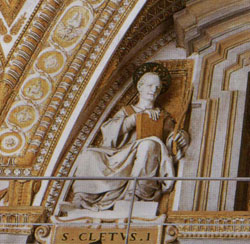 St. Cletus: Saint of the Day for Friday, April 26, 2024
 Prayer before the Closing of the Day: Prayer of the Day for Friday, April 26, 2024