We ask you, urgently: don't scroll past this
Dear readers, May 11–15 is Monthly Giving Week. Monthly recurring donors are vital to keeping our mission alive. After being de-platformed by Shopify for our pro-life beliefs, Catholic Online lost essential services supporting millions of families and now over 2.1 million students worldwide. Our founders, now in their 70’s, gave their entire life savings to protect this mission. But fewer than 2% of readers donate. A monthly gift of just $5 helps rebuild stronger and keep Catholic education free for all. Stand with us in faith. Thank you.Help Now >
On the Message of Christmas
FREE Catholic Classes
"God Has Manifested His Good Will Toward Everyone"
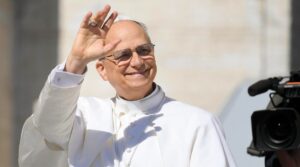
VATICAN CITY, JAN. 2, 2007 (Zenit) - Here is a translation of the address Benedict XVI gave at the general audience last Wednesday, held in Paul VI Hall. The Pope delivered a reflection on the meaning of Christmas.
* * *
Dear Brothers and Sisters:
Today's meeting takes place in the atmosphere of Christmas, permeated by the profound joy of the Savior's birth. We just celebrated, day before yesterday, this mystery, whose echo is prolonged in the liturgy of all these days. It is a mystery of light that the people of every age can relive in faith.
Resounding in our spirit are the words of John the Evangelist, whose feast we celebrate in fact today: "'Et Verbum caro factum est' -- the Word became flesh and dwelt among us" (John 1:14). At Christmas, therefore, God has come to dwell among us, he has come for us, to stay with us. A question runs throughout these two thousand years of Christian history: But why did he do so? Why did God become man?"
The song that the angels intoned in the grotto of Bethlehem helps us to answer this question: "Glory to God in the highest, and on earth peace among men with whom he is pleased!" (Luke 2:14). The canticle of Christmas night, which enters in the Gloria, is now a part of the liturgy as are the other three canticles of the New Testament, which refer to Jesus' birth and infancy: the Benedictus, the Magnificat and the Nunc Dimittis.
While the last three are placed respectively in lauds, in the morning, in the evening prayer of vespers and the night prayer of compline, the Gloria is placed precisely in the holy Mass. Added since the second century to the words of the angels were some acclamations: "We praise you for your great glory, we bless you, we adore you, we glorify you, we give you thanks," and later, other invocations: "Lord God, Lamb of God, Son of the Father, who takes away the sins of the world ..." until formulating a graceful hymn of praise which was sung for the first time in the Christmas Mass and later on all feast days.
Placed at the beginning of the Eucharistic celebration, the Gloria underlines the existing continuity between the birth and death of Christ, between Christmas and Easter, inseparable aspects of the one and only mystery of salvation.
The Gospel recounts that the angelic multitude sang: "Glory to God in the highest, and on earth peace among men with whom he is pleased." The angels announce to the shepherds that Jesus' birth "is" glory for God in the highest heaven; and "is" peace on earth for the men with whom he is pleased.
Appropriately, therefore, these words are usually placed in the grotto as an explanation of the mystery of Christmas, which has taken place in the manger. The term "gloria" (doxa) indicates the splendor of God which arouses the grateful praise of creatures. St. Paul would say: It is "knowledge of the glory of God in the face of Christ" (2 Corinthians 4:6). "Peace" (eirene) synthesizes the fullness of the messianic gifts, the salvation that, as the Apostle also observes, is identified with Christ himself. "He is our peace" (Ephesians 2:14).
And finally is the reference to "men with whom he is pleased." "Good will" (eudokia), in common language, makes one think of the "good will" of men, but here rather is indicated God's "good will" toward men, which knows no limits. Here, therefore, is the message of Christmas: With Jesus' birth, God has manifested his good will toward everyone.
Let us return to the question: "Why did God become man?" St. Irenaeus writes: "The word has become the dispenser of the Father's glory for the usefulness of men.... The glory of God is the living man -- 'vivens homo' -- and the life of man consists in the vision of God" ("Adv. Haer," IV, 20.5.7).
God's glory is manifested, therefore, in the salvation of man, whom God has so loved "who gave him," as John's Gospel affirms, "his only Son so that he who believes in him will not perish, but have eternal life" (John 3:16). So love is the ultimate reason for Christ's incarnation.
Eloquent in this respect is the reflection of the theologian Hans Urs von Balthasar, who wrote: God "is not, in the first place, absolute power, but absolute love whose sovereignty is not manifested in keeping for himself what belongs to him, but in its abandonment" ("Mysterium Paschale," 1,14).
The God we contemplate in the manger is the God-Love. On this point, the proclamation of the angels resounds for us also as an invitation: "May there be glory to God in the highest heaven, may there be on earth peace among men with whom he is pleased."
The only way to glorify God and to build peace in the world consists in the humble and confident acceptance of the gift of Christmas: love. The song of the angels can then become a prayer to utter frequently, and not only in this Christmas season. A hymn of praise to God in the highest heaven and a fervent invocation of peace on earth, which is translated in a concrete commitment to build it with our lives. This is the commitment that Christmas entrusts to us.
[At the end of the audience, the Holy Father greeted pilgrims in several languages. In English, he said:]
Dear Brothers and Sisters,
Our audience today is filled with the joy of Christmas, the mystery of God's eternal word made flesh for our salvation. Down the centuries Christians have contemplated this mystery of light, seeking to understand more fully why God chose to become man.
An answer to this question can be found in the joyful song of the angels on the first Christmas: "Glory to God in the highest, and peace among those whom he favors!" (Luke 2:14).
God's glory, shining on the face of Christ (cf. 2 Corinthians 4:6), brings that peace which is the crowning of his messianic gifts. St. Irenaeus tells us that the word became flesh in order to give us a share in God's glory: "The glory of God is the living man, and the life of man consists in the vision of God" ("Adv. Haer.," 20.5.7).
Ultimately, the Incarnation is the fruit of God's infinite love for humanity; it reveals, in von Balthasar's insightful phrase, that God is not primarily absolute power, but absolute love, a love revealed in the complete gift of himself. May the song of the angels inspire us to give "glory to God" and to build "peace on earth," by humbly receiving the gift that God gives us at Christmas: the gifts of his love, the gift of his Son.

I offer a very cordial welcome to all the English-speaking pilgrims and visitors, especially the groups from Ireland and the United States of America. May your visit to Rome in these holy days be a source of spiritual joy and deepened faith in the word made flesh. Upon you and your families I invoke the grace and peace of the newborn Savior. Happy Christmas!
© Copyright 2006 -- Libreria Editrice Vaticana
Contact
Catholic Online
https://www.catholic.org
CA, US
Catholic Online - Publisher, 661 869-1000
info@yourcatholicvoice.org
Keywords
Pope, Benedict, Christmas

More Catholic PRWire
Showing 1 - 50 of 4,716
A Recession Antidote
Randy Hain
Monaco & The Vatican: Monaco's Grace Kelly Exhibit to Rome--A Review of Monegasque-Holy See Diplomatic History
Dna. Maria St. Catherine Sharpe, t.o.s.m., T.O.SS.T.
The Why of Jesus' Death: A Pauline Perspective
Jerom Paul
A Royal Betrayal: Catholic Monaco Liberalizes Abortion
Dna. Maria St.Catherine De Grace Sharpe, t.o.s.m., T.O.SS.T.
Embrace every moment as sacred time
Mary Regina Morrell
My Dad
JoMarie Grinkiewicz
Letting go is simple wisdom with divine potential
Mary Regina Morrell
Father Lombardi's Address on Catholic Media
Catholic Online
Pope's Words to Pontifical Latin American College
Catholic Online
Prelate: Genetics Needs a Conscience
Catholic Online
State Aid for Catholic Schools: Help or Hindrance?
Catholic Online
Scorsese Planning Movie on Japanese Martyrs
Catholic Online
2 Nuns Kidnapped in Kenya Set Free
Catholic Online
Holy See-Israel Negotiation Moves Forward
Catholic Online
Franchising to Evangelize
Catholic Online
Catholics Decry Anti-Christianity in Israel
Catholic Online
Pope and Gordon Brown Meet About Development Aid
Catholic Online
Pontiff Backs Latin America's Continental Mission
Catholic Online
Cardinal Warns Against Anti-Catholic Education
Catholic Online
Full Circle
Robert Gieb
Three words to a deeper faith
Paul Sposite
Relections for Lent 2009
chris anthony
Wisdom lies beyond the surface of life
Mary Regina Morrell
World Food Program Director on Lent
Catholic Online
Moral Clarity
DAN SHEA
Pope's Lenten Message for 2009
Catholic Online
A Prayer for Monaco: Remembering the Faith Legacy of Prince Rainier III & Princess Grace and Contemplating the Moral Challenges of Prince Albert II
Dna. Maria St. Catherine Sharpe
Keeping a Lid on Permissiveness
Sally Connolly
Glimpse of Me
Sarah Reinhard
The 3 stages of life
Michele Szekely
Sex and the Married Woman
Cheryl Dickow
A Catholic Woman Returns to the Church
Cheryl Dickow
Modernity & Morality
Dan Shea
Just a Minute
Sarah Reinhard
Catholic identity ... triumphant reemergence!
Hugh McNichol
Edging God Out
Paul Sposite
Burying a St. Joseph Statue
Cheryl Dickow
George Bush Speaks on Papal Visit
Catholic Online
Sometimes moving forward means moving the canoe
Mary Regina Morrell
Action Changes Things: Teaching our Kids about Community Service
Lisa Hendey
Easter... A Way of Life
Paul Spoisite
Papal initiative...peace and harmony!
Hugh McNichol
Proclaim the mysteries of the Resurrection!
Hugh McNichol
Jerusalem Patriarch's Easter Message
Catholic Online
Good Friday Sermon of Father Cantalamessa
Catholic Online
Papal Address at the End of the Way of the Cross
Catholic Online
Cardinal Zen's Meditations for Via Crucis
Catholic Online
Interview With Vatican Aide on Jewish-Catholic Relations
Catholic Online
Pope Benedict XVI On the Easter Triduum
Catholic Online
Holy Saturday...anticipation!
Hugh McNichol
Come Grow With Us
Sign up and walk the Catholic journey with millions around the world.
Receive inspiring emails on saints, daily readings, and free faith-building resources—no cost, ever.
Some children just need to know they’re not alone...
Watch 'Jessie’s Story: A Heart Changed by Faith'
- Easter / Lent
- 5 Lenten Prayers
- Ash Wednesday
- 7 Morning Prayers
- Mysteries of the Rosary
- Litany of the Bl. Virgin Mary
- Popular Saints
- Popular Prayers
- Female Saints
- Saint Feast Days by Month
- Stations of the Cross
- St. Francis of Assisi
- St. Michael the Archangel
- The Apostles' Creed
- Unfailing Prayer to St. Anthony
- Pray the Rosary







Copyright 2026 Catholic Online. All materials contained on this site, whether written, audible or visual are the exclusive property of Catholic Online and are protected under U.S. and International copyright laws, © Copyright 2026 Catholic Online. Any unauthorized use, without prior written consent of Catholic Online is strictly forbidden and prohibited.
Catholic Online is a Project of Your Catholic Voice Foundation, a Not-for-Profit Corporation. Your Catholic Voice Foundation has been granted a recognition of tax exemption under Section 501(c)(3) of the Internal Revenue Code. Federal Tax Identification Number: 81-0596847. Your gift is tax-deductible as allowed by law.