We ask you, urgently: don't scroll past this
Dear readers, May 11–15 is Monthly Giving Week. Monthly recurring donors are vital to keeping our mission alive. After being de-platformed by Shopify for our pro-life beliefs, Catholic Online lost essential services supporting millions of families and now over 2.1 million students worldwide. Our founders, now in their 70’s, gave their entire life savings to protect this mission. But fewer than 2% of readers donate. A monthly gift of just $5 helps rebuild stronger and keep Catholic education free for all. Stand with us in faith. Thank you.Help Now >
Judeo-Catholic Dialogue Is Important for Christians
FREE Catholic Classes
Interview With Cardinal Jean-Marie Lustiger
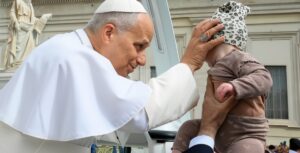
VALENCIA, Spain, JUNE 9, 2005 (Zenit) - The Judeo-Christian dialogue promoted by Pope John Paul II helped Christians understand the importance of Judaism in knowing their own faith, says the retired archbishop of Paris.
In this interview with us, Cardinal Jean-Marie Lustiger, who is Jewish by birth -- his mother died in Auschwitz -- highlights the important achievements of John Paul II in fostering relations with the Jews.
Q: You are in Spain, among other reasons, to give a talk on the importance of the dialogue between Jews and Christians. What is the present state of the dialogue between Jews and Christians and what progress has been made, especially during John Paul II's pontificate?
Cardinal Lustiger: Pope John Paul II's endeavor was gigantic. The Second Vatican Council had already characterized the Church's position in regard to other non-Christian religions and, in particular, to the Jews.
Subsequently, in the decree "Nostra Aetate," Pope John Paul II followed this position in an amazing way, because he did not address the question only as a diplomat or as a man hoping to establish contact and relations of good will, but, at the same time, as a mystic, theologian, a man of real charity, a man of faith, a disciple of Christ and above all as Pope, as Successor of Peter.
He showed that this Judeo-Christian dialogue is not simply an endeavor to establish good relations, but that it implies discovering, in the existence of the Jewish people, the fundamental aspect of Revelation, because it is a question of the alliance God made with his people, without which the mystery of Christ, in whom we believe and which constitutes his Church, would lose all its consistency.
The Pope reminded us who we are by making us understand who the Jews are. And he taught us to understand that if we love Christ and follow him, we cannot be contemptuous of his people and of the grace given to them.
This gigantic endeavor of Pope John Paul II has not only touched the hearts of Christians, but has been understood by the most diverse Jews, from the most orthodox to the most removed from religious practice, the most secularized. They all understood that a loyal man of God existed, whom they could trust.
I think that today, after centuries of massacres and death, which have not been forgotten, they have real confidence in the person of the Pope, who represents the Church.
Q: What is the significance of this dialogue in general, from your personal point of view, given your knowledge of both worlds and your experience of it in your personal life?
Cardinal Lustiger: It is a real spiritual adventure, because the extraordinary diversity of the currents of Jewish thought refers us to all sorts of different aspects of our own faith and religious practice, and we are only at the beginning of this dialogue!
We have arrived at a point in which this dialogue can begin to exist in-depth, because trust has been won, or, more accurately, re-established. And we have no idea where this dialogue will lead us.
It is not a question of the Jews becoming Christians or vice versa; it is about what they have in common, not only as the object of faith, but also in regard to attitudes and conduct. It might lead to clarifying the differences between the two.
For example, Jesus insists very much that he who loves the Father and Christ must obey his commandments, that he who does not do the will of the Father does not really love him, so we must obey the commandments. It's what St. Augustine said, "Love and do what you will," which is a mystical summary. But St. John of the Cross reminds us that we do not love if we do not practice the commandments.
Christians are tempted to forget the need to obey the commandments as an act of love, as the very test of love, and to see how at present the Jews practice the commandments in their way, literally, because they are God's commandments, which makes us reflect. When Jesus says that he keeps the commandments, he asks us to observe them as he does. It is only an example.
Q: Why do you say that this dialogue is especially important for Christians?
Cardinal Lustiger: I think that this dialogue leads us Christians to the integrity and truth of the Christian faith.
Imagine it as a ship, and imagine anchor. If we are not attached to the anchor, we might drift and get lost. But we do not get lost if we are fastened to the anchor, which is not the ship, but which is necessary for its balance, and the tension caused by its resistance helps us to remain within ourselves.
It is amazing to see that in face of this great "drift" of modern, present, contemporary civilization, to which the Second Vatican Council intended to respond in advance, the ethical, moral and anthropological position on the human condition of believing Jews -- faithful to the religious tradition of Israel -- and of the Catholic Church, have many similar points.
It is as though we find ourselves next to one another before a common light we have received, and this is not surprising, because in Jesus' teachings, when he is questioned on what today we call anthropological problems -- the relationship of man and woman, to money, the world, reality, one's neighbor, the poor -- he always refers to Genesis.
If we listen to the Church, to Pope John Paul II, we see that reference is always made to the "beginning" when speaking of the relationship between man and woman, man as image of God.
The Jews have the same biblical and anthropological references of the human condition, including faith in redemption, though we don't draw the Redeemer in the same way. We hold and believe that God sent his Son, who is the Messiah. Israel still awaits the Messiah's coming, but believes in the forgiveness of sins, which God promised, and in grace and the resurrection of the dead and eternal life. They hope the Messiah will come in glory, and we also await the coming of Christ in glory.
In sum, we share the same biblical background when it comes to the structure of the faith and anthropological structure, which finds us side by side today, even if we are separated by elements of our faith.

Q: How is the question of secularism and secularization seen -- from the Jewish and Christian point of view -- which is so rooted in France and is making such forceful inroads in Spain?
Cardinal Lustiger: It is a very difficult problem, because we have undergone a very great process of mutation. It is difficult to analyze the factors of a problem when one is not in their midst.
There are at least two factors that are interwoven with one another.
The first is a very profound change in the totality of the culture. I am referring to popular culture, as opposed to the culture of the learned, the elites, people who have had the opportunity to benefit from more specialized studies. Today popular culture also embraces doctors, engineers, lawyers, bankers, laborers -- all have the same culture, the same television.
Today this culture virtually takes on a new form, substituting, with images and the saturation of the senses, the critical reflection of reason. I think that this evolution of technology and civilization has led to the destruction of reason for the masses of the people; it has substituted reason -- which was the great ambition and hope at the beginning of the modern era -- by affectivity and opinion.
After the drama of this civilization which reached the point of totalitarianism, which in turn is the internal negation of reason and Christian hope, there has been a mutation of civilization; it is the moment in which we are living. At present there is a series of Christian theologies, more or less articulated, which have understood this change of which we spoke at the beginning.
I don't know if a comparison can be made between secularity and anti-Semitism, although there are links, but there is a real spiritual struggle at present, a struggle for truth, to introduce -- for man's benefit in this change of civilization -- his reason and freedom, and the light of the Gospel which clarifies what we are as human creatures.
Let us respond to God and receive our dignity from him. In fact, we do not know where this society is headed, but we will make every effort to make it the best and not the worst.
Contact
Catholic Online
https://www.catholic.org
CA, US
Catholic Online - Publisher, 661 869-1000
info@yourcatholicvoice.org
Keywords
Christmas, Judeo-Catholic, Lustiger, Jewish, Catholic,

More Catholic PRWire
Showing 1 - 50 of 4,716
A Recession Antidote
Randy Hain
Monaco & The Vatican: Monaco's Grace Kelly Exhibit to Rome--A Review of Monegasque-Holy See Diplomatic History
Dna. Maria St. Catherine Sharpe, t.o.s.m., T.O.SS.T.
The Why of Jesus' Death: A Pauline Perspective
Jerom Paul
A Royal Betrayal: Catholic Monaco Liberalizes Abortion
Dna. Maria St.Catherine De Grace Sharpe, t.o.s.m., T.O.SS.T.
Embrace every moment as sacred time
Mary Regina Morrell
My Dad
JoMarie Grinkiewicz
Letting go is simple wisdom with divine potential
Mary Regina Morrell
Father Lombardi's Address on Catholic Media
Catholic Online
Pope's Words to Pontifical Latin American College
Catholic Online
Prelate: Genetics Needs a Conscience
Catholic Online
State Aid for Catholic Schools: Help or Hindrance?
Catholic Online
Scorsese Planning Movie on Japanese Martyrs
Catholic Online
2 Nuns Kidnapped in Kenya Set Free
Catholic Online
Holy See-Israel Negotiation Moves Forward
Catholic Online
Franchising to Evangelize
Catholic Online
Catholics Decry Anti-Christianity in Israel
Catholic Online
Pope and Gordon Brown Meet About Development Aid
Catholic Online
Pontiff Backs Latin America's Continental Mission
Catholic Online
Cardinal Warns Against Anti-Catholic Education
Catholic Online
Full Circle
Robert Gieb
Three words to a deeper faith
Paul Sposite
Relections for Lent 2009
chris anthony
Wisdom lies beyond the surface of life
Mary Regina Morrell
World Food Program Director on Lent
Catholic Online
Moral Clarity
DAN SHEA
Pope's Lenten Message for 2009
Catholic Online
A Prayer for Monaco: Remembering the Faith Legacy of Prince Rainier III & Princess Grace and Contemplating the Moral Challenges of Prince Albert II
Dna. Maria St. Catherine Sharpe
Keeping a Lid on Permissiveness
Sally Connolly
Glimpse of Me
Sarah Reinhard
The 3 stages of life
Michele Szekely
Sex and the Married Woman
Cheryl Dickow
A Catholic Woman Returns to the Church
Cheryl Dickow
Modernity & Morality
Dan Shea
Just a Minute
Sarah Reinhard
Catholic identity ... triumphant reemergence!
Hugh McNichol
Edging God Out
Paul Sposite
Burying a St. Joseph Statue
Cheryl Dickow
George Bush Speaks on Papal Visit
Catholic Online
Sometimes moving forward means moving the canoe
Mary Regina Morrell
Action Changes Things: Teaching our Kids about Community Service
Lisa Hendey
Easter... A Way of Life
Paul Spoisite
Papal initiative...peace and harmony!
Hugh McNichol
Proclaim the mysteries of the Resurrection!
Hugh McNichol
Jerusalem Patriarch's Easter Message
Catholic Online
Good Friday Sermon of Father Cantalamessa
Catholic Online
Papal Address at the End of the Way of the Cross
Catholic Online
Cardinal Zen's Meditations for Via Crucis
Catholic Online
Interview With Vatican Aide on Jewish-Catholic Relations
Catholic Online
Pope Benedict XVI On the Easter Triduum
Catholic Online
Holy Saturday...anticipation!
Hugh McNichol
Come Grow With Us
Sign up and walk the Catholic journey with millions around the world.
Receive inspiring emails on saints, daily readings, and free faith-building resources—no cost, ever.
Some children just need to know they’re not alone...
Watch 'Jessie’s Story: A Heart Changed by Faith'
- Easter / Lent
- 5 Lenten Prayers
- Ash Wednesday
- 7 Morning Prayers
- Mysteries of the Rosary
- Litany of the Bl. Virgin Mary
- Popular Saints
- Popular Prayers
- Female Saints
- Saint Feast Days by Month
- Stations of the Cross
- St. Francis of Assisi
- St. Michael the Archangel
- The Apostles' Creed
- Unfailing Prayer to St. Anthony
- Pray the Rosary








Copyright 2026 Catholic Online. All materials contained on this site, whether written, audible or visual are the exclusive property of Catholic Online and are protected under U.S. and International copyright laws, © Copyright 2026 Catholic Online. Any unauthorized use, without prior written consent of Catholic Online is strictly forbidden and prohibited.
Catholic Online is a Project of Your Catholic Voice Foundation, a Not-for-Profit Corporation. Your Catholic Voice Foundation has been granted a recognition of tax exemption under Section 501(c)(3) of the Internal Revenue Code. Federal Tax Identification Number: 81-0596847. Your gift is tax-deductible as allowed by law.