Because of You, 2.2 Million Students Are Being Formed in the Faith
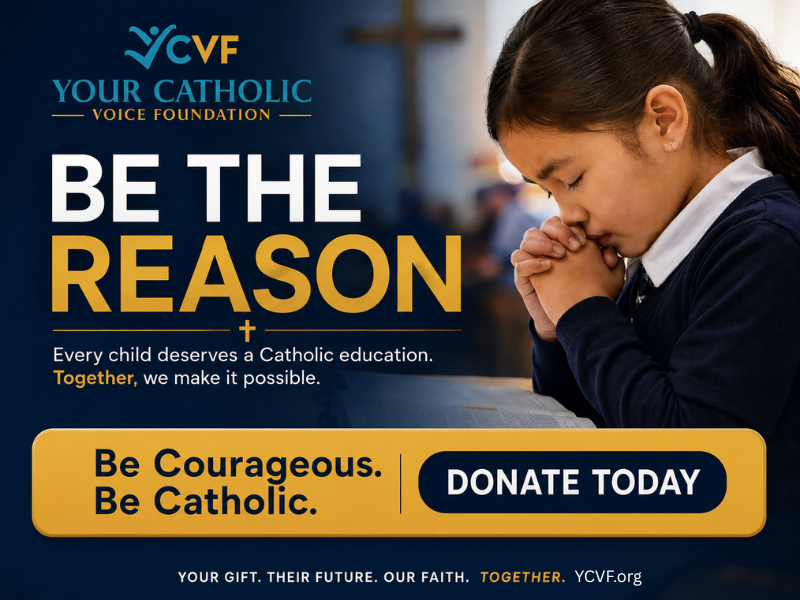
Because of generous supporters like you, Catholic Online School has already delivered free, faithful Catholic education to over 2.2 million students across 193 countries. In an age of noise and algorithms, you are helping form souls with truth, prayer, Scripture, and Christ.
If everyone who reads this gave just $5 — the cost of a coffee — we could reach even more families and keep this life-changing formation free for all. Be Courageous. Be Catholic. Stand with us today.
DONATE TODAY >Rome Notes: Battle Over Biotechnology; Sports and Spirituality
FREE Catholic Classes
Conference Looks at Genetically Modified Organisms
By Catherine Smibert
ROME, OCT. 1, 2004 (Zenit) - Participants and press people alike found themselves highly stirred during a biotechnology conference held at the Gregorian University last week.
That's exactly what the organizers of the event were hoping for.
The U.S. Embassy to the Holy See and the Pontifical Academy of Sciences had joined forces to present the meeting entitled "Feeding a Hungry World: The Moral Imperative of Biotechnology?"
They aimed to investigate the complex moral debate surrounding the use of genetically modified foods or organisms, GMOs, as an answer to feeding the 1.5 billion people who suffer from hunger and malnutrition.
In his presentation, Bishop Marcelo Sánchez Sorondo of the Pontifical Academy of Sciences said that their hope was to delve deeper into the issue, "to collaborate what Pope Paul VI called the drama of hunger in the world."
U.S. Ambassador James Nicholson agreed. "Feeding the hungry is a question of life and death," he said. "It is a moral challenge of great magnitude that demands we explore all options to help the poor and assist them in their own environments to become self-sustaining in their food production."
Despite the conference's notable speakers, who represented the scientific, ecclesial and rural realms, the event drew accusations of being too one-sided by tending to favor the use of GMOs to be grown by the poor and starving.
Conference participants Jesuit Father Roland Lessops and Franciscan Sister Janet Fearns, who each spent many years working in rural Africa, told me of their frustration at the lack of "balanced representation."
In one of his documents on this issue, Father Lessops warned of the "propaganda and distortion" surrounding "the argument of the proponents of GMOs."
Ambassador Nicholson too recognized these misgivings. "Unfortunately, efforts to explore biotechnology's potential have been hindered by misinformation and misunderstandings fomented by anti-biotech activists," he said. "Scientific evidence has been overwhelming that biotech can play a critical role in the developing world."
To date, the Vatican has taken no specific stance on the issue, even though the Pontifical Academy of Sciences has published a study document and the Pontifical Council for Justice and Peace sponsored an intense conference of this kind last November. Bishop Sánchez Sorondo pointed out that "the conclusions of the academy do not represent the official teachings of the Church, so they are free to be debated."
Throughout the conference, the debate focused on ethical, environmental and economical concerns.
Father Lessops aired concerns that there is a division within the Church on the topic of biotechnology. He noted that "there are bishops' conferences and Catholic institutions in many parts of the world -- in the Philippines, South Africa, even parts of the U.S., who oppose GMOs."
One of the speakers representing the Church in an official capacity was Legionary Father Gonzalo Miranda, dean of the bioethics school at the Regina Apostolorum Pontifical University. He told me that he believes that the division comes from "social ideology and different data input."
Foes of biotechnology question whether it is ethically right for us to tamper with nature. Father Miranda supported the scientists in the hall, such as AgBio founder C.S. Prakash, when he noted that "humankind has been selecting and manipulating plant and animal food stocks for millenniums."
Referring to the Book of Genesis, Father Miranda observed how humankind was created in the "image and likeness of God" and has been given dominion over all living things. "In this sense," the priest said, "God has made man the 'gardener of creation' who should work with responsibility to cultivate and take care of it."
He notes, however, that the Bible points out that humanity does not have the right to "abuse or do damage to nature." Yet this is precisely what others believe GMOs do.
Father Rodrigo Peret, for instance, believes that many of the solutions to problems are already available in nature itself. Father Peret, who attended the conference, heads the Franciscan Justice and Peace office. He says that we do not need new biotechnology as it threatens health and biodiversity. "Technical solutions like genetic engineering overshadow real social and environmental problems that cause hunger," he insisted.
Botanist Peter Raven, a member of the Pontifical Academy for Sciences and speaker at the conference, gave us examples of what has been achieved with various organisms, including the so-called golden rice. This is a grain enriched with vitamin A, the lack of which causes many diseases in Africa. "We are really able to produce the plants and animals that we want," he said.
Of such "scientifically precise" GMOs, he noted: "It would be very foolhardy to not use them, particularly in a world that needs to feed so many people."
Raven believes that many people opposed to GMOs "don't really have the right information about the new science, and then I think they become involved with social issues." He quickly added: "This is not to deny the social problems, the international trade problems, the intellectual property issues. But they apply to any technology, they are not unique to GMOs."
Many groups working in the Third World, including that of Father Lessops, say they suspect the profit crusade behind many of the companies involved. They see the "imposition" of GMOs as the multinationals' way of preying on desperate rural communities.
"The whole genetic engineering approach," says Father Lessops, "is not really for feeding the poor people in the world, but for feeding the stakeholders in the big wealthy companies ... so I think that is the motive that's driving it."
Father Miranda, however, noted: "Many people say that as these technologies are produced today by multinationals, it is capitalism and this is bad. But they don't understand that, first, profit is not bad in itself."
Bishop Sánchez Sorondo quoted Recommendation 12 of the Pontifical Academy of Sciences' study document: "Intellectual property rights should not inhibit a wide access to beneficial applications of scientific knowledge."
Ambassador Nicholson acknowledged that money could be made from intellectual property rights. "If you took that away," he said on Vatican Radio last Thursday, "we wouldn't have penicillin."
A farmer who became a believer in GMOs was Sabina Kohza. The South African farmer, a one-time skeptic of GMOs, presented her 2-year-old success story with the modified crops to the Rome meeting. "I was against crop-engineering myself, but then I tried it," she said.

The result: Kohza said she has gotten wealthier and healthier. "I can tell you that I am a very proud consumer, grower and proud rural woman in agriculture who is growing genetically modified maize," she said, smiling.
Father Miranda referred to the writings of John Paul II where he says that "it is necessary to maintain an attitude of prudence and to explore, with a keen eye, the nature and manners of the various technologies applied." Scientists, says the Pope, should use their "capacity for the service of all humanity."
In this sense, Father Miranda cautioned that we should not fall into the trap of thinking that GMOs can resolve all the world's problems of poverty and underdevelopment. Rather, the coming of GMOs can be "viewed as one of the tools in the toolbox to fix this concern."
* * *
Evangelizing, the Sporting Way
Jude McKenna was supposed to originally travel to Rome in order to fight Cassius Clay. Instead, his first Roman trip was for a pilgrimage as a religious novice.
A professional Irish boxer, he just missed going to Australia for the 1956 Olympic Games because he was too young. Ireland "went over with five and came home with four medals," he recalled.
Four years later, as he prepared to step up to the Olympic ranks in Rome, he missed the opportunity and found his religious vocation instead. "God stepped in and saved me from who else was in my weight category!" he said.
He has since taken up professional judo because he deemed it "a little more becoming of the cloth." Capuchin Father McKenna continues to travel in his capacity as president of Zambia judo.
He now trains African athletes for international competitions in both judo and boxing. And there's no stopping this feisty religious, who says he owes it all to sports and spirituality.
I came upon his story when speaking with a group of Franciscan missionaries retreating in Rome recently. We were discussing the World Day of Tourism Message from John Paul II on sports. They directed me to a priest of their congregation who exemplifies this message.
In his message, the Pope says that "Sport and tourism refer first and foremost to free time, in which activities must be encouraged that foster both physical and spiritual development."
To the average observer, it may seem a little indulgent to include the concept of spirituality with the two activities of travel and sports, but Father McKenna highlights how vital they can be in promoting universal values.
"Take the closing ceremony of the Olympics," the Capuchin told me. "Having been to several of the Games in the last 35 years, there's always a sadness or melancholy surrounding the end of them."
This is because "we're parting company with people we've become attached with and related with through sport and meals together; praying and hoping together," he said.
Father McKenna's experience of being everything from an athlete to an Olympic coach to an officially appointed Vatican chaplain for the Moscow Olympics, mirrors the considerations of his fellow sportsman, John Paul II.
The Capuchin, who is 70 but could easily pass for 50, cannot but help to promote the benefits and spirituality behind sports.
"I always believed in the value of it as a school for personal discipline," this friar explained. "Sport gives people focus and vision. They aim for something, they train for it and many of them are or have become tremendously disciplined people. This is a quality that adds to the journey of life, making them much better citizens, fathers and mothers of the future."
John Paul II urges the faithful to find a sport "which contributes to the love of life, teaches sacrifice, respect and responsibility, leading to the full development of every human person."
Such a commitment relates directly to faith, according to Father McKenna.
"Being acknowledged as a champion is no easy task for athletes -- it takes commitment, sacrifice and countless hours of practice," said. "This applies to our journey's of faith where we work to receive our eternal reward."
Even through many of the hardships that he witnesses daily in Africa, he sees his ministry of sports as having been very much God's design.
He told me how at times it brought tears to his eyes to see the holistic effect that a sporting club could have on an impoverished area.
"I think that our minds, our spirits and the whole soul of man and woman all operate better via sport," he observed. "In every dimension, where the body is kept fit and clean and pure, overall morale is improved."
He continues this philosophy via an example close to the hearts of "his people": "If we have a national disaster like HIV/AIDS, across the country, this physically pulls you down and effects everything else."
These days, Father McKenna's very presence is an advertisement for the "pure clean living" that he recommends through the recipe of sports and spirituality and traveling through cultures with both. He holds John Paul II's statement dear that "sports are a godly endeavor when approached in prayer and love."
Contact
Catholic Online
https://www.catholic.org
CA, US
Catholic Online - Publisher, 661 869-1000
info@yourcatholicvoice.org
Keywords
Rome, Biotechnology, Sports, Hunger, Life

More Catholic PRWire
Showing 1 - 50 of 4,716
A Recession Antidote
Randy Hain
Monaco & The Vatican: Monaco's Grace Kelly Exhibit to Rome--A Review of Monegasque-Holy See Diplomatic History
Dna. Maria St. Catherine Sharpe, t.o.s.m., T.O.SS.T.
The Why of Jesus' Death: A Pauline Perspective
Jerom Paul
A Royal Betrayal: Catholic Monaco Liberalizes Abortion
Dna. Maria St.Catherine De Grace Sharpe, t.o.s.m., T.O.SS.T.
Embrace every moment as sacred time
Mary Regina Morrell
My Dad
JoMarie Grinkiewicz
Letting go is simple wisdom with divine potential
Mary Regina Morrell
Father Lombardi's Address on Catholic Media
Catholic Online
Pope's Words to Pontifical Latin American College
Catholic Online
Prelate: Genetics Needs a Conscience
Catholic Online
State Aid for Catholic Schools: Help or Hindrance?
Catholic Online
Scorsese Planning Movie on Japanese Martyrs
Catholic Online
2 Nuns Kidnapped in Kenya Set Free
Catholic Online
Holy See-Israel Negotiation Moves Forward
Catholic Online
Franchising to Evangelize
Catholic Online
Catholics Decry Anti-Christianity in Israel
Catholic Online
Pope and Gordon Brown Meet About Development Aid
Catholic Online
Pontiff Backs Latin America's Continental Mission
Catholic Online
Cardinal Warns Against Anti-Catholic Education
Catholic Online
Full Circle
Robert Gieb
Three words to a deeper faith
Paul Sposite
Relections for Lent 2009
chris anthony
Wisdom lies beyond the surface of life
Mary Regina Morrell
World Food Program Director on Lent
Catholic Online
Moral Clarity
DAN SHEA
Pope's Lenten Message for 2009
Catholic Online
A Prayer for Monaco: Remembering the Faith Legacy of Prince Rainier III & Princess Grace and Contemplating the Moral Challenges of Prince Albert II
Dna. Maria St. Catherine Sharpe
Keeping a Lid on Permissiveness
Sally Connolly
Glimpse of Me
Sarah Reinhard
The 3 stages of life
Michele Szekely
Sex and the Married Woman
Cheryl Dickow
A Catholic Woman Returns to the Church
Cheryl Dickow
Modernity & Morality
Dan Shea
Just a Minute
Sarah Reinhard
Catholic identity ... triumphant reemergence!
Hugh McNichol
Edging God Out
Paul Sposite
Burying a St. Joseph Statue
Cheryl Dickow
George Bush Speaks on Papal Visit
Catholic Online
Sometimes moving forward means moving the canoe
Mary Regina Morrell
Action Changes Things: Teaching our Kids about Community Service
Lisa Hendey
Easter... A Way of Life
Paul Spoisite
Papal initiative...peace and harmony!
Hugh McNichol
Proclaim the mysteries of the Resurrection!
Hugh McNichol
Jerusalem Patriarch's Easter Message
Catholic Online
Good Friday Sermon of Father Cantalamessa
Catholic Online
Papal Address at the End of the Way of the Cross
Catholic Online
Cardinal Zen's Meditations for Via Crucis
Catholic Online
Interview With Vatican Aide on Jewish-Catholic Relations
Catholic Online
Pope Benedict XVI On the Easter Triduum
Catholic Online
Holy Saturday...anticipation!
Hugh McNichol
Come Grow With Us
Sign up and walk the Catholic journey with millions around the world.
Receive inspiring emails on saints, daily readings, and free faith-building resources—no cost, ever.
This 15-Second Video Will Change How You See Catholic Education.
Watch Now
- 7 Morning Prayers
- Mysteries of the Rosary
- Litany of the Bl. Virgin Mary
- Popular Saints
- Popular Prayers
- Female Saints
- Saint Feast Days by Month
- Stations of the Cross
- St. Francis of Assisi
- St. Michael the Archangel
- The Apostles' Creed
- Unfailing Prayer to St. Anthony
- Pray the Rosary









Copyright 2026 Catholic Online. All materials contained on this site, whether written, audible or visual are the exclusive property of Catholic Online and are protected under U.S. and International copyright laws, © Copyright 2026 Catholic Online. Any unauthorized use, without prior written consent of Catholic Online is strictly forbidden and prohibited.
Catholic Online is a Project of Your Catholic Voice Foundation, a Not-for-Profit Corporation. Your Catholic Voice Foundation has been granted a recognition of tax exemption under Section 501(c)(3) of the Internal Revenue Code. Federal Tax Identification Number: 81-0596847. Your gift is tax-deductible as allowed by law.
