 Hi readers, it seems you use Catholic Online a lot; that's great! It's a little awkward to ask, but we need your help. If you have already donated, we sincerely thank you. We're not salespeople, but we depend on donations averaging $14.76 and fewer than 1% of readers give. If you donate just $5.00, the price of your coffee, Catholic Online School could keep thriving. Thank you. Help Now >
Publius Helvius Pertinax
FREE Catholic Classes
Roman Emperor (31 Dec., 192), b. at Alba Pompeia, in Luguria, 1 August, 126; d. at Rome 28 March, 193. A freedman's son, he taught grammar at Rome before entering the army. Because of his military ability and his competence in civil positions, he was made prætor and consul. His services in the campaign against Avidius Cassius led Marcus Aurelius to give Pertinax the chief command of the army along the Danube, a position he filled with such distinction that Marcus Aurelius made him successively governor of Mœsia, Dacia, and Syria.
Commodus first made him commander-in-chief of the troops in Britain, then appointed him governor in Africa, and finally made him prefect of the city of Rome. On account of a conspiracy against Commodus many innocent persons, including Pertinax, were banished. After the strangling of Commodus, Pertinax was proclaimed emperor by the soldiers at the suggestion of Lætus, prefect of the prætorian guard. Pertinax had himself elected as head of the State once more by the senators and revived the title "Princeps Senatus"; on the first day of his reign he assumed the title "Pater Patriæ". Pertinax strove to restore order in the administration of the State. By selling at auction the costly furniture and plate of Commodus and by a frugal administration, before three months he was able to make gifts of money to the people and give to the prætorian guard the promised largess. He also was able to resume public works. He separated public lands from those belonging to the emperor, endeavoured to bring about the resettling of deserted estates, to recall those arbitrarily banished, and to bring informers to trial. He refused the title of Augusta for his wife, or that of Cæsar for his son until he had earned the honour. When the prætorians saw that the emperor meant to restore the ancient discipline and when the prefect Lætus noticed that he strove to limit his own influence, he aroused the soldiers of the guard against the emperor. After suppressing the revolt of the consul, Sossius Falco, Pertinax declined to put him to death, though the Senate had decreed his execution. Several prætorians were suspected of being members of the conspiracy; Lætus had these put to death without any trial and made the soldiers believe that it was done by imperial command. The prætorians now resolved to depose Pertinax. One evening a mob of about two hundred soldiers went to the palace to murder the emperor. The latter came out to them without arms in the hope of quieting them by his personal influence. His words impressed the mutineers and they put their swords back in the scabbards, when suddenly a Tongrian cavalryman fell upon Pertinax and stabbed him in the breast. This incited the others who fell upon Pertinax; the emperor's head was put on a lance and carried through the streets of the city to the camp. Severus, the second successor of Pertinax, deified him.



Join the Movement
When you sign up below, you don't just join an email list - you're joining an entire movement for Free world class Catholic education.


-

-
Mysteries of the Rosary
-
St. Faustina Kowalska
-
Litany of the Blessed Virgin Mary
-
Saint of the Day for Wednesday, Oct 4th, 2023
-
Popular Saints
-
St. Francis of Assisi
-
Bible
-
Female / Women Saints
-
7 Morning Prayers you need to get your day started with God
-
Litany of the Blessed Virgin Mary


Sacrifices of Faith: The Pro-Life Legacies of St. Gianna and Jessica Hanna
-
How to love God by caring for our bodies
-
Pope Francis calls for negotiations to End Russia-Ukraine War
-
Pope Francis Contemplates Return to U.S. for United Nations Assembly Address
-
Pope Francis Calls on Faithful to Embrace Faith, Hope, and Charity in New Teaching Series


Daily Catholic
- Daily Readings for Sunday, April 28, 2024
- St. Peter Chanel: Saint of the Day for Sunday, April 28, 2024
- Prayer before a Crucifix: Prayer of the Day for Sunday, April 28, 2024
- Daily Readings for Saturday, April 27, 2024
- St. Zita: Saint of the Day for Saturday, April 27, 2024
- Prayer for the Dead # 2: Prayer of the Day for Saturday, April 27, 2024
 Daily Readings for Sunday, April 28, 2024
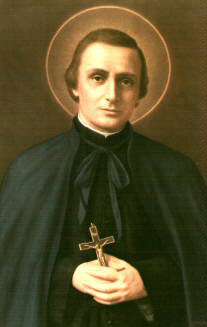 St. Peter Chanel: Saint of the Day for Sunday, April 28, 2024
 Prayer before a Crucifix: Prayer of the Day for Sunday, April 28, 2024



Copyright 2024 Catholic Online. All materials contained on this site, whether written, audible or visual are the exclusive property of Catholic Online and are protected under U.S. and International copyright laws, © Copyright 2024 Catholic Online. Any unauthorized use, without prior written consent of Catholic Online is strictly forbidden and prohibited.
Catholic Online is a Project of Your Catholic Voice Foundation, a Not-for-Profit Corporation. Your Catholic Voice Foundation has been granted a recognition of tax exemption under Section 501(c)(3) of the Internal Revenue Code. Federal Tax Identification Number: 81-0596847. Your gift is tax-deductible as allowed by law.