St. Othmar
FREE Catholic Classes
(Audomar.)
Died 16 Nov., 759, on the island of Werd in the Rhine, near Echnez, Switzerland. He was of Alemannic descent, received his education in Rhaetia, was ordained priest, and for a time presided over a church of St. Florinus in Rhaetia. This church was probably identical with the one of St. Peter at Remus, where St. Florinus had laboured as a priest and was buried. In 720 Waltram of Thurgau appointed Othmar superior over the cell of St. Gall. He united into a monastery the monks that lived about the cell of St. Gall, according to the rule of St. Columban, and became their first abbot. He added a hospital and a school ; during his abbacy the Rule of St. Columban was replaced by that of St. Benedict. When Karlmann renounced his throne in 747, he visited Othmar at St. Gall and gave him a letter to his brother Pepin, recommending Othmar and his monastery to the king's liberality. Othmar personally brought the letter to Pepin, and was kindly received. When the Counts Warin and Ruodhart unjustly tried to gain possession of some property belonging to St. Gall, Othmar fearlessly resisted their demands. Hereupon they captured him while he was on a journey to Constance, and held him prisoner, first at the castle of Bodmann, then on the island of Werd in the Rhine. At the latter place he died, after an imprisonment of six months, and was buried. In 769 his body was transferred to the monastery of St. Gall and in 867 he was solemnly entombed in the new church of St. Othmar at St. Gall. His cult began to spread soon after his death, and now he is, next to St. Maurice and St. Gall, the most popular saint in Switzerland. His feast is celebrated on 16 November. He is represented in art as a Benedictine abbot, generally holding a little barrel in his hand, an allusion to the alleged miracle, that a barrel of St. Othmar never became empty, no matter how much he took from it to give to the poor.

 Hi readers, it seems you use Catholic Online a lot; that's great! It's a little awkward to ask, but we need your help. If you have already donated, we sincerely thank you. We're not salespeople, but we depend on donations averaging $14.76 and fewer than 1% of readers give. If you donate just $5.00, the price of your coffee, Catholic Online School could keep thriving. Thank you. Help Now >

Join the Movement
When you sign up below, you don't just join an email list - you're joining an entire movement for Free world class Catholic education.


-

-
Mysteries of the Rosary
-
St. Faustina Kowalska
-
Litany of the Blessed Virgin Mary
-
Saint of the Day for Wednesday, Oct 4th, 2023
-
Popular Saints
-
St. Francis of Assisi
-
Bible
-
Female / Women Saints
-
7 Morning Prayers you need to get your day started with God
-
Litany of the Blessed Virgin Mary


Sacrifices of Faith: The Pro-Life Legacies of St. Gianna and Jessica Hanna
-
How to love God by caring for our bodies
-
Pope Francis calls for negotiations to End Russia-Ukraine War
-
Pope Francis Contemplates Return to U.S. for United Nations Assembly Address
-
Pope Francis Calls on Faithful to Embrace Faith, Hope, and Charity in New Teaching Series


Daily Catholic
- Daily Readings for Sunday, April 28, 2024
- St. Peter Chanel: Saint of the Day for Sunday, April 28, 2024
- Prayer before a Crucifix: Prayer of the Day for Sunday, April 28, 2024
- Daily Readings for Saturday, April 27, 2024
- St. Zita: Saint of the Day for Saturday, April 27, 2024
- Prayer for the Dead # 2: Prayer of the Day for Saturday, April 27, 2024
 Daily Readings for Sunday, April 28, 2024
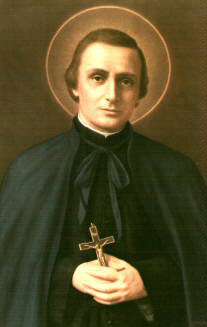 St. Peter Chanel: Saint of the Day for Sunday, April 28, 2024
 Prayer before a Crucifix: Prayer of the Day for Sunday, April 28, 2024
We ask you, humbly: don't scroll away.
Hi readers, it seems you use Catholic Online a lot; that's great! It's a little awkward to ask, but we need your help. If you have already donated, we sincerely thank you. We're not salespeople, but we depend on donations averaging $14.76 and fewer than 1% of readers give. If you donate just $5.00, the price of your coffee, Catholic Online School could keep thriving. Thank you.Help Now >

Copyright 2024 Catholic Online. All materials contained on this site, whether written, audible or visual are the exclusive property of Catholic Online and are protected under U.S. and International copyright laws, © Copyright 2024 Catholic Online. Any unauthorized use, without prior written consent of Catholic Online is strictly forbidden and prohibited.
Catholic Online is a Project of Your Catholic Voice Foundation, a Not-for-Profit Corporation. Your Catholic Voice Foundation has been granted a recognition of tax exemption under Section 501(c)(3) of the Internal Revenue Code. Federal Tax Identification Number: 81-0596847. Your gift is tax-deductible as allowed by law.