 Hi readers, it seems you use Catholic Online a lot; that's great! It's a little awkward to ask, but we need your help. If you have already donated, we sincerely thank you. We're not salespeople, but we depend on donations averaging $14.76 and fewer than 1% of readers give. If you donate just $5.00, the price of your coffee, Catholic Online School could keep thriving. Thank you. Help Now >
Ontologism
FREE Catholic Classes
(from on, ontos , being, and logos , science)
Ontologism is an ideological system which maintains that God and Divine ideas are the first object of our intelligence and the intuition of God the first act of our intellectual knowledge.
Exposition
Malebranche developed his theory of "la vision en Dieu" in different works, particularly "Recherche de la vérité", III, under the influence of Platonic and Cartesian philosophies, and of a misunderstanding of St. Augustine's and St. Thomas's principles on the origin and source of our ideas. It is also in large part the consequence of his theory of occasional causes (see OCCASIONALISM). Our true knowledge of things, he says, is the knowledge we have of them in their ideas. The ideas of things are present to our mind, endowed with the essential characteristics of universality, necessity, and eternity, and are not the result of intellectual elaboration or representations of things as they are, but the archetypes which concrete and temporal things realize. Ideas have their source and real existence in God ; they are the Divine essence itself, considered as the infinite model of all things. " God is the locus of our ideas, as space is the locus of bodies." God is then always really present to our mind ; we see all things, even material and concrete things, in Him, Who contains and manifests to our intelligence their nature and existence. Vincenzo Gioberti (1801-52) developed his Ontologism in "Introduzione allo studio della filosofia" (1840), I, iii; II, i. Our first act of intellectual knowledge is the intuitive judgment "ens creat existentias" (Being creates existences). By that act, he says, our mind apprehends directly and immediately in an intuitive synthesis;
We ask you, humbly: don't scroll away.
Hi readers, it seems you use Catholic Online a lot; that's great! It's a little awkward to ask, but we need your help. If you have already donated, we sincerely thank you. We're not salespeople, but we depend on donations averaging $14.76 and fewer than 1% of readers give. If you donate just $5.00, the price of your coffee, Catholic Online School could keep thriving. Thank you.Help Now >
- being, not simply in general nor merely as ideal, but as necessary and real, viz., God ;
- existences or contingent beings;
- the relation which unites being and existences, viz., the creative act.
Ontologism was advocated, under a more moderate form, by some Catholic philosophers of the nineteenth century. Maintaining against Malebranche that concrete material things are perceived by our senses, they asserted that our universal ideas endowed with the characteristics of necessity and eternity, and our notion of the infinite cannot exist except in God ; and they cannot therefore be known except by an intuition of God present to our mind and perceived by our intelligence not in His essence as such, but in His essence as the archetype of all things. Such is the Ontologism taught by C. Ubaghs, professor at Louvain, in "Essai d'idéologie ontologique" (Louvain, 1860); by Abbé L. Branchereau in "Prælectiones Philosophicæ"; by Abbé F. Hugonin in "Ontologie ou études des lois de la pensée" (Paris, 1856-7); by Abbé J. Fabre in "Défense de l'ontologisme"; by Carlo Vercellone , etc. We find also the fundamental principles of Ontologism in Rosmini's philosophy, although there have been many attempts to defend him against this accusation (cf. G. Morando, "Esame critico delle XL proposizione rosminiane condannate dalla S.R.U. inquisizione", Milan, 1905). According to Rosmini, the form of all our thoughts is being in its ideality ( l'essere ideale , l'essere iniziale ). The idea of being is innate in us and we perceive it by intuition. Altogether indetermined, it is neither God nor creature; it is an appurtenance of God, it is something of the Word ("Teosophia", I, n. 490; II, n. 848; cf. "Rosminianarum propositionum trutina theologica", Rome, 1892). At the origin and basis of every system of Ontologism, there are two principal reasons:
Refutation
From the philosophical point of view, the immediate intuition of God and of His Divine ideas, as held by Ontologists, is above the natural power of man's intelligence. We are not conscious, even by reflection, of the presence of God in our mind ; and, if we did have such an intuition we would find in it (as St. Thomas rightly remarks) the full satisfaction of all our aspirations, since we would know God in His essence (for the distinction between God in His essence and God as containing the ideas of things, as advanced by Ontologists, is arbitrary and cannot be more than logical ); error or doubt concerning God would be impossible. (Cf. St. Thom. in Lib. Boetii de Trinitate, Q. I, a. 3; de Veritate, Q. XVIII, a. 1.) Again, all our intellectual thoughts, even those concerning God, are accompanied by sensuous images; they are made of elements which may be applied to creatures as well as to God Himself; only in our idea of God and of His attributes, these elements are divested of the characteristics of imperfection and limit which they have in creatures, and assume the highest possible degree of perfection. In a word, our idea of God is not direct and proper; it is analogical (cf. GOD; ANALOGY). This shows that God is not known by intuition.

The reasons advanced by Ontologists rest on confusion and false assumptions. The human mind has an idea of the infinite ; but this idea may be and in fact is, obtained from the notion of the finite, by the successive processes of abstraction, elimination, and transcendence. The notion of the finite is the notion of being having a certain perfection in a limited degree. By eliminating the element of limitation and conceiving the positive perfection as realized in its highest possible degree, we arrive at the notion of the infinite. We form in this way, a negativo-positive concept, as the Schoolmen say, of the infinite. It is true also that our ideas have the characteristics of necessity, universality, and eternity ; but these are essentially different from the attributes of God. God exists necessarily, viz., He is absolutely, and cannot not exist; our ideas are necessary in the sense that, when an object is conceived in its essence, independently of the concrete beings in which it is realized, it is a subject of necessary relations: man, if he exists, is necessarily a rational being. God is absolutely universal in the sense that He eminently possesses the actual fulness of all perfections; our ideas are universal in the sense that they are applicable to an indefinite number of concrete beings. God is eternal in the sense that He exists by Himself and always identical with Himself; our ideas are eternal in the sense that in their state of abstraction they are not determined by any special place in space or moment in time.
It is true that God alone is perfectly intelligible in Himself, since He alone has in Himself the reason of His existence ; finite beings are intelligible in the very measure in which they exist. Having an existence distinct from that of God, they have also an intelligibility distinct from Him. And it is precisely because they are dependent in their existence that we conclude to the existence of God, the first intelligible. The assumption that the order of knowledge must follow the order of things, holds of absolute and perfect knowledge, not of all knowledge. It is sufficient for true knowledge that it affirm as real that which is truly real; the order of knowledge may be different from the order of reality. The confusion of certain Ontologists regarding the notion of being opens the way to Pantheism. Neither St. Augustine nor St. Thomas favours Ontologism. It is through a misunderstanding of their theories and of their expression that the Ontologist appeals to them. (Cf. St. August., "De civitate Dei", lib. X, XI; "De utilitate credendi", lib. 83, cap. XVI, Q. xlv, etc.; St. Thomas, "Summa Theol.", I, Q. ii, a. 11; Q. lxxxiv-lxxxviii; "Qq. disp., de Veritate", Q. xvi, a. l; Q. xi, "De magistro", a. 3, etc.)
The Condemnation of Ontologism by the Church
The Council of Vienna (1311-12) had already condemned the doctrine of the Begards who maintained that we can see God by our natural intelligence. On 18 September, 1861, seven propositions of the Ontologists, concerning the immediate and the innate knowledge of God, being, and the relation of finite things to God, were declared by the Holy Office tuto tradi non posse (cf. Denzinger -Bannwart, nn. 1659-65). The same congregation, in 1862, pronounced the same censure against fifteen propositions by Abbé Branchereau, subjected to its examination, two of which (xii and xiii) asserted the existence of an innate and direct perception of ideas, and the intuition of God by the human mind. In the Vatican Council, Cardinals Pecci and Sforza presented a postulatum for an explicit condemnation of Ontologism. On 14 December, 1887 the Holy Office reproved, condemned, and proscribed forty propositions extracted from the works of Rosmini, in which the principles of Ontologism are contained (cf. Denzinger -Bannwart, nn. 1891-1930).


Join the Movement
When you sign up below, you don't just join an email list - you're joining an entire movement for Free world class Catholic education.


-

-
Mysteries of the Rosary
-
St. Faustina Kowalska
-
Litany of the Blessed Virgin Mary
-
Saint of the Day for Wednesday, Oct 4th, 2023
-
Popular Saints
-
St. Francis of Assisi
-
Bible
-
Female / Women Saints
-
7 Morning Prayers you need to get your day started with God
-
Litany of the Blessed Virgin Mary


Sacrifices of Faith: The Pro-Life Legacies of St. Gianna and Jessica Hanna
-
How to love God by caring for our bodies
-
Pope Francis calls for negotiations to End Russia-Ukraine War
-
Pope Francis Contemplates Return to U.S. for United Nations Assembly Address
-
Pope Francis Calls on Faithful to Embrace Faith, Hope, and Charity in New Teaching Series

Daily Catholic
- Daily Readings for Sunday, April 28, 2024
- St. Peter Chanel: Saint of the Day for Sunday, April 28, 2024
- Prayer before a Crucifix: Prayer of the Day for Sunday, April 28, 2024
- Daily Readings for Saturday, April 27, 2024
- St. Zita: Saint of the Day for Saturday, April 27, 2024
- Prayer for the Dead # 2: Prayer of the Day for Saturday, April 27, 2024
 Daily Readings for Sunday, April 28, 2024
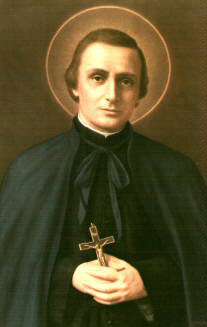 St. Peter Chanel: Saint of the Day for Sunday, April 28, 2024
 Prayer before a Crucifix: Prayer of the Day for Sunday, April 28, 2024


Copyright 2024 Catholic Online. All materials contained on this site, whether written, audible or visual are the exclusive property of Catholic Online and are protected under U.S. and International copyright laws, © Copyright 2024 Catholic Online. Any unauthorized use, without prior written consent of Catholic Online is strictly forbidden and prohibited.
Catholic Online is a Project of Your Catholic Voice Foundation, a Not-for-Profit Corporation. Your Catholic Voice Foundation has been granted a recognition of tax exemption under Section 501(c)(3) of the Internal Revenue Code. Federal Tax Identification Number: 81-0596847. Your gift is tax-deductible as allowed by law.