We ask you, humbly: don't scroll away.
Hi readers, it seems you use Catholic Online a lot; that's great! It's a little awkward to ask, but we need your help. If you have already donated, we sincerely thank you. We're not salespeople, but we depend on donations averaging $14.76 and fewer than 1% of readers give. If you donate just $5.00, the price of your coffee, Catholic Online School could keep thriving. Thank you.Help Now >
Anna Comnena
FREE Catholic Classes
Byzantine historian, eldest daughter of Alexius Comnenus, Emperor of Constantinople (1081-1118). She was born in 1083, and received, as was the custom for Byzantine princesses, an excellent education in the Greek classics, history, geography, mythology, and even philosophy. She was married to Nicephorus Bryennius, son of a former pretender to the imperial office, and in 1118 joined in a conspiracy to place her husband on the throne. Failing in her ambition she retired with her mother, the Empress Irene, to a monastery that the latter had founded, and wrote there in fifteen books her famous "Alexias". It was finished by 1148, and describes the career of her father, from 1069 to his death in 1118; it is thus a continuation of her husband's "Historical Materials", that comes down to 1079. The Princess is the historian of the fortunes of the Comneni family. Her own observations are often valuable by reason of her personal knowledge and the close acquaintance with public affairs that she owed to her high rank, but she also made use of diplomatic correspondence, the reports of her father's generals and soldiers, and the imperial archives. Critics praise the fullness and choice quality of her historical information; she seems to have gone so far as to utilize in her account of Robert Guiscard a Latin contemporary chronicle, which was written probably by the Archdeacon of Bari. At the same time they point out the panegyrical and ultra-filial character of her work, it being formally devoted to the fame and honor of her father. As a true Byzantine she looks on the Crusades only from the narrow and selfish standpoint of Constantinople, and detests soundly all Latins. The chronology is defective. She loves to describe scenes of splendour, great state-actions, audiences, and feasts, whatever is concrete and picturesque. Nor is she adverse to satire, court gossip, and detraction. Profounder matters, financial, military, and constitutional, escape her purview. Withal, however, Krumbacher calls it "one of the most remarkable efforts of medieval Greek historiography", the first notable production of the medieval Greek Renaissance set afoot by Psellos and powerfully furthered by the family of the Princess. She strains in her vocabulary for an Attic elegance, though construction and style betray too often the distance between her and the models (Thucydides and Polybius) whom she aims at imitating. She avoids, as unfit for the pen of an historian, uncouth foreign names and vulgar terms. Her studied precision in the matter of hellenizing causes her pages to take on a kind of mummy-like appearance when compared with the vigorous, living Greek of contemporary popular intercourse.



Join the Movement
When you sign up below, you don't just join an email list - you're joining an entire movement for Free world class Catholic education.


-

-
Mysteries of the Rosary
-
St. Faustina Kowalska
-
Litany of the Blessed Virgin Mary
-
Saint of the Day for Wednesday, Oct 4th, 2023
-
Popular Saints
-
St. Francis of Assisi
-
Bible
-
Female / Women Saints
-
7 Morning Prayers you need to get your day started with God
-
Litany of the Blessed Virgin Mary


Sacrifices of Faith: The Pro-Life Legacies of St. Gianna and Jessica Hanna
-
How to love God by caring for our bodies
-
Pope Francis calls for negotiations to End Russia-Ukraine War
-
Pope Francis Contemplates Return to U.S. for United Nations Assembly Address
-
Pope Francis Calls on Faithful to Embrace Faith, Hope, and Charity in New Teaching Series


Daily Catholic
- Daily Readings for Sunday, April 28, 2024
- St. Peter Chanel: Saint of the Day for Sunday, April 28, 2024
- Prayer before a Crucifix: Prayer of the Day for Sunday, April 28, 2024
- Daily Readings for Saturday, April 27, 2024
- St. Zita: Saint of the Day for Saturday, April 27, 2024
- Prayer for the Dead # 2: Prayer of the Day for Saturday, April 27, 2024
 Daily Readings for Sunday, April 28, 2024
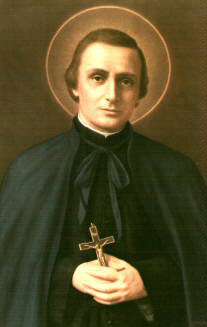 St. Peter Chanel: Saint of the Day for Sunday, April 28, 2024
 Prayer before a Crucifix: Prayer of the Day for Sunday, April 28, 2024



Copyright 2024 Catholic Online. All materials contained on this site, whether written, audible or visual are the exclusive property of Catholic Online and are protected under U.S. and International copyright laws, © Copyright 2024 Catholic Online. Any unauthorized use, without prior written consent of Catholic Online is strictly forbidden and prohibited.
Catholic Online is a Project of Your Catholic Voice Foundation, a Not-for-Profit Corporation. Your Catholic Voice Foundation has been granted a recognition of tax exemption under Section 501(c)(3) of the Internal Revenue Code. Federal Tax Identification Number: 81-0596847. Your gift is tax-deductible as allowed by law.