William Maxwell
FREE Catholic Classes
Fifth Earl of Nithsdale (Lord Nithsdale signed as Nithsdaill) and fourteenth Lord Maxwell, b. in 1676; d. at Rome, 2 March, 1744. He succeeded his father at the early age of seven. His mother, a daughter of the House of Douglas, a clever energetic woman, educated him in sentiments of devotion to the Catholic faith and of loyalty to the House of Stuart, for which his family was famous. When he was about twenty-three, Lord Nithsdale visited the French Court to do homage to King James, and there met and wooed Lady Winifred Herbert, youngest daughter of William, first Marquis of Powis. The marriage contract is dated 2 March, 1699. The young couple resided chiefly at Terregles, in Dumfriesshire, and here probably their five children were born. Until 1715 no special event marked their lives, but in that year Lord Nithsdale's principles led him to join the rising in favour of Prince James Stuart, and he shared in the disasters which attended the royal cause, being taken prisoner at Preston and sent to the Tower. In deep anxiety Lady Nithsdale hastened to London and there made every effort on behalf of her husband, including a personal appeal to George I, but no sort of hope was held out to her. She, therefore, with true heroism, planned and carried out his escape on the eve of the day fixed for his execution. Lord Nithsdale had prepared himself for death like a good Catholic and loyal servant of his king, as his "Dying Speech" and farewell letter to his family attest. After his escape he fled in disguise to France. He and Lady Nithsdale spent their last years in great poverty, in Rome, in attendance on their exiled king.

We ask you, humbly: don't scroll away.
Hi readers, it seems you use Catholic Online a lot; that's great! It's a little awkward to ask, but we need your help. If you have already donated, we sincerely thank you. We're not salespeople, but we depend on donations averaging $14.76 and fewer than 1% of readers give. If you donate just $5.00, the price of your coffee, Catholic Online School could keep thriving. Thank you.Help Now >
Join the Movement
When you sign up below, you don't just join an email list - you're joining an entire movement for Free world class Catholic education.


-

-
Mysteries of the Rosary
-
St. Faustina Kowalska
-
Litany of the Blessed Virgin Mary
-
Saint of the Day for Wednesday, Oct 4th, 2023
-
Popular Saints
-
St. Francis of Assisi
-
Bible
-
Female / Women Saints
-
7 Morning Prayers you need to get your day started with God
-
Litany of the Blessed Virgin Mary


Sacrifices of Faith: The Pro-Life Legacies of St. Gianna and Jessica Hanna
-
How to love God by caring for our bodies
-
Pope Francis calls for negotiations to End Russia-Ukraine War
-
Pope Francis Contemplates Return to U.S. for United Nations Assembly Address
-
Pope Francis Calls on Faithful to Embrace Faith, Hope, and Charity in New Teaching Series


Daily Catholic
- Daily Readings for Monday, April 29, 2024
- St. Catherine of Siena: Saint of the Day for Monday, April 29, 2024
- Prayer for the Dead # 3: Prayer of the Day for Monday, April 29, 2024
- Daily Readings for Sunday, April 28, 2024
- St. Peter Chanel: Saint of the Day for Sunday, April 28, 2024
- Prayer before a Crucifix: Prayer of the Day for Sunday, April 28, 2024
 Daily Readings for Monday, April 29, 2024
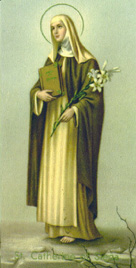 St. Catherine of Siena: Saint of the Day for Monday, April 29, 2024
 Prayer for the Dead # 3: Prayer of the Day for Monday, April 29, 2024


Copyright 2024 Catholic Online. All materials contained on this site, whether written, audible or visual are the exclusive property of Catholic Online and are protected under U.S. and International copyright laws, © Copyright 2024 Catholic Online. Any unauthorized use, without prior written consent of Catholic Online is strictly forbidden and prohibited.
Catholic Online is a Project of Your Catholic Voice Foundation, a Not-for-Profit Corporation. Your Catholic Voice Foundation has been granted a recognition of tax exemption under Section 501(c)(3) of the Internal Revenue Code. Federal Tax Identification Number: 81-0596847. Your gift is tax-deductible as allowed by law.