We ask you, humbly: don't scroll away.
Hi readers, it seems you use Catholic Online a lot; that's great! It's a little awkward to ask, but we need your help. If you have already donated, we sincerely thank you. We're not salespeople, but we depend on donations averaging $14.76 and fewer than 1% of readers give. If you donate just $5.00, the price of your coffee, Catholic Online School could keep thriving. Thank you.Help Now >
Marianus Scotus
FREE Catholic Classes
There were two Irish scholars of this name who attained distinction in the eleventh century. Both spent the greater part of their lives in Germany.
(1) Marianus Scotus (The Chronicler)
Marianus Scotus the chronicler, whose Irish name was Maelbrigte, or "Servant of Brigid"; born, according to his own "Chronicle", in Ireland in 1028; died at Mainz, 1082. From the same source we learn also that in 1052 he became a monk, assuming the name Marianus, and that in 1056 he went to Cologne, where he entered the Irish monastery of St. Martin. Two years later, he tells us, he went to Fulda, visited Paderborn, and in 1059 was ordained priest at Würzburg. In 1060 he became a hermit, or recluse, at Fulda, whence in 1070 he moved to Mainz in obedience to an order from his former abbot, Siegfried, who was now archbishop of that see. His remains were interred in the monastery of St. Martin at Mainz. The only work which can with certainty be ascribed to Marianus is the "Universal Chronicle" (the incipit has the title "Mariana Scoti cronica clara"), a history of the world, year by year, from the beginning of the Christian era down to 1082. It has been published in various editions, the best of which are the Waitz edition in the "Monumenta Germaniæ" (V, 481 sqq.) and Migne's (P. L., CLXVII, 623 sqq.). It exists in at least two eleventh-century manuscripts, one of which (Vatican, 830) has strong claims to be considered an autograph. The material which Marianus gathered together with a great deal of intelligent industry was used very freely by subsequent chroniclers, such as Florence of Worcester and Siegbert of Gembloux . The chronological system, however, which Marianus defended as preferable, and which was based on his contention that the date of Christ's birth given by Dionysius Exiguus was twenty-two years too late, did not meet with general acceptance. He himself gives both systems. Besides the "Chronicle" several other works were ascribed to Marianus owing to a confusion of his name with that of his countryman, Marianus, Abbot of St. Peter's at Ratisbon.
We ask you, humbly: don't scroll away.
Hi readers, it seems you use Catholic Online a lot; that's great! It's a little awkward to ask, but we need your help. If you have already donated, we sincerely thank you. We're not salespeople, but we depend on donations averaging $14.76 and fewer than 1% of readers give. If you donate just $5.00, the price of your coffee, Catholic Online School could keep thriving. Thank you.Help Now >
(2) Marianus Scotus (The Abbot)
Abbot of St. Peter's at Ratisbon, born in Ireland before the middle of the eleventh century; died at Ratisbon towards the end of the eleventh century, probably in 1088. In 1067 he left his native country, intending to make a pilgrimage to Rome. Like many of his countrymen, however, who visited the Continent, he decided to settle in Germany, and did not return to Ireland. At Bamberg he became a Benedictine monk, and thence he went with some companions to Ratisbon (or Regensburg), where he founded the monastery of St. Peter and became its first abbot. After his death he was honoured as a saint, his feast being observed on 17 April, 4 July, or, according to the Bollandists, on 9 February. Marianus devoted himself to transcribing and glossing the text of the Scriptures. His success as a scribe, and the exceptional beauty of his calligraphy may be judged by a specimen of his work which has come down to us. This is Codex 1247 of the Imperial Library of Vienna containing the Epistles of St. Paul with glosses, some of which are in Latin and others in Irish. The latter were collected and published by Zeuss in his "Grammatica Celtica" (p. xxiv). The manuscript ends with the words "In honore individuæ trinitatis Marianus Scotus scripsit hunc librum suis fratribus peregrinis . . ." (the date given is 16 May, 1078). Over the words 'Marianus Scotus" is the gloss: "Muirdach trog macc robartaig, i.e. Marianus miser filius Robartaci." The Irish form of his name was, therefore, Muirdach (from the root muir; hence, instead of the Latin form Marianus, there sometimes occurs Pelagius), and his family name was Robartaig, or Rafferty.

Join the Movement
When you sign up below, you don't just join an email list - you're joining an entire movement for Free world class Catholic education.


-

-
Mysteries of the Rosary
-
St. Faustina Kowalska
-
Litany of the Blessed Virgin Mary
-
Saint of the Day for Wednesday, Oct 4th, 2023
-
Popular Saints
-
St. Francis of Assisi
-
Bible
-
Female / Women Saints
-
7 Morning Prayers you need to get your day started with God
-
Litany of the Blessed Virgin Mary

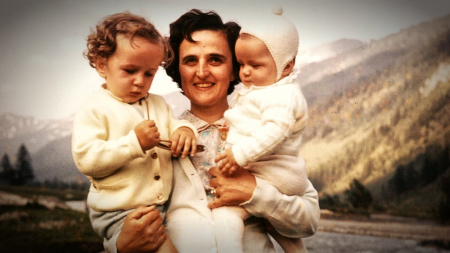
Sacrifices of Faith: The Pro-Life Legacies of St. Gianna and Jessica Hanna
-
How to love God by caring for our bodies
-
Pope Francis calls for negotiations to End Russia-Ukraine War
-
Pope Francis Contemplates Return to U.S. for United Nations Assembly Address
-
Pope Francis Calls on Faithful to Embrace Faith, Hope, and Charity in New Teaching Series
Daily Catholic
- Daily Readings for Monday, April 29, 2024
- St. Catherine of Siena: Saint of the Day for Monday, April 29, 2024
- Prayer for the Dead # 3: Prayer of the Day for Monday, April 29, 2024
- Daily Readings for Sunday, April 28, 2024
- St. Peter Chanel: Saint of the Day for Sunday, April 28, 2024
- Prayer before a Crucifix: Prayer of the Day for Sunday, April 28, 2024
 Daily Readings for Monday, April 29, 2024
 St. Catherine of Siena: Saint of the Day for Monday, April 29, 2024
 Prayer for the Dead # 3: Prayer of the Day for Monday, April 29, 2024
We ask you, humbly: don't scroll away.
Hi readers, it seems you use Catholic Online a lot; that's great! It's a little awkward to ask, but we need your help. If you have already donated, we sincerely thank you. We're not salespeople, but we depend on donations averaging $14.76 and fewer than 1% of readers give. If you donate just $5.00, the price of your coffee, Catholic Online School could keep thriving. Thank you.Help Now >
 Hi readers, it seems you use Catholic Online a lot; that's great! It's a little awkward to ask, but we need your help. If you have already donated, we sincerely thank you. We're not salespeople, but we depend on donations averaging $14.76 and fewer than 1% of readers give. If you donate just $5.00, the price of your coffee, Catholic Online School could keep thriving. Thank you. Help Now >

Copyright 2024 Catholic Online. All materials contained on this site, whether written, audible or visual are the exclusive property of Catholic Online and are protected under U.S. and International copyright laws, © Copyright 2024 Catholic Online. Any unauthorized use, without prior written consent of Catholic Online is strictly forbidden and prohibited.
Catholic Online is a Project of Your Catholic Voice Foundation, a Not-for-Profit Corporation. Your Catholic Voice Foundation has been granted a recognition of tax exemption under Section 501(c)(3) of the Internal Revenue Code. Federal Tax Identification Number: 81-0596847. Your gift is tax-deductible as allowed by law.