We ask you, humbly: don't scroll away.
Hi readers, it seems you use Catholic Online a lot; that's great! It's a little awkward to ask, but we need your help. If you have already donated, we sincerely thank you. We're not salespeople, but we depend on donations averaging $14.76 and fewer than 1% of readers give. If you donate just $5.00, the price of your coffee, Catholic Online School could keep thriving. Thank you.Help Now >
Blessed Justin de Jacobis
FREE Catholic Classes
Vicar Apostolic of Abyssinia and titular Bishop of Nilopolis, h. at San Fele, Province of Potenza, Italy, 9 October, 1800 d. 31 July, 1860, in the plain of Eydele between the mountains Chedene and Hamamo in Abyssinia, while on his way to Halay where he hoped to regain his health. On 17 October, 1818, he entered the Congregation of the Lazarists at Naples, took vows there on 18 October, 1820, and was ordained priest at Brindisi, 12 June, 1824. After spending some time in the care of souls at Oria and Monopoli, he became superior, first at Lecce, then at Naples. In 1839 he was appointed first Prefect Apostolic of Abyssinia and entrusted with the foundation of Catholic missions in that country. After laboring with great success in Abyssinia for eight years, he was made titular Bishop of Nilopolis in 1847, and shortly afterwards Vicar Apostolic of Abyssinia, but he refused the episcopal dignity until it was finally forced upon him in 1849. Despite imprisonment, exile, and every other kind of persecution from heathens and heretics, he founded numerous Catholic missions, built various schools for the training of a native clergy, and in many other ways labored for the conversion of Abyssinia. The process of his beatification was introduced on 13 July, 1904.
 Hi readers, it seems you use Catholic Online a lot; that's great! It's a little awkward to ask, but we need your help. If you have already donated, we sincerely thank you. We're not salespeople, but we depend on donations averaging $14.76 and fewer than 1% of readers give. If you donate just $5.00, the price of your coffee, Catholic Online School could keep thriving. Thank you. Help Now >

Join the Movement
When you sign up below, you don't just join an email list - you're joining an entire movement for Free world class Catholic education.


-

-
Mysteries of the Rosary
-
St. Faustina Kowalska
-
Litany of the Blessed Virgin Mary
-
Saint of the Day for Wednesday, Oct 4th, 2023
-
Popular Saints
-
St. Francis of Assisi
-
Bible
-
Female / Women Saints
-
7 Morning Prayers you need to get your day started with God
-
Litany of the Blessed Virgin Mary

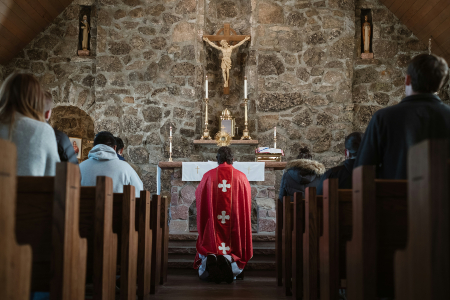
U.S. Catholic Parishes Experience Resurgence of Traditional Practices
-
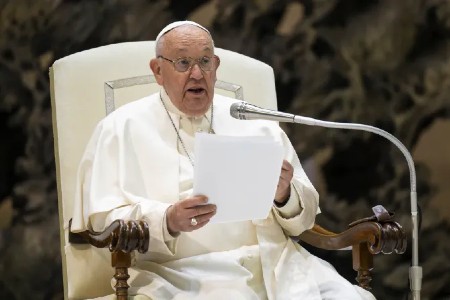
Pope Francis Urges Faith and Prayers for Peace
-
Florida Welcomes Volunteer Chaplains to Public Schools
-
10 Fascinating Details About St. Joseph the Worker: Celebrating His Feast Day - May 1
-
St. Joseph the Worker: Model for Men, Young and Old

Daily Catholic
- Daily Readings for Thursday, May 02, 2024
- St. Athanasius: Saint of the Day for Thursday, May 02, 2024
- The Our Father: Prayer of the Day for Thursday, May 02, 2024
- Daily Readings for Wednesday, May 01, 2024
- St. Marculf: Saint of the Day for Wednesday, May 01, 2024
- To Saint Peregrine: Prayer of the Day for Wednesday, May 01, 2024
 Daily Readings for Thursday, May 02, 2024
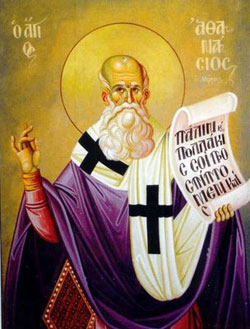 St. Athanasius: Saint of the Day for Thursday, May 02, 2024
 The Our Father: Prayer of the Day for Thursday, May 02, 2024


Copyright 2024 Catholic Online. All materials contained on this site, whether written, audible or visual are the exclusive property of Catholic Online and are protected under U.S. and International copyright laws, © Copyright 2024 Catholic Online. Any unauthorized use, without prior written consent of Catholic Online is strictly forbidden and prohibited.
Catholic Online is a Project of Your Catholic Voice Foundation, a Not-for-Profit Corporation. Your Catholic Voice Foundation has been granted a recognition of tax exemption under Section 501(c)(3) of the Internal Revenue Code. Federal Tax Identification Number: 81-0596847. Your gift is tax-deductible as allowed by law.