John of Roquetaillade (de Rupescissa)
FREE Catholic Classes
Franciscan alchemist, date of birth unknown; d. probably at Avignon, 1362. After pursuing the study of philosophy for five years at Toulouse, he entered the Franciscan monastery at Orléans, where he continued his studies for five years longer. His experiments in distillation led to the discovery of what he termed aqua vitæ , or usually quinta essentia , and commended as a panacea for all disease. His work as an alchemist forms the subject-matter of "De consideratione quintæ essentiæ" (Basle, 1561) and "De extractione quintæ essentiæ"; likewise "Libellus de conficiendo vero lapide philosophico ad sublevandam inopiam papæ et cleri in tempore tribulationis" (Strasburg, 1659). His false prophecies and violent denunciation of ecclesiastical abuses brought him into disfavour with his superiours, resulting in his imprisonment by Clement VI (1345) and Innocent VI (1356). While there he wrote in 1349 his "Visiones seu revelationes", and in 1356 "Vade Mecum in tribulatione" and "Ostensor" (in Brown, "Fascicula rerum expetendarum et fugiendarum", III, London, 1640). His other works include commentaries on the Sentences and on the "Oraculum Cyrilli", "Fragmenta revelationum", "Apologus propheticus", "De famulatu philosphiæ ad theologiam".
We ask you, humbly: don't scroll away.
Hi readers, it seems you use Catholic Online a lot; that's great! It's a little awkward to ask, but we need your help. If you have already donated, we sincerely thank you. We're not salespeople, but we depend on donations averaging $14.76 and fewer than 1% of readers give. If you donate just $5.00, the price of your coffee, Catholic Online School could keep thriving. Thank you.Help Now >
Join the Movement
When you sign up below, you don't just join an email list - you're joining an entire movement for Free world class Catholic education.


-

-
Mysteries of the Rosary
-
St. Faustina Kowalska
-
Litany of the Blessed Virgin Mary
-
Saint of the Day for Wednesday, Oct 4th, 2023
-
Popular Saints
-
St. Francis of Assisi
-
Bible
-
Female / Women Saints
-
7 Morning Prayers you need to get your day started with God
-
Litany of the Blessed Virgin Mary

U.S. Catholic Parishes Experience Resurgence of Traditional Practices
-
Pope Francis Urges Faith and Prayers for Peace
-
Florida Welcomes Volunteer Chaplains to Public Schools
-
10 Fascinating Details About St. Joseph the Worker: Celebrating His Feast Day - May 1
-
St. Joseph the Worker: Model for Men, Young and Old

Daily Catholic
- Daily Readings for Thursday, May 02, 2024
- St. Athanasius: Saint of the Day for Thursday, May 02, 2024
- The Our Father: Prayer of the Day for Thursday, May 02, 2024
- Daily Readings for Wednesday, May 01, 2024
- St. Marculf: Saint of the Day for Wednesday, May 01, 2024
- To Saint Peregrine: Prayer of the Day for Wednesday, May 01, 2024
 Daily Readings for Thursday, May 02, 2024
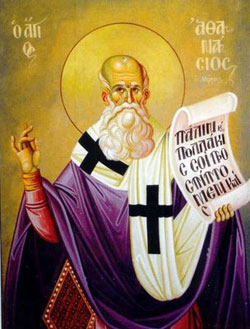 St. Athanasius: Saint of the Day for Thursday, May 02, 2024
 The Our Father: Prayer of the Day for Thursday, May 02, 2024


Copyright 2024 Catholic Online. All materials contained on this site, whether written, audible or visual are the exclusive property of Catholic Online and are protected under U.S. and International copyright laws, © Copyright 2024 Catholic Online. Any unauthorized use, without prior written consent of Catholic Online is strictly forbidden and prohibited.
Catholic Online is a Project of Your Catholic Voice Foundation, a Not-for-Profit Corporation. Your Catholic Voice Foundation has been granted a recognition of tax exemption under Section 501(c)(3) of the Internal Revenue Code. Federal Tax Identification Number: 81-0596847. Your gift is tax-deductible as allowed by law.
