 Hi readers, it seems you use Catholic Online a lot; that's great! It's a little awkward to ask, but we need your help. If you have already donated, we sincerely thank you. We're not salespeople, but we depend on donations averaging $14.76 and fewer than 1% of readers give. If you donate just $5.00, the price of your coffee, Catholic Online School could keep thriving. Thank you. Help Now >
Pontifical Indult
FREE Catholic Classes
( Latin Indultum , found in Roman Law, bk. I, Cod. Theodos. 3, 10. and 4, 15: V, 15, 2; concession, privilege ). Indults are general faculties, granted by the Holy See to bishops and others, of doing something not permitted by the common law. General needs, peculiar local conditions, the impossibility of applying to Rome in individual cases, etc., are sufficient reasons for making these concessions. They are granted for a definite term, three, five, ten years, or for a specific number of cases; they are ordinary or extraordinary, contained in certain formula, and are of the nature of privileges or quasi-privileges. Indults are personal in so much as they must be used by the bishop himself (or his vicar-general ), unless he be allowed to communicate them to others. Permission to communicate indults is conceded in some formulae, denied in others, while in others it is granted conditionally. The one to whom these faculties are communicated is the agent or commissary of the ordinary rather than his delegate. Indults are communicated as they are received; are possessed and exercised not in the name of the one communicating them, but in the name of him to whom they have been communicated: consequently they do not cease with the death or loss of jurisdiction of the ordinary through whom they were communicated. Faculties that are subdelegated may be restricted in regard to persons, number of cases, etc, and are exercised not in one's own name, but in the name of another: the power of the subdelegate ceases on the death of the delegate.

It is to be noted moreover that the word indult , employed in a less restricted sense, is synonymous with privilege, grace, favor, concession, etc. (Decretals, L. V, tit. 33, c. 17, 19, tit. 40, c. 21; Cone. Trid., VI, c. 2, De Ref.). Hence we speak of the Lenten indult, an indult of secularization granted to a religious, an indult to absent oneself from the recitation of the Divine Office in choir, an indult permitting the celebration of Mass at sea, the indult of a private oratory, a privileged altar, and so on. An indult or privilege differs from a dispensation, since the former grants a permanent (not necessarily perpetual) concession, while the latter is given for a particular case, outside which the obligation of observing the law remains. (See FACULTIES, CANONICAL.)
We ask you, humbly: don't scroll away.
Hi readers, it seems you use Catholic Online a lot; that's great! It's a little awkward to ask, but we need your help. If you have already donated, we sincerely thank you. We're not salespeople, but we depend on donations averaging $14.76 and fewer than 1% of readers give. If you donate just $5.00, the price of your coffee, Catholic Online School could keep thriving. Thank you.Help Now >

Join the Movement
When you sign up below, you don't just join an email list - you're joining an entire movement for Free world class Catholic education.


-

-
Mysteries of the Rosary
-
St. Faustina Kowalska
-
Litany of the Blessed Virgin Mary
-
Saint of the Day for Wednesday, Oct 4th, 2023
-
Popular Saints
-
St. Francis of Assisi
-
Bible
-
Female / Women Saints
-
7 Morning Prayers you need to get your day started with God
-
Litany of the Blessed Virgin Mary


Sacrifices of Faith: The Pro-Life Legacies of St. Gianna and Jessica Hanna
-
How to love God by caring for our bodies
-
Pope Francis calls for negotiations to End Russia-Ukraine War
-
Pope Francis Contemplates Return to U.S. for United Nations Assembly Address
-
Pope Francis Calls on Faithful to Embrace Faith, Hope, and Charity in New Teaching Series


Daily Catholic
- Daily Readings for Sunday, April 28, 2024
- St. Peter Chanel: Saint of the Day for Sunday, April 28, 2024
- Prayer before a Crucifix: Prayer of the Day for Sunday, April 28, 2024
- Daily Readings for Saturday, April 27, 2024
- St. Zita: Saint of the Day for Saturday, April 27, 2024
- Prayer for the Dead # 2: Prayer of the Day for Saturday, April 27, 2024
 Daily Readings for Sunday, April 28, 2024
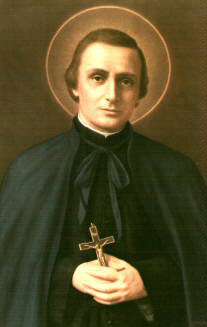 St. Peter Chanel: Saint of the Day for Sunday, April 28, 2024
 Prayer before a Crucifix: Prayer of the Day for Sunday, April 28, 2024
 Hi readers, it seems you use Catholic Online a lot; that's great! It's a little awkward to ask, but we need your help. If you have already donated, we sincerely thank you. We're not salespeople, but we depend on donations averaging $14.76 and fewer than 1% of readers give. If you donate just $5.00, the price of your coffee, Catholic Online School could keep thriving. Thank you. Help Now >

Copyright 2024 Catholic Online. All materials contained on this site, whether written, audible or visual are the exclusive property of Catholic Online and are protected under U.S. and International copyright laws, © Copyright 2024 Catholic Online. Any unauthorized use, without prior written consent of Catholic Online is strictly forbidden and prohibited.
Catholic Online is a Project of Your Catholic Voice Foundation, a Not-for-Profit Corporation. Your Catholic Voice Foundation has been granted a recognition of tax exemption under Section 501(c)(3) of the Internal Revenue Code. Federal Tax Identification Number: 81-0596847. Your gift is tax-deductible as allowed by law.