Nicholas Horner
FREE Catholic Classes
Layman and martyr, born at Grantley, Yorkshire, England, date of birth unknown; died at Smithfield, 4 March, 1590. He appears to have been following the calling of a tailor in London, when he was arrested on the charge of harbouring Catholic priests. He was confined for a long time in a damp and noisome cell, where he contracted bloodpoisoning in one leg, which it became necessary to amputate. It is said that during this operation Horner was favoured with a vision, which acted as an anodyne to his sufferings. He was afterwards liberated, but when he was again found to be harbouring priests he was convicted of felony, and as he refused to conform to the public worship of the Church by law established, was condemned. On the eve of his execution, he had a vision of a crown of glory hanging over his head, which filled him with courage to face the ordeal of the next day. The story of this vision was told by him to a friend, who in turn transmitted it by letter to Father Robert Southwell S.J. , 18 March, 1590. Horner was hanged, drawn and quartered because he had relieved and assisted Christopher Bales, seminary priest and martyr, b. at Cunsley, Durham, 1564, d. on the Scaffold at Fetter Lane, London 4 March, 1590. Father Bales was cruelly tortured in prison, although he was a consumptive; and was condemned merely for being a priest.



Join the Movement
When you sign up below, you don't just join an email list - you're joining an entire movement for Free world class Catholic education.


-

-
Mysteries of the Rosary
-
St. Faustina Kowalska
-
Litany of the Blessed Virgin Mary
-
Saint of the Day for Wednesday, Oct 4th, 2023
-
Popular Saints
-
St. Francis of Assisi
-
Bible
-
Female / Women Saints
-
7 Morning Prayers you need to get your day started with God
-
Litany of the Blessed Virgin Mary

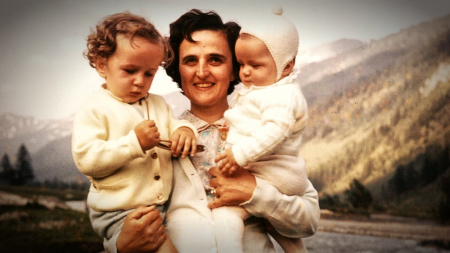
Sacrifices of Faith: The Pro-Life Legacies of St. Gianna and Jessica Hanna
-
How to love God by caring for our bodies
-
Pope Francis calls for negotiations to End Russia-Ukraine War
-
Pope Francis Contemplates Return to U.S. for United Nations Assembly Address
-
Pope Francis Calls on Faithful to Embrace Faith, Hope, and Charity in New Teaching Series


Daily Catholic
- Daily Readings for Sunday, April 28, 2024
- St. Peter Chanel: Saint of the Day for Sunday, April 28, 2024
- Prayer before a Crucifix: Prayer of the Day for Sunday, April 28, 2024
- Daily Readings for Saturday, April 27, 2024
- St. Zita: Saint of the Day for Saturday, April 27, 2024
- Prayer for the Dead # 2: Prayer of the Day for Saturday, April 27, 2024
 Daily Readings for Sunday, April 28, 2024
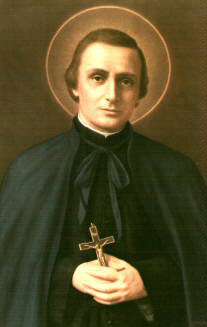 St. Peter Chanel: Saint of the Day for Sunday, April 28, 2024
 Prayer before a Crucifix: Prayer of the Day for Sunday, April 28, 2024


Copyright 2024 Catholic Online. All materials contained on this site, whether written, audible or visual are the exclusive property of Catholic Online and are protected under U.S. and International copyright laws, © Copyright 2024 Catholic Online. Any unauthorized use, without prior written consent of Catholic Online is strictly forbidden and prohibited.
Catholic Online is a Project of Your Catholic Voice Foundation, a Not-for-Profit Corporation. Your Catholic Voice Foundation has been granted a recognition of tax exemption under Section 501(c)(3) of the Internal Revenue Code. Federal Tax Identification Number: 81-0596847. Your gift is tax-deductible as allowed by law.
