 Hi readers, it seems you use Catholic Online a lot; that's great! It's a little awkward to ask, but we need your help. If you have already donated, we sincerely thank you. We're not salespeople, but we depend on donations averaging $14.76 and fewer than 1% of readers give. If you donate just $5.00, the price of your coffee, Catholic Online School could keep thriving. Thank you. Help Now >
Bl. Hermann Joseph
FREE Catholic Classes
Premonstratensian monk and mystic; b. at Cologne about 1150; d. at Hoven, 7 April, 1241. According to the biography by Razo Bonvisinus, contemporary prior of Steinfeld (Acta SS., 7 April, I, 679), Hermann was the son of poor parents who had once been rich. At the age of seven he attended school and very early he began the tender devotion to the Blessed Virgin for which he was known during his entire life. At every available moment he could be found at the church of St. Mary on the Capitol, where he would kneel wrapt in prayer and child-like appeal to Mary. One day he is said to have presented an apple, saved from his own scanty repast, to the Child Who accepted it. According to still another legend, on another occasion, when on a bitter cold day he made his appearance with bare feet, Mary procured him the means of getting shoes. At the age of twelve he entered the monastery of the Norbertine or Premonstratensian Canons at Steinfeld, in the present Rhenish Prussia, made his studies in the Netherlands, and on his return was entrusted with the service of the refectory and later of the sacristy.
After he had been ordained priest, it was remarkable with what reverence and devotion he offered the Holy Sacrifice. He was known for his gentle demeanour and affability, his humility, his extraordinary mortifications, but, above all, for his affection for the Mother of God, before whose altar he remained for hours in pious intercourse and ecstatic visions , and in whose honour he composed wonderful prayers and hymns. Mary, in turn, showed him her predilection, called him her chaplain and her spouse, and confirmed his surname Joseph, given to him by his brothers in religion. Hermann was sometimes sent out to perform pastoral duties and was in frequent demand for the making and repairing of clocks. He had under his charge the spiritual welfare of the Cistercian nuns at Hoven near Zulpich. Here he died and was buried in the cloister. His body was later transferred to Steinfeld, where his marble tomb and large picture may be seen to the present day; portions of his relics are at Cologne and at Antwerp. He is represented in art as kneeling before a statue of the Virgin and Child and offering an apple. The process of his canonization was begun in 1626, at the request of Archbishop Ferdinand of Cologne and the Emperor Ferdinand II, but was interrupted. His feast was, however, celebrated on 7 April, and the name of Blessed Hermann is in the Premonstratensian supplement to the Roman Martyrology. They also celebrate the translation of his relics on 24 May. His works are: "A Commentary on the Canticle of Canticles ", which is lost; "Opuscula" (new edition, Namur, 1899), including: "Duodecim gratiarum actiones"; "Jubilus seu Hymnus de SS. undecim millibus Virginibus"; "Oratio ad Dominum nostrum Jesum Christum", taken to a great extent from the Canticle of Canticles ; "Alia Oratio"; "Precula de quinque Gaudiis B. Mariae V." It is not quite certain whether the last three are the works of Hermann, though they are generally ascribed to him.

[ Note: Hermann Joseph was canonized by Pope Pius XII in 1958.]
Join the Movement
When you sign up below, you don't just join an email list - you're joining an entire movement for Free world class Catholic education.


-

-
Mysteries of the Rosary
-
St. Faustina Kowalska
-
Litany of the Blessed Virgin Mary
-
Saint of the Day for Wednesday, Oct 4th, 2023
-
Popular Saints
-
St. Francis of Assisi
-
Bible
-
Female / Women Saints
-
7 Morning Prayers you need to get your day started with God
-
Litany of the Blessed Virgin Mary

Sacrifices of Faith: The Pro-Life Legacies of St. Gianna and Jessica Hanna
-
How to love God by caring for our bodies
-
Pope Francis calls for negotiations to End Russia-Ukraine War
-
Pope Francis Contemplates Return to U.S. for United Nations Assembly Address
-
Pope Francis Calls on Faithful to Embrace Faith, Hope, and Charity in New Teaching Series


Daily Catholic
- Daily Readings for Sunday, April 28, 2024
- St. Peter Chanel: Saint of the Day for Sunday, April 28, 2024
- Prayer before a Crucifix: Prayer of the Day for Sunday, April 28, 2024
- Daily Readings for Saturday, April 27, 2024
- St. Zita: Saint of the Day for Saturday, April 27, 2024
- Prayer for the Dead # 2: Prayer of the Day for Saturday, April 27, 2024
 Daily Readings for Sunday, April 28, 2024
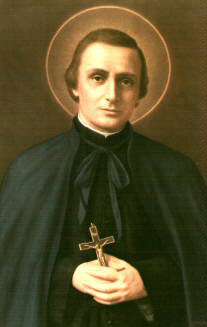 St. Peter Chanel: Saint of the Day for Sunday, April 28, 2024
 Prayer before a Crucifix: Prayer of the Day for Sunday, April 28, 2024
 Hi readers, it seems you use Catholic Online a lot; that's great! It's a little awkward to ask, but we need your help. If you have already donated, we sincerely thank you. We're not salespeople, but we depend on donations averaging $14.76 and fewer than 1% of readers give. If you donate just $5.00, the price of your coffee, Catholic Online School could keep thriving. Thank you. Help Now >

Copyright 2024 Catholic Online. All materials contained on this site, whether written, audible or visual are the exclusive property of Catholic Online and are protected under U.S. and International copyright laws, © Copyright 2024 Catholic Online. Any unauthorized use, without prior written consent of Catholic Online is strictly forbidden and prohibited.
Catholic Online is a Project of Your Catholic Voice Foundation, a Not-for-Profit Corporation. Your Catholic Voice Foundation has been granted a recognition of tax exemption under Section 501(c)(3) of the Internal Revenue Code. Federal Tax Identification Number: 81-0596847. Your gift is tax-deductible as allowed by law.