We ask you, humbly: don't scroll away.
Hi readers, it seems you use Catholic Online a lot; that's great! It's a little awkward to ask, but we need your help. If you have already donated, we sincerely thank you. We're not salespeople, but we depend on donations averaging $14.76 and fewer than 1% of readers give. If you donate just $5.00, the price of your coffee, Catholic Online School could keep thriving. Thank you.Help Now >
Alma Redemptoris Mater
FREE Catholic Classes
(Kindly Mother of the Redeemer).
The opening words of one of the four Antiphons sung at Compline and Lauds, in honour of the Blessed Virgin, at various seasons of the year. This particular Antiphon is assigned to that part of the year occurring between the first Vespers of the first Sunday in Advent and Compline of the 2nd of February (on which day it ceases, even if the Feast of the Purification should be transferred from that day). It consists of six hexameter verses in strict prosodial form, followed by versicle, response, and prayer, which vary for the season: until Christmas Eve (first Vespers of the Nativity), V. Angelus Domini etc., R. Et concepit etc., with the prayer Gratiam tuam etc.; thenceforward, V. Post partum etc., R. Dei Genitrix , etc., and the prayer Deus qui salutes æterna etc. The hexameter verses are credited to Hermannus Contractus, or Hermann "the Cripple" (d. 1054), an interesting biographical notice of whom may be found in Duffield, "Latin Hymn Writers", 149-168. It has been translated into English by Father Caswall (Mother of Christ, hear thou thy people's cry); by Cardinal Newman , in "Tracts for the Times", No. 75 (Kindly Mother of the Redeemer), and J. Wallace (Sweet Mother of Our Saviour blest). Caswall's translation is found in the official "Manual of Prayers" (Baltimore), 76. In the Marquess of Bute's "Breviary; Winter Part", 176 (Maiden! Mother of Him Who redeemed us, thou that abides"), the unrhymed hexameter version is very literal.

The Antiphon must have been very popular in England both before and after its treatment by Chaucer in his "Prioresses Tale", which is based wholly on a legend connected with its recitation by the "Litel Clergeon":
This litel childe his litel book lerninge,As he sat in the scole at his prymer,
He Alma redemptoris herde singe,
As children lerned hir antiphoner;
And, as he dorste, he drough hym ner and ner,
And herkned ay the wordes and the note,
Till he the firste vers coude al by rote.
Professor Skeat, in his "Oxford Chaucer", thought that the Alma Redemptoris here was the sequence (cf. Mone, Lateinische Hymnen, II, 200):
Alma Redemptoris materQuem de cælis misit Pater
but subsequently (cf. Modern Philology, April, 1906, "Chaucer's 'Litel Clergeon'", for an explanation of the error and a good treatment of many questions related to the Antiphon) admitted that the Breviary Antiphon was referred to by Chaucer.


Join the Movement
When you sign up below, you don't just join an email list - you're joining an entire movement for Free world class Catholic education.


-

-
Mysteries of the Rosary
-
St. Faustina Kowalska
-
Litany of the Blessed Virgin Mary
-
Saint of the Day for Wednesday, Oct 4th, 2023
-
Popular Saints
-
St. Francis of Assisi
-
Bible
-
Female / Women Saints
-
7 Morning Prayers you need to get your day started with God
-
Litany of the Blessed Virgin Mary


Sacrifices of Faith: The Pro-Life Legacies of St. Gianna and Jessica Hanna
-
How to love God by caring for our bodies
-
Pope Francis calls for negotiations to End Russia-Ukraine War
-
Pope Francis Contemplates Return to U.S. for United Nations Assembly Address
-
Pope Francis Calls on Faithful to Embrace Faith, Hope, and Charity in New Teaching Series


Daily Catholic
- Daily Readings for Sunday, April 28, 2024
- St. Peter Chanel: Saint of the Day for Sunday, April 28, 2024
- Prayer before a Crucifix: Prayer of the Day for Sunday, April 28, 2024
- Daily Readings for Saturday, April 27, 2024
- St. Zita: Saint of the Day for Saturday, April 27, 2024
- Prayer for the Dead # 2: Prayer of the Day for Saturday, April 27, 2024
 Daily Readings for Sunday, April 28, 2024
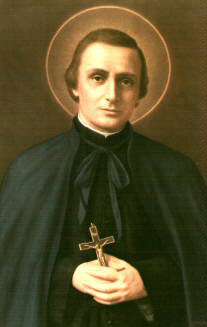 St. Peter Chanel: Saint of the Day for Sunday, April 28, 2024
 Prayer before a Crucifix: Prayer of the Day for Sunday, April 28, 2024

We ask you, humbly: don't scroll away.
Hi readers, it seems you use Catholic Online a lot; that's great! It's a little awkward to ask, but we need your help. If you have already donated, we sincerely thank you. We're not salespeople, but we depend on donations averaging $14.76 and fewer than 1% of readers give. If you donate just $5.00, the price of your coffee, Catholic Online School could keep thriving. Thank you.Help Now >

Copyright 2024 Catholic Online. All materials contained on this site, whether written, audible or visual are the exclusive property of Catholic Online and are protected under U.S. and International copyright laws, © Copyright 2024 Catholic Online. Any unauthorized use, without prior written consent of Catholic Online is strictly forbidden and prohibited.
Catholic Online is a Project of Your Catholic Voice Foundation, a Not-for-Profit Corporation. Your Catholic Voice Foundation has been granted a recognition of tax exemption under Section 501(c)(3) of the Internal Revenue Code. Federal Tax Identification Number: 81-0596847. Your gift is tax-deductible as allowed by law.
