We ask you, humbly: don't scroll away.
Hi readers, it seems you use Catholic Online a lot; that's great! It's a little awkward to ask, but we need your help. If you have already donated, we sincerely thank you. We're not salespeople, but we depend on donations averaging $14.76 and fewer than 1% of readers give. If you donate just $5.00, the price of your coffee, Catholic Online School could keep thriving. Thank you.Help Now >
Gerard of Cremona
FREE Catholic Classes
A twelfth-century student of Arabic science and translator from Arabic into Latin; born at Cremona, in 1114; died in 1187. The place and date of Gerard's birth are not given in any document prior to the fourteenth century. Tiraboschi, in his "Storia della letteratura italiana", is at pains to refute the contention of some Spanish writers that Gerard was born, not at Cremona in Italy, but at Carmona in Spain. While conceding that Gerard spent a good many years at Toledo, Tiraboschi shows that Cremona and not Carmona is his birthplace. In fact, the manuscripts of his writings style him Cremonensis , or Chremonensis (which seems to be a corrupt form of Cremonensis ). From the "Chronicle" of the Dominican Francisco Pipino, who flourished about the year 1300, we learn, besides the place and date of his birth and death, that impelled by his interest in the works of the astronomer Ptolemy, he went to Toledo, and, applying himself to the study of Arabic, soon acquired so great a proficiency in that language that he was able to translate not only the "Almagest", but also the entire works of Avicenna, into Latin. He died in the year 1187 and was buried in the church of St. Lucy at Cremona, to which he bequeathed his valuable library. The number of books which he translated from Arabic into Latin is said by Pipino to be seventy-six. Whether he is the author of original treatises is uncertain. The works sometimes attributed to him are almost certainly to be ascribed to Gerard of Sabionetta, who lived in the thirteenth century. He must have been a man of extraordinarily wide taste in scientific matters, for he translated, according to the "Chronicle" of Pipino, works on dialectic, geometry, philosopht, physics, and several other sciences. His activity as a translator, combined with the efforts in the same line of Michael Scott, and of the group of men who formed a regular college of translators at Toledo under the direction of Bishop Raymond, brought the world of Arabian learning within the reach of the scholars of Latin Christendom and prepared the way for that conflict of ideas out of which sprang the Scholasticism of the thirteenth century. In this work Gerard was a pioneer. If the description of his moral qualities given by Pipino is not overdrawn, he was a man whose single-minded devotion to the cause of science enabled him to overcome the difficulties which in those days were inevitable in a task such as he undertook.



Join the Movement
When you sign up below, you don't just join an email list - you're joining an entire movement for Free world class Catholic education.


-

-
Mysteries of the Rosary
-
St. Faustina Kowalska
-
Litany of the Blessed Virgin Mary
-
Saint of the Day for Wednesday, Oct 4th, 2023
-
Popular Saints
-
St. Francis of Assisi
-
Bible
-
Female / Women Saints
-
7 Morning Prayers you need to get your day started with God
-
Litany of the Blessed Virgin Mary

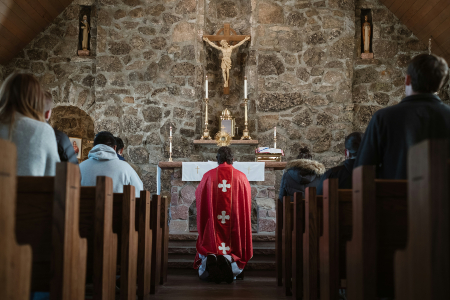
U.S. Catholic Parishes Experience Resurgence of Traditional Practices
-
Pope Francis Urges Faith and Prayers for Peace
-
Florida Welcomes Volunteer Chaplains to Public Schools
-
10 Fascinating Details About St. Joseph the Worker: Celebrating His Feast Day - May 1
-
St. Joseph the Worker: Model for Men, Young and Old


Daily Catholic
- Daily Readings for Thursday, May 02, 2024
- St. Athanasius: Saint of the Day for Thursday, May 02, 2024
- The Our Father: Prayer of the Day for Thursday, May 02, 2024
- Daily Readings for Wednesday, May 01, 2024
- St. Marculf: Saint of the Day for Wednesday, May 01, 2024
- To Saint Peregrine: Prayer of the Day for Wednesday, May 01, 2024
 Daily Readings for Thursday, May 02, 2024
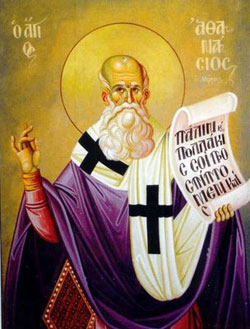 St. Athanasius: Saint of the Day for Thursday, May 02, 2024
 The Our Father: Prayer of the Day for Thursday, May 02, 2024
We ask you, humbly: don't scroll away.
Hi readers, it seems you use Catholic Online a lot; that's great! It's a little awkward to ask, but we need your help. If you have already donated, we sincerely thank you. We're not salespeople, but we depend on donations averaging $14.76 and fewer than 1% of readers give. If you donate just $5.00, the price of your coffee, Catholic Online School could keep thriving. Thank you.Help Now >


Copyright 2024 Catholic Online. All materials contained on this site, whether written, audible or visual are the exclusive property of Catholic Online and are protected under U.S. and International copyright laws, © Copyright 2024 Catholic Online. Any unauthorized use, without prior written consent of Catholic Online is strictly forbidden and prohibited.
Catholic Online is a Project of Your Catholic Voice Foundation, a Not-for-Profit Corporation. Your Catholic Voice Foundation has been granted a recognition of tax exemption under Section 501(c)(3) of the Internal Revenue Code. Federal Tax Identification Number: 81-0596847. Your gift is tax-deductible as allowed by law.