We ask you, humbly: don't scroll away.
Hi readers, it seems you use Catholic Online a lot; that's great! It's a little awkward to ask, but we need your help. If you have already donated, we sincerely thank you. We're not salespeople, but we depend on donations averaging $14.76 and fewer than 1% of readers give. If you donate just $5.00, the price of your coffee, Catholic Online School could keep thriving. Thank you.Help Now >
Faustus of Riez
FREE Catholic Classes
Bishop of Riez ( Rhegium ) in Southern Gaul (Provence), the best known and most distinguished defender of Semipelagianism, b. between 405 and 410, and according to his contemporaries, Avitus of Vienne and Sidonius Apollinaris, in the island of Britain; d. between 490 and 495. Nothing, however, is known about his early life or his education. He is thought by some to have been a lawyer but owing to the influence of his mother, famed for her sanctity, he abandoned secular pursuits while still a young man and entered the monastery of Lérins. Here he was soon ordained to the priesthood and because of his extraordinary piety was chosen (432) to be head of the monastery, in succession to Maximus who had become Bishop of Riez. His career as abbot lasted about twenty or twenty-five years during which he attained a high reputation for his wonderful gifts as an extempore preacher and for his stern asceticism. After the death of Maximus he became Bishop of Riez. This elevation did not make any change in his manner of life; he continued his ascetic practices, and frequently returned to the monastery of Lérins to renew his fervour. He was a zealous advocate of monasticism and established many monasteries in his diocese. In spite of his activity in the discharge of his duties as bishop, he participated in all the theological discussions of his time and became known as a stern opponent of Arianism in all its forms. For this, and also, it is said, for his view, stated below, of the corporeity of the human soul, he incurred the enmity of Euric, King of the Visigoths, who had gained possession of a large portion of Southern Gaul, and was banished from his see. His exile lasted eight years, during which time he was aided by loyal friends. On the death of Euric he resumed his labours at the head of his diocese and continued there until his death. Throughout his life Faustus was an uncompromising adversary of Pelagius, whom he styled Pestifer , and equally decided in his opposition to the doctrine of Predestination which he styled "erroneous, blasphemous, heathen, fatalistic, and conducive to immorality". This doctrine in its most repulsive form had been expounded by a presbyter named Lucidus and was condemned by two synods, Arles and Lyons (475). At the request of the bishops who composed these synods, and especially Leontius of Arles, Faustus wrote a work, "Libri duo de Gratiâ Dei et humanae mentis libero arbitrio", in which he refuted not only the doctrines of the Predestinarians but also those of Pelagius (P.L., LVIII, 783). The work was marred, however, by its decided Semipelagianism, for several years was bitterly attacked, and was condemned by the Synod of Orange in 529 ( Denzinger, Enchiridion, Freiburg, 1908, no. 174 sqq. - old no. 144; PL.L., XLV, 1785; Mansi, VIII, 712). Besides this error, Faustus maintained that the human soul is in a certain sense corporeal, God alone being a pure spirit. The opposition to Faustus was not fully developed in his lifetime and he died with a well-merited reputation for sanctity. His own flock considered him a saint and erected a basilica in his honour. Faustus wrote also: "Libri duo de Spiritu Sancto" (P.L., LXII, 9), wrongly ascribed to the Roman deacon Paschasius. His "Libellus parvus adversus Arianos et Macedonianos", mentioned by Genadius, seems to have perished. His correspondence ( epistulae ) and sermons are best found in the new and excellent edition of the works of Faustus by Engelbrecht, "Fausti Reiensis praeter sermones pseudo-Eusebianos opera. Accedunt Ruricii Epistulae" in "Corpus Scrip. eccles. lat.", vol. XXI (Vienna, 1891).


 Hi readers, it seems you use Catholic Online a lot; that's great! It's a little awkward to ask, but we need your help. If you have already donated, we sincerely thank you. We're not salespeople, but we depend on donations averaging $14.76 and fewer than 1% of readers give. If you donate just $5.00, the price of your coffee, Catholic Online School could keep thriving. Thank you. Help Now >
Join the Movement
When you sign up below, you don't just join an email list - you're joining an entire movement for Free world class Catholic education.


-

-
Mysteries of the Rosary
-
St. Faustina Kowalska
-
Litany of the Blessed Virgin Mary
-
Saint of the Day for Wednesday, Oct 4th, 2023
-
Popular Saints
-
St. Francis of Assisi
-
Bible
-
Female / Women Saints
-
7 Morning Prayers you need to get your day started with God
-
Litany of the Blessed Virgin Mary


Sacrifices of Faith: The Pro-Life Legacies of St. Gianna and Jessica Hanna
-
How to love God by caring for our bodies
-
Pope Francis calls for negotiations to End Russia-Ukraine War
-
Pope Francis Contemplates Return to U.S. for United Nations Assembly Address
-
Pope Francis Calls on Faithful to Embrace Faith, Hope, and Charity in New Teaching Series


Daily Catholic
- Daily Readings for Sunday, April 28, 2024
- St. Peter Chanel: Saint of the Day for Sunday, April 28, 2024
- Prayer before a Crucifix: Prayer of the Day for Sunday, April 28, 2024
- Daily Readings for Saturday, April 27, 2024
- St. Zita: Saint of the Day for Saturday, April 27, 2024
- Prayer for the Dead # 2: Prayer of the Day for Saturday, April 27, 2024
 Daily Readings for Sunday, April 28, 2024
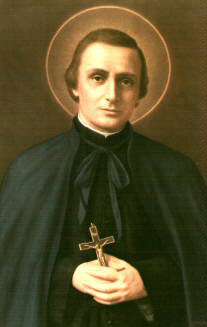 St. Peter Chanel: Saint of the Day for Sunday, April 28, 2024
 Prayer before a Crucifix: Prayer of the Day for Sunday, April 28, 2024
We ask you, humbly: don't scroll away.
Hi readers, it seems you use Catholic Online a lot; that's great! It's a little awkward to ask, but we need your help. If you have already donated, we sincerely thank you. We're not salespeople, but we depend on donations averaging $14.76 and fewer than 1% of readers give. If you donate just $5.00, the price of your coffee, Catholic Online School could keep thriving. Thank you.Help Now >


Copyright 2024 Catholic Online. All materials contained on this site, whether written, audible or visual are the exclusive property of Catholic Online and are protected under U.S. and International copyright laws, © Copyright 2024 Catholic Online. Any unauthorized use, without prior written consent of Catholic Online is strictly forbidden and prohibited.
Catholic Online is a Project of Your Catholic Voice Foundation, a Not-for-Profit Corporation. Your Catholic Voice Foundation has been granted a recognition of tax exemption under Section 501(c)(3) of the Internal Revenue Code. Federal Tax Identification Number: 81-0596847. Your gift is tax-deductible as allowed by law.