We ask you, humbly: don't scroll away.
Hi readers, it seems you use Catholic Online a lot; that's great! It's a little awkward to ask, but we need your help. If you have already donated, we sincerely thank you. We're not salespeople, but we depend on donations averaging $14.76 and fewer than 1% of readers give. If you donate just $5.00, the price of your coffee, Catholic Online School could keep thriving. Thank you.Help Now >
Johann Dietenberger
FREE Catholic Classes
Theologian, b. about 1475 at Frankfort-on-the-Main, d. 4 Sept., 1537, at Mainz. He was educated in his native city, joined the Dominican Order, and soon distinguished himself by his attainments, both religious and intellectual. On 3 June, 1511, he registered at Cologne as a theological student; three years later, 23 September, 1514, he was admitted to the licentiate, and the next year, after some time spent at Heidelberg and Mainz, received the doctor's degree. Towards the end of 1517 Dietenberger was appointed Regens studiorum and interpreter of St. Thomas at Trier, where he opened his lectures 27 January, 1518. In the meantime he had been elected (1516) prior of his convent at Frankfort, and he retained this office until 1526, when he became prior at Coblenz. In 1530 Dietenberger attended the Diet of Augshurg and was chosen a member of the committee of twenty Catholic theologians selected at the meeting of 27 June and presided over by Eck, to draw up a refutation of the Protestant Confession. About the same time he received the appointment of general inquisitor for the Dioceses of Mainz and Cologne. His last years, from 1532, were devoted to teaching theology and exegesis in the Academy of Mainz.
Foremost among Dietenberger's works stands his catechism : "Evangelischer Bericht und Christliche Unterweisung der furnehmlichsten Stuck des waren heyligen Christlichen Glaubens", published first at Mainz in 1537 and often re-edited, lastly by Moufang (Die Mainzer Katechismen). Next should be mentioned Dietenberger's German Bible: "Biblia beider Allt und Newen Testamenten, new verdeutscht", published at Mainz in 1534. This work, repeatedly corrected, especially by Caspar Ulenberg (Cologne, 1630) and the Jesuit theologians of Mainz (1661), was destined to become for the German people "Die Katholische Bibel", a title bespeaking its excellence. Dietenberger has been frequently charged with having purloined Luther's version. True, he used freely the New Testament of Emser (1527), of whom Luther was wont to say that "he had ploughed with his heifers"; he used likewise other translations compiled in pre-Reformation times, and so did Luther. These facts may account for many similarities; moreover, he was well acquainted with the versions of Luther and of Leo of Juda, and confessedly profited by them to improve his own. Besides these two important works, Dietenberger composed fifteen polemical tracts, treating various subjects then much mooted: Mass, confession, vows, faith, etc.
We ask you, humbly: don't scroll away.
Hi readers, it seems you use Catholic Online a lot; that's great! It's a little awkward to ask, but we need your help. If you have already donated, we sincerely thank you. We're not salespeople, but we depend on donations averaging $14.76 and fewer than 1% of readers give. If you donate just $5.00, the price of your coffee, Catholic Online School could keep thriving. Thank you.Help Now >
We ask you, humbly: don't scroll away.
Hi readers, it seems you use Catholic Online a lot; that's great! It's a little awkward to ask, but we need your help. If you have already donated, we sincerely thank you. We're not salespeople, but we depend on donations averaging $14.76 and fewer than 1% of readers give. If you donate just $5.00, the price of your coffee, Catholic Online School could keep thriving. Thank you.Help Now >

Join the Movement
When you sign up below, you don't just join an email list - you're joining an entire movement for Free world class Catholic education.


-

-
Mysteries of the Rosary
-
St. Faustina Kowalska
-
Litany of the Blessed Virgin Mary
-
Saint of the Day for Wednesday, Oct 4th, 2023
-
Popular Saints
-
St. Francis of Assisi
-
Bible
-
Female / Women Saints
-
7 Morning Prayers you need to get your day started with God
-
Litany of the Blessed Virgin Mary


Sacrifices of Faith: The Pro-Life Legacies of St. Gianna and Jessica Hanna
-
How to love God by caring for our bodies
-
Pope Francis calls for negotiations to End Russia-Ukraine War
-
Pope Francis Contemplates Return to U.S. for United Nations Assembly Address
-
Pope Francis Calls on Faithful to Embrace Faith, Hope, and Charity in New Teaching Series


Daily Catholic
- Daily Readings for Sunday, April 28, 2024
- St. Peter Chanel: Saint of the Day for Sunday, April 28, 2024
- Prayer before a Crucifix: Prayer of the Day for Sunday, April 28, 2024
- Daily Readings for Saturday, April 27, 2024
- St. Zita: Saint of the Day for Saturday, April 27, 2024
- Prayer for the Dead # 2: Prayer of the Day for Saturday, April 27, 2024
 Daily Readings for Sunday, April 28, 2024
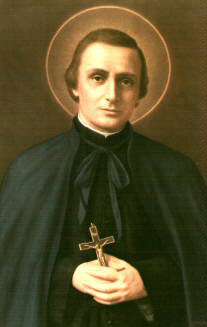 St. Peter Chanel: Saint of the Day for Sunday, April 28, 2024
 Prayer before a Crucifix: Prayer of the Day for Sunday, April 28, 2024


Copyright 2024 Catholic Online. All materials contained on this site, whether written, audible or visual are the exclusive property of Catholic Online and are protected under U.S. and International copyright laws, © Copyright 2024 Catholic Online. Any unauthorized use, without prior written consent of Catholic Online is strictly forbidden and prohibited.
Catholic Online is a Project of Your Catholic Voice Foundation, a Not-for-Profit Corporation. Your Catholic Voice Foundation has been granted a recognition of tax exemption under Section 501(c)(3) of the Internal Revenue Code. Federal Tax Identification Number: 81-0596847. Your gift is tax-deductible as allowed by law.