We ask you, humbly: don't scroll away.
Hi readers, it seems you use Catholic Online a lot; that's great! It's a little awkward to ask, but we need your help. If you have already donated, we sincerely thank you. We're not salespeople, but we depend on donations averaging $14.76 and fewer than 1% of readers give. If you donate just $5.00, the price of your coffee, Catholic Online School could keep thriving. Thank you.Help Now >
St. Diarmaid
FREE Catholic Classes
Born in Ireland, date unknown; d. in 851 or 852. He was made Archbishop of Armagh in 834, but was driven from his see by the usurper Foraunan in 835. However, he claimed his rights and collected his cess in Connacht, in 836, as primate. He lived in a stormy age, as the Scandinavian rovers under Turgesius seized Armagh, in 841, and levelled the churches. The "Annals of Ulster" (ed. B. McCarthy, Dublin, 1887; I, 361) describe him as "the wisest of the doctors of Europe ". His feast is celebrated 24 April.
St. Diarmaid the Just
A famous Irish confessor of the mid-sixth century; d. 542. His name is associated with the great monastery of Inisclothran (Iniscleraun) on Lough Ree, in the Dioeese of Ardagh, which he founded about the year 530. He was of princely origin and a native of Connacht. Wishing to found an oratory far from the haunts of men, he selected the beautiful but lonely island associated with the memory of Queen Meave, now known as Quaker Island. Here his fame soon attracted disciples, and among them St. Ciaran of Clonmacnoise. He was not only a good teacher, but also a distinguished writer and poet. On the island seven churches are traditionally said to have been erected, and the traces of six are still in evidence, including Teampul Diarmada , or the church of St. Diarmaid, the saint's own church an oratory eight feet by seven. His feast is celebrated 10 January. After his death the monastic school kept up its reputation for fully six centuries, and the island itself was famous for pilgrimages in pre-Reformation days.
We ask you, humbly: don't scroll away.
Hi readers, it seems you use Catholic Online a lot; that's great! It's a little awkward to ask, but we need your help. If you have already donated, we sincerely thank you. We're not salespeople, but we depend on donations averaging $14.76 and fewer than 1% of readers give. If you donate just $5.00, the price of your coffee, Catholic Online School could keep thriving. Thank you.Help Now >

Join the Movement
When you sign up below, you don't just join an email list - you're joining an entire movement for Free world class Catholic education.


-

-
Mysteries of the Rosary
-
St. Faustina Kowalska
-
Litany of the Blessed Virgin Mary
-
Saint of the Day for Wednesday, Oct 4th, 2023
-
Popular Saints
-
St. Francis of Assisi
-
Bible
-
Female / Women Saints
-
7 Morning Prayers you need to get your day started with God
-
Litany of the Blessed Virgin Mary

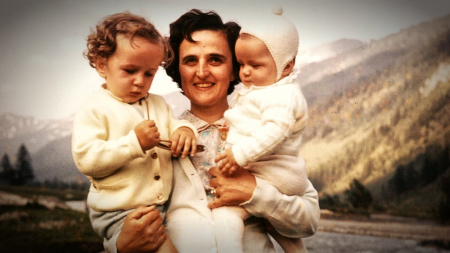
Sacrifices of Faith: The Pro-Life Legacies of St. Gianna and Jessica Hanna
-
How to love God by caring for our bodies
-
Pope Francis calls for negotiations to End Russia-Ukraine War
-
Pope Francis Contemplates Return to U.S. for United Nations Assembly Address
-
Pope Francis Calls on Faithful to Embrace Faith, Hope, and Charity in New Teaching Series

Daily Catholic
- Daily Readings for Sunday, April 28, 2024
- St. Peter Chanel: Saint of the Day for Sunday, April 28, 2024
- Prayer before a Crucifix: Prayer of the Day for Sunday, April 28, 2024
- Daily Readings for Saturday, April 27, 2024
- St. Zita: Saint of the Day for Saturday, April 27, 2024
- Prayer for the Dead # 2: Prayer of the Day for Saturday, April 27, 2024
 Daily Readings for Sunday, April 28, 2024
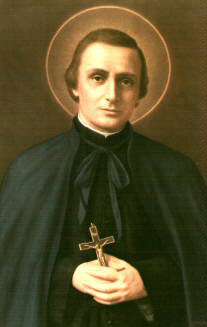 St. Peter Chanel: Saint of the Day for Sunday, April 28, 2024
 Prayer before a Crucifix: Prayer of the Day for Sunday, April 28, 2024
We ask you, humbly: don't scroll away.
Hi readers, it seems you use Catholic Online a lot; that's great! It's a little awkward to ask, but we need your help. If you have already donated, we sincerely thank you. We're not salespeople, but we depend on donations averaging $14.76 and fewer than 1% of readers give. If you donate just $5.00, the price of your coffee, Catholic Online School could keep thriving. Thank you.Help Now >

Copyright 2024 Catholic Online. All materials contained on this site, whether written, audible or visual are the exclusive property of Catholic Online and are protected under U.S. and International copyright laws, © Copyright 2024 Catholic Online. Any unauthorized use, without prior written consent of Catholic Online is strictly forbidden and prohibited.
Catholic Online is a Project of Your Catholic Voice Foundation, a Not-for-Profit Corporation. Your Catholic Voice Foundation has been granted a recognition of tax exemption under Section 501(c)(3) of the Internal Revenue Code. Federal Tax Identification Number: 81-0596847. Your gift is tax-deductible as allowed by law.
