We ask you, humbly: don't scroll away.
Hi readers, it seems you use Catholic Online a lot; that's great! It's a little awkward to ask, but we need your help. If you have already donated, we sincerely thank you. We're not salespeople, but we depend on donations averaging $14.76 and fewer than 1% of readers give. If you donate just $5.00, the price of your coffee, Catholic Online School could keep thriving. Thank you.Help Now >
Abbey of Croyland
FREE Catholic Classes
(Or Crowland.)
A monastery of the Benedictine Order in Lincolnshire, sixteen miles from Stamford and thirteen from Peterborough. It was founded in memory of St. Guthlac, early in the eighth century, by Ethelbald, King of Mercia, but was entirely destroyed and the community slaughtered by the Danes in 866. Refounded in the reign of King Edred, it was again destroyed by fire in 1091, but rebuilt about twenty years later by Abbot Joffrid. In 1170 the greater part of the abbey and church was once more burnt down and once more rebuilt, under Abbot Edward. From this time the history of Croyland was one of growing and almost unbroken prosperity down to the time of the Dissolution. Richly endowed by royal and noble visitors to the shrine of St. Guthlac, it became one of the most opulent of East Anglian abbeys ; and owning to its isolated position in the heart of the fen country, its security and peace were comparatively undisturbed during the great civil wars and other national troubles. The first abbot (in Ethelbald's reign) is said to have been Kenulph, a monk of Evesham ; and one of the most notable was Ingulphus, who ruled from 1075 to 1109, and whose pseudo-chronicle was long considered the chief authority for the history of the abbey, though it is now acknowledged to be a compilation of the fifteenth century. At the time of the Dissolution the abbot was John Welles, or Bridges, who with his twenty-seven monks subscribed to the Royal Supremacy in 1534, and five years later surrendered his house to the king. The revenue of the abbey at this time has been variously estimated at 1083 and 1217 pounds. The site and buildings were granted in Edward VI's reign to Edward Lord Clinton, and afterwards came into the possession of the Hunter family. The remains of the abbey were fortified by the Royalists in 1643, and besieged and taken by Cromwell in May of that year. The abbey church comprised a nave of nine bays with aisles, 183 feet long by 87 wide, an apsidal choir of five bays 90 feet long, a central tower and detached bell-tower at the east end. The existing remains consist of the north aisle, still used (as it was from the earliest times) as the parish church; the splendid west front, the lower (twelfth century) and the upper part (fourteenth century) elaborately decorated with arcading and statues, it is thought in imitation of Wells cathedral ; and a few piers and arches of the nave. Much careful restoration and repair has been carried out since 1860, under Sir Gilbert Scott, Mr. J.L. Pearson, and other eminent architects.



Join the Movement
When you sign up below, you don't just join an email list - you're joining an entire movement for Free world class Catholic education.


-

-
Mysteries of the Rosary
-
St. Faustina Kowalska
-
Litany of the Blessed Virgin Mary
-
Saint of the Day for Wednesday, Oct 4th, 2023
-
Popular Saints
-
St. Francis of Assisi
-
Bible
-
Female / Women Saints
-
7 Morning Prayers you need to get your day started with God
-
Litany of the Blessed Virgin Mary


Sacrifices of Faith: The Pro-Life Legacies of St. Gianna and Jessica Hanna
-
How to love God by caring for our bodies
-
Pope Francis calls for negotiations to End Russia-Ukraine War
-
Pope Francis Contemplates Return to U.S. for United Nations Assembly Address
-
Pope Francis Calls on Faithful to Embrace Faith, Hope, and Charity in New Teaching Series


Daily Catholic
- Daily Readings for Sunday, April 28, 2024
- St. Peter Chanel: Saint of the Day for Sunday, April 28, 2024
- Prayer before a Crucifix: Prayer of the Day for Sunday, April 28, 2024
- Daily Readings for Saturday, April 27, 2024
- St. Zita: Saint of the Day for Saturday, April 27, 2024
- Prayer for the Dead # 2: Prayer of the Day for Saturday, April 27, 2024
 Daily Readings for Sunday, April 28, 2024
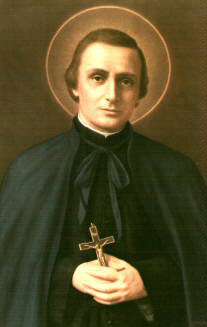 St. Peter Chanel: Saint of the Day for Sunday, April 28, 2024
 Prayer before a Crucifix: Prayer of the Day for Sunday, April 28, 2024
We ask you, humbly: don't scroll away.
Hi readers, it seems you use Catholic Online a lot; that's great! It's a little awkward to ask, but we need your help. If you have already donated, we sincerely thank you. We're not salespeople, but we depend on donations averaging $14.76 and fewer than 1% of readers give. If you donate just $5.00, the price of your coffee, Catholic Online School could keep thriving. Thank you.Help Now >



Copyright 2024 Catholic Online. All materials contained on this site, whether written, audible or visual are the exclusive property of Catholic Online and are protected under U.S. and International copyright laws, © Copyright 2024 Catholic Online. Any unauthorized use, without prior written consent of Catholic Online is strictly forbidden and prohibited.
Catholic Online is a Project of Your Catholic Voice Foundation, a Not-for-Profit Corporation. Your Catholic Voice Foundation has been granted a recognition of tax exemption under Section 501(c)(3) of the Internal Revenue Code. Federal Tax Identification Number: 81-0596847. Your gift is tax-deductible as allowed by law.