Cosmati Mosaic
FREE Catholic Classes
(Greek kosmos )
A peculiar style of inlaid ornamental mosaic introduced into the decorative art of Europe during the twelfth century, by a marble-worker named Laurentius, a native of Anagni, a small hill-town thirty-seven miles east-south-east of Rome. Laurentius acquired his craft from Greek masters and for a time followed their method of work, but early in his career, freeing himself from Byzantine traditions and influences, he worked along original lines and evolved a new style of decorative mosaic, vigorous in colour and design, which he invariably employed in conjunction with plain or sculptored marble surfaces, making it a decorative accessary to some architectural feature. As a rule he used white or light-coloured marbles for his backgrounds; these he inlaid with squares, parallelograms, and circles of darker marble, porphyry, or serpentine, surrounding them with ribbons of mosaic composed of coloured and gold-glass tesseræ. These harlequinads he separated one from another with marble mouldings, carvings, and flat bands, and further enriched them with mosaic. His earliest recorded work was executed for a church at Fabieri in 1190, and the earliest existing example is to be seen in the church of Ara Coeli at Rome. It consists of an epistle and gospel ambo, a chair, screen, and pavement. In much of his work he was assisted by his son, Jacobus, who was not only a sculptor and mosaic-worker, but also an architect of ability, as witness the architectural alterations carried out by him in the cathedral of Cività Castellana, a foreshadowing of the Renaissance. This was a work in which other members of his family took part, and they were all followers of the craft for four generations. Those attaining eminence in their art are named in the following genealogical epitome: Laurentius (1140-1210); Jacobus (1165-1234); Luca (1221-1240); Jacobus (1213-1293); Deodatus (1225-1294); Johannes (1231-1303). Their noted Cosmatesque mosaics are to be seen in the Roman churches of SS. Alessio e Bonifacio, S. Sabba, S. Cesareo, S. Giovanni a Porta Latina, S. Maria in Cosmedin, S. Balbina, S. Maria sopra Minerva, S. Maria Maggiore, and in the cloister of S. Scholastica at Subiaco, the basilica of St. Magus at Anagni, the duomo of Cività Castellana, and the ruined shrine of St. Edward the Confessor in Westminster Abbey.

Join the Movement
When you sign up below, you don't just join an email list - you're joining an entire movement for Free world class Catholic education.


-

-
Mysteries of the Rosary
-
St. Faustina Kowalska
-
Litany of the Blessed Virgin Mary
-
Saint of the Day for Wednesday, Oct 4th, 2023
-
Popular Saints
-
St. Francis of Assisi
-
Bible
-
Female / Women Saints
-
7 Morning Prayers you need to get your day started with God
-
Litany of the Blessed Virgin Mary


Sacrifices of Faith: The Pro-Life Legacies of St. Gianna and Jessica Hanna
-
How to love God by caring for our bodies
-
Pope Francis calls for negotiations to End Russia-Ukraine War
-
Pope Francis Contemplates Return to U.S. for United Nations Assembly Address
-
Pope Francis Calls on Faithful to Embrace Faith, Hope, and Charity in New Teaching Series

Daily Catholic
- Daily Readings for Sunday, April 28, 2024
- St. Peter Chanel: Saint of the Day for Sunday, April 28, 2024
- Prayer before a Crucifix: Prayer of the Day for Sunday, April 28, 2024
- Daily Readings for Saturday, April 27, 2024
- St. Zita: Saint of the Day for Saturday, April 27, 2024
- Prayer for the Dead # 2: Prayer of the Day for Saturday, April 27, 2024
 Daily Readings for Sunday, April 28, 2024
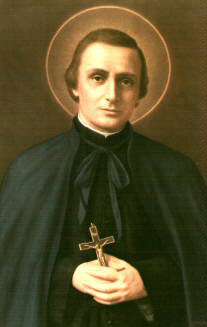 St. Peter Chanel: Saint of the Day for Sunday, April 28, 2024
 Prayer before a Crucifix: Prayer of the Day for Sunday, April 28, 2024
We ask you, humbly: don't scroll away.
Hi readers, it seems you use Catholic Online a lot; that's great! It's a little awkward to ask, but we need your help. If you have already donated, we sincerely thank you. We're not salespeople, but we depend on donations averaging $14.76 and fewer than 1% of readers give. If you donate just $5.00, the price of your coffee, Catholic Online School could keep thriving. Thank you.Help Now >


Copyright 2024 Catholic Online. All materials contained on this site, whether written, audible or visual are the exclusive property of Catholic Online and are protected under U.S. and International copyright laws, © Copyright 2024 Catholic Online. Any unauthorized use, without prior written consent of Catholic Online is strictly forbidden and prohibited.
Catholic Online is a Project of Your Catholic Voice Foundation, a Not-for-Profit Corporation. Your Catholic Voice Foundation has been granted a recognition of tax exemption under Section 501(c)(3) of the Internal Revenue Code. Federal Tax Identification Number: 81-0596847. Your gift is tax-deductible as allowed by law.
