We ask you, humbly: don't scroll away.
Hi readers, it seems you use Catholic Online a lot; that's great! It's a little awkward to ask, but we need your help. If you have already donated, we sincerely thank you. We're not salespeople, but we depend on donations averaging $14.76 and fewer than 1% of readers give. If you donate just $5.00, the price of your coffee, Catholic Online School could keep thriving. Thank you.Help Now >
Communicatio Idiomatum
FREE Catholic Classes
("Communication of Idioms").
A technical expression in the theology of the Incarnation. It means that the properties of the Divine Word can be ascribed to the man Christ, and that the properties of the man Christ can be predicated of the Word. The language of Scripture and of the Fathers shows that such a mutual interexchange of predicates is legitimate; in this article its source and the rules determining its use will be briefly considered.
I. SOURCE
The source of the communicatio idiomatum is not to be found in the close moral union between Christ and God as maintained by the Nestorians, nor in Christ's fullness of grace and supernatural gifts, nor, again, in the fact that the Word owns the human nature of Christ by right of creation. God the Father and the Holy Ghost have the same right and interest as the Son in all created things except in the human nature of Jesus Christ . This the Son by Assumption has made His own in a way that is not theirs, i.e., by the incommunicable property of personal union. In Christ there is one person with two natures, the human and the Divine. In ordinary language all the properties of a subject are predicated of its person ; consequently the properties of Christ's two natures must be predicated of his one person, since they have only one subject of predication. He Who is the Word of God on account of His eternal generation is also the subject of human properties; and He Who is the man Christ on account of having assumed human nature is the subject of Divine attributes. Christ is God ; God is man.

II. USE
The communicatio idiomatum is based on the oneness of person subsisting in the two natures of Jesus Christ. Hence it can be used as long as both the subject and the predicate of a sentence stand for the person of Jesus Christ, or present a common subject of predication. For in this case we simply affirm that He Who subsists in the Divine nature and possesses certain Divine properties is the same as He Who subsists in the human nature and possesses certain human properties. The following considerations will show the application of this principle more in detail:
(1) In general, concrete terms stand for the person : hence, statements interchanging the Divine and human properties of Christ are, generally speaking, correct if both their subjects and predicates be concrete terms. We may safely say, " God is man ", though we must observer certain cautions:
- The concrete human names of Christ describe His person according to His human nature. They presuppose the Incarnation, and their application to Christ previously to the completion of the hypostatic union would involve the Nestorian view that Christ's human nature had its own subsistence. Consequently, such expressions as "man became God " are to be avoided.
- Concrete terms used reduplicatively emphasize the nature rather than the person. The statement " God as God has suffered" means that God according to His Divine nature has suffered; needless to say, such statements are false.
- Certain expressions, though correct in themselves, are for extrinsic reasons, inadmissible; the statement "One of the Trinity was crucified" was misapplied in a Monophysite sense and was therefore forbidden by Pope Hormisdas ; the Arians misinterpreted the words "Christ is a creature"; both Arians and Nestorians misused the expressions "Christ had a beginning" and "Christ is less than the Father" or "less than God "; the Docetists abused the terms "incorporeal" and "impassible".
- Aside from the personal relations in God there is no real distinction admissible in Him. Hence abstract names and attributes of God, though standing formally for the Divine nature, imply really also the Divine persons. Absolutely speaking, we may replace a concrete Divine name by its corresponding abstract one and still keep the communication idiomatum. Thus we may say "Omnipotence was crucified", in the sense that He Who is omnipotent ( Omnipotence ) is the same as He Who was crucified. But such expressions are liable to be misunderstood and great care must be exercised in their use.
- There is less danger in the use of those abstract terms which express attributes appropriated to the Second person of the Trinity. We may say "Eternal Wisdom became man ".
- There is no communicatio idiomatum between the two natures of Christ, or between the Word and the human nature as such or its parts. The fundamental error of the Ubiquitists consists in predicating of the human nature or of humanity the properties of the Divine nature. We cannot say that "the Word is the humanity ", and still less that "the Word is the soul " or "the body of Christ".
- In negative sentences: though it be true that Christ did not die according to His Divine nature, we cannot say, "Christ did not die", without impairing His human nature ;
- in exclusive sentences: if we say "Christ is only God " or "Christ is only man ", we destroy either His human or His Divine nature ;
- in the use of ambiguous terms: the Arians, the Nestorians, and the Adoptionists misused the term "servant", inferring from the expression, "Christ is the servant of God ", conclusions agreeing with their respective heresies.

We ask you, humbly: don't scroll away.
Hi readers, it seems you use Catholic Online a lot; that's great! It's a little awkward to ask, but we need your help. If you have already donated, we sincerely thank you. We're not salespeople, but we depend on donations averaging $14.76 and fewer than 1% of readers give. If you donate just $5.00, the price of your coffee, Catholic Online School could keep thriving. Thank you.Help Now >
Join the Movement
When you sign up below, you don't just join an email list - you're joining an entire movement for Free world class Catholic education.


-

-
Mysteries of the Rosary
-
St. Faustina Kowalska
-
Litany of the Blessed Virgin Mary
-
Saint of the Day for Wednesday, Oct 4th, 2023
-
Popular Saints
-
St. Francis of Assisi
-
Bible
-
Female / Women Saints
-
7 Morning Prayers you need to get your day started with God
-
Litany of the Blessed Virgin Mary


Sacrifices of Faith: The Pro-Life Legacies of St. Gianna and Jessica Hanna
-
How to love God by caring for our bodies
-
Pope Francis calls for negotiations to End Russia-Ukraine War
-
Pope Francis Contemplates Return to U.S. for United Nations Assembly Address
-
Pope Francis Calls on Faithful to Embrace Faith, Hope, and Charity in New Teaching Series


Daily Catholic
- Daily Readings for Sunday, April 28, 2024
- St. Peter Chanel: Saint of the Day for Sunday, April 28, 2024
- Prayer before a Crucifix: Prayer of the Day for Sunday, April 28, 2024
- Daily Readings for Saturday, April 27, 2024
- St. Zita: Saint of the Day for Saturday, April 27, 2024
- Prayer for the Dead # 2: Prayer of the Day for Saturday, April 27, 2024
 Daily Readings for Sunday, April 28, 2024
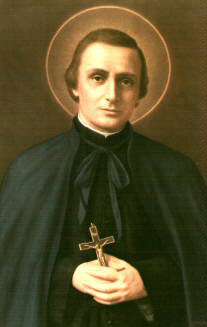 St. Peter Chanel: Saint of the Day for Sunday, April 28, 2024
 Prayer before a Crucifix: Prayer of the Day for Sunday, April 28, 2024
We ask you, humbly: don't scroll away.
Hi readers, it seems you use Catholic Online a lot; that's great! It's a little awkward to ask, but we need your help. If you have already donated, we sincerely thank you. We're not salespeople, but we depend on donations averaging $14.76 and fewer than 1% of readers give. If you donate just $5.00, the price of your coffee, Catholic Online School could keep thriving. Thank you.Help Now >


Copyright 2024 Catholic Online. All materials contained on this site, whether written, audible or visual are the exclusive property of Catholic Online and are protected under U.S. and International copyright laws, © Copyright 2024 Catholic Online. Any unauthorized use, without prior written consent of Catholic Online is strictly forbidden and prohibited.
Catholic Online is a Project of Your Catholic Voice Foundation, a Not-for-Profit Corporation. Your Catholic Voice Foundation has been granted a recognition of tax exemption under Section 501(c)(3) of the Internal Revenue Code. Federal Tax Identification Number: 81-0596847. Your gift is tax-deductible as allowed by law.