 Hi readers, it seems you use Catholic Online a lot; that's great! It's a little awkward to ask, but we need your help. If you have already donated, we sincerely thank you. We're not salespeople, but we depend on donations averaging $14.76 and fewer than 1% of readers give. If you donate just $5.00, the price of your coffee, Catholic Online School could keep thriving. Thank you. Help Now >
The Calas Case
FREE Catholic Classes
Jean Calas was a French Calvinist , born 19 March, 1698, at La Caparède near Castres, in the department of Tarn; executed 10 March, 1762, at Toulouse. At the time of the events which made his name famous, he was a prominent merchant of Toulouse, where he had resided for some forty years. In 1731 he married Anne-Rose Cabibel, and had six children: four sons, Marc-Antoine, Louis, Pierre, and Donat, and two daughters, Rose and Anne. One of the sons, Louis, was converted to Catholicity about 1760. His brother Marc-Antoine, also manifested an inclination to alter his faith, but, possibly owing to opposition on the part of the family, never took the final step. On 13 October, 1761, a number of people, attracted by the excitement, gathered around the house of Jean Calas. Marc-Antoine had been found hanged in his father's warehouse. The news spread rapidly; the capitouls , or highest civil magistrates, hurried to the scene. One of the multitude cried out that Antoine had been murdered by his father to prevent him from abjuring Protestantism. The crowd immediately took up the idea, and the members of the family were arrested. The dead son was looked upon as a martyr by the Catholic population, and his obsequies were celebrated with great ceremony. In the interrogatory the accused involved themselves in contradictions, and, on 9 March, 1762, the Parliament of Toulouse, by a vote of 8 to 5, pronounced sentence against Jean Calas. He was condemned to the torture, ordinary and extraordinary, was then broken upon the wheel, and finally burnt. The sentence was executed the following day. Calas suffered with admirable courage and, until his last breath, never ceased to protest his innocence. The property of the family was confiscated. Madame Calas was liberated; but her two daughters, who were absent from home at the time of their brother's death, were forced into a convent of the Visitation. Pierre and Donat escaped to Geneva. Voltaire, then living at Ferney, made the acquaintance of the family and employed his all-powerful influence to have the dead father's innocence officially proclaimed, at the same time using the latter's condemnation as a welcome source of new attacks upon the hated Catholic Church. In letters and pamphlets he defended the cause of Calas, and interested his many powerful friends in the case, which now began to attract world-wide attention. On 9 March, 1765, a Parisian tribunal unanimously pronounced Calas innocent. The Parliament of Toulouse was ordered to revoke the death sentence, but never obeyed the injunction. The remnant of the property was restored to the family, which, by a subscription and by gifts of money from King Louis XV, was enabled to live in moderate circumstances. The Calas Case was not without its effect on contemporary art and literature. Over a hundred publications relating to it are in existence. It forms the subject of many plays by F.-L. Laya (produced for the first time in Paris in 1790), Lemierre d'Argy (Paris, 1790), Marie-Joseph Chénier (Paris, 1791), and Victor Du Cange (Paris, 1819). Madame Calas and her daughters were living in Paris, when several of these were presented on the stage. Some historians, carried away perhaps by too great a desire to bring the innocence of Jean Calas to the fore, assert that Marc-Antoine committed suicide. But there are weighty reasons to doubt the father's innocence (Barthélemy). Voltaire cannot be considered an impartial historian of the case, owing to his preconceived desire to present a strong indictment against the Catholic Church, rather than to state the facts in their true light. The responsibility of the condemnation in no way rested with the ecclesiastical authorities, and the penalty was inflicted not for a mere religious offence, but for murder alleged to have been committed for a religious motive.

We ask you, humbly: don't scroll away.
Hi readers, it seems you use Catholic Online a lot; that's great! It's a little awkward to ask, but we need your help. If you have already donated, we sincerely thank you. We're not salespeople, but we depend on donations averaging $14.76 and fewer than 1% of readers give. If you donate just $5.00, the price of your coffee, Catholic Online School could keep thriving. Thank you.Help Now >

Join the Movement
When you sign up below, you don't just join an email list - you're joining an entire movement for Free world class Catholic education.


-

-
Mysteries of the Rosary
-
St. Faustina Kowalska
-
Litany of the Blessed Virgin Mary
-
Saint of the Day for Wednesday, Oct 4th, 2023
-
Popular Saints
-
St. Francis of Assisi
-
Bible
-
Female / Women Saints
-
7 Morning Prayers you need to get your day started with God
-
Litany of the Blessed Virgin Mary


Sacrifices of Faith: The Pro-Life Legacies of St. Gianna and Jessica Hanna
-
How to love God by caring for our bodies
-
Pope Francis calls for negotiations to End Russia-Ukraine War
-
Pope Francis Contemplates Return to U.S. for United Nations Assembly Address
-
Pope Francis Calls on Faithful to Embrace Faith, Hope, and Charity in New Teaching Series


Daily Catholic
- Daily Readings for Sunday, April 28, 2024
- St. Peter Chanel: Saint of the Day for Sunday, April 28, 2024
- Prayer before a Crucifix: Prayer of the Day for Sunday, April 28, 2024
- Daily Readings for Saturday, April 27, 2024
- St. Zita: Saint of the Day for Saturday, April 27, 2024
- Prayer for the Dead # 2: Prayer of the Day for Saturday, April 27, 2024
 Daily Readings for Sunday, April 28, 2024
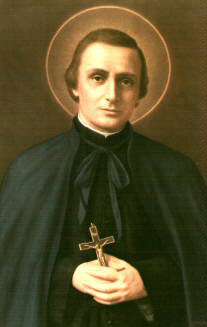 St. Peter Chanel: Saint of the Day for Sunday, April 28, 2024
 Prayer before a Crucifix: Prayer of the Day for Sunday, April 28, 2024



Copyright 2024 Catholic Online. All materials contained on this site, whether written, audible or visual are the exclusive property of Catholic Online and are protected under U.S. and International copyright laws, © Copyright 2024 Catholic Online. Any unauthorized use, without prior written consent of Catholic Online is strictly forbidden and prohibited.
Catholic Online is a Project of Your Catholic Voice Foundation, a Not-for-Profit Corporation. Your Catholic Voice Foundation has been granted a recognition of tax exemption under Section 501(c)(3) of the Internal Revenue Code. Federal Tax Identification Number: 81-0596847. Your gift is tax-deductible as allowed by law.