 Hi readers, it seems you use Catholic Online a lot; that's great! It's a little awkward to ask, but we need your help. If you have already donated, we sincerely thank you. We're not salespeople, but we depend on donations averaging $14.76 and fewer than 1% of readers give. If you donate just $5.00, the price of your coffee, Catholic Online School could keep thriving. Thank you. Help Now >
Burchard of Worms
FREE Catholic Classes
Bishop of that see, b. of noble parents in Hesse, Germany, after the middle of the tenth century; d. 20 August, 1025. He received his education in Coblenz and other places, and ultimately entered the service of Archbishop Willigis of Mainz (975-1011), by whom he was ordained deacon. He rose gradually in ecclesiastical rank and was finally appointed by Willigis first chamberlain, and primate or judge of the city. In these offices he showed so much discretion and impartiality, that his reputation reached Emperor Otto III. During a personal interview with his imperial master (1000) he was appointed to the vacant Bishopric of Worms; a few days later he was advanced to the priesthood and the episcopal dignity by Willigis at Heiligenstadt. Thenceforth he laboured unceasingly for the temporal and spiritual welfare of his subjects. He rebuilt the walls of Worms and with the approval of Henry II tore down the stronghold of a certain Duke Otto, which served as a place of refuge to criminals and malefactors. Between 1023 and 1025 he promulgated a celebrated body of laws the "Leges et Statuta familiae S. Petri Wormatiensis", with the purpose of insuring the impartial administration of justice. (Boos, in Urkundenbuch der Stadt Worms, I, 1886; Weiland, in Mon. Ger. Hist.: Leges, IV, 1.) Many monasteries and churches were erected by him. On the site of the aforesaid Otto's castle he built a monastery in honour of St. Paul ; his sister Mathilda was placed in charge of a community of religious women, whose home was practically rebuilt; the cathedral of St. Peter at Worms was reconstructed and dedicated in 1016. He also devoted himself to the formation of ecclesiastical students in his cathedral school and to the instruction of ecclesiastics generally. To stimulate their zeal he would at times answer difficult questions submitted to him. The prevalent evils he tried to reform through visitations and synods.
Hi readers, it seems you use Catholic Online a lot; that's great! It's a little awkward to ask, but we need your help. If you have already donated, we sincerely thank you. We're not salespeople, but we depend on donations averaging $14.76 and fewer than 1% of readers give. If you donate just $5.00, the price of your coffee, Catholic Online School could keep thriving. Thank you. Help Now >
For the sake of uniformity in all church matters he drew up a manual for the instruction and guidance of young ecclesiastics, this is his well-known "Collectarium canonum" or "Decretum" in twenty books, a compilation of ecclesiastical law and moral theology , drawn from previous similar collections, the penitential books, the writings of the Fathers, the decrees of councils and popes, and the Sacred Scriptures . For more than a century, until the publication of the "Decretum" of Gratian (c. 1150), this was a widely used practical guide of the clergy, often quoted as "Brocardus". The nineteenth book, known as "Corrector, seu medicus", was circulated frequently as a separate work and was esteemed as a practical confessor's guide. (Von Scherer, Kirchenrecht, I, 238.) The work was undertaken at the suggestion of Brunicho, the provost of the Worms Cathedral, and was executed with the help of Bishop Walter of Speyer and Abbot Olbert of Gembloux (ed. Foucher, Paris, 1549; Migne, P.L., CXL, Paris, 1853). Burchard enjoyed the special esteem of his imperial masters. With Otto III he was on the most intimate terms; Henry II and Conrad II made visits to him in 1009 and 1025 respectively. Personally Burchard was a saintly man. His biographer, probably an ecclesiastic, praises his devotion to prayer, his mortification, his fairness and charity towards others.
We ask you, humbly: don't scroll away.
Hi readers, it seems you use Catholic Online a lot; that's great! It's a little awkward to ask, but we need your help. If you have already donated, we sincerely thank you. We're not salespeople, but we depend on donations averaging $14.76 and fewer than 1% of readers give. If you donate just $5.00, the price of your coffee, Catholic Online School could keep thriving. Thank you.Help Now >
Join the Movement
When you sign up below, you don't just join an email list - you're joining an entire movement for Free world class Catholic education.


-

-
Mysteries of the Rosary
-
St. Faustina Kowalska
-
Litany of the Blessed Virgin Mary
-
Saint of the Day for Wednesday, Oct 4th, 2023
-
Popular Saints
-
St. Francis of Assisi
-
Bible
-
Female / Women Saints
-
7 Morning Prayers you need to get your day started with God
-
Litany of the Blessed Virgin Mary

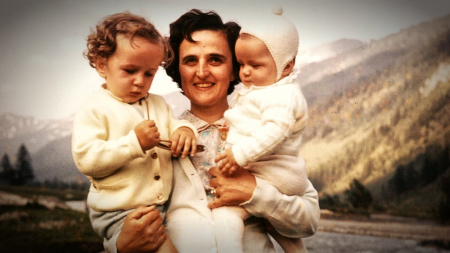
Sacrifices of Faith: The Pro-Life Legacies of St. Gianna and Jessica Hanna
-
How to love God by caring for our bodies
-
Pope Francis calls for negotiations to End Russia-Ukraine War
-
Pope Francis Contemplates Return to U.S. for United Nations Assembly Address
-
Pope Francis Calls on Faithful to Embrace Faith, Hope, and Charity in New Teaching Series
Daily Catholic
- Daily Readings for Sunday, April 28, 2024
- St. Peter Chanel: Saint of the Day for Sunday, April 28, 2024
- Prayer before a Crucifix: Prayer of the Day for Sunday, April 28, 2024
- Daily Readings for Saturday, April 27, 2024
- St. Zita: Saint of the Day for Saturday, April 27, 2024
- Prayer for the Dead # 2: Prayer of the Day for Saturday, April 27, 2024
 Daily Readings for Sunday, April 28, 2024
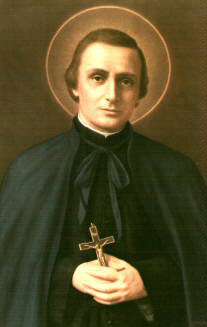 St. Peter Chanel: Saint of the Day for Sunday, April 28, 2024
 Prayer before a Crucifix: Prayer of the Day for Sunday, April 28, 2024
We ask you, humbly: don't scroll away.
Hi readers, it seems you use Catholic Online a lot; that's great! It's a little awkward to ask, but we need your help. If you have already donated, we sincerely thank you. We're not salespeople, but we depend on donations averaging $14.76 and fewer than 1% of readers give. If you donate just $5.00, the price of your coffee, Catholic Online School could keep thriving. Thank you.Help Now >

Copyright 2024 Catholic Online. All materials contained on this site, whether written, audible or visual are the exclusive property of Catholic Online and are protected under U.S. and International copyright laws, © Copyright 2024 Catholic Online. Any unauthorized use, without prior written consent of Catholic Online is strictly forbidden and prohibited.
Catholic Online is a Project of Your Catholic Voice Foundation, a Not-for-Profit Corporation. Your Catholic Voice Foundation has been granted a recognition of tax exemption under Section 501(c)(3) of the Internal Revenue Code. Federal Tax Identification Number: 81-0596847. Your gift is tax-deductible as allowed by law.