We ask you, humbly: don't scroll away.
Hi readers, it seems you use Catholic Online a lot; that's great! It's a little awkward to ask, but we need your help. If you have already donated, we sincerely thank you. We're not salespeople, but we depend on donations averaging $14.76 and fewer than 1% of readers give. If you donate just $5.00, the price of your coffee, Catholic Online School could keep thriving. Thank you.Help Now >
Charles Etienne, Abbé Brasseur de Bourbourg
FREE Catholic Classes
Born at Bourbourg (Département du Nord), France, 1814; died at Nice in January, 1874. He left France for Canada in 1845 and was for a short time professor of ecclesiastical history at Quebec. In 1846 he was at Boston as vicar-general of that diocese, and then returned to Europe where he spent two winters at Rome, searching archives for documents relative to Spanish America. In 1848 he went to Mexico and became chaplain of the French Legation at that city. In 1851 he returned to Paris until 1854, when he sailed for New York and from there to the Isthmus and Central America, visiting Nicaragua, San Salvador, and Guatemala. He arrived in the latter City 1 February, 1855, and was made ecclesiastical administrator of the district of Rabinal in Vera Paz which position he occupied for a year. In 1857 he was again in France. In the years 1859 and 1860 he visited the Isthmus of Tehuantepec and Chiapas, also parts of Guatemala. In 1864 he became attached to the French scientific mission to Mexico, but political events in that republic drove him back to Guatemala in 1865, whence he returned to Europe. Exhausted by his long arduous, and often dangerous labors, he died at Nice at the age of sixty. While an ecclesiastic worthy of high respect, and a teacher who has left a good record in the short period he devoted himself to instruction, Brasseur de Bourbourg was, above all, an indefatigable student of the American Indian of his past and present. Hence the many and protracted journeys in Mexico and Central America his permanent stay among aboriginal tribes, and his frequent visits to Europe were often made for the purpose of delving into archives for ethnographic linguistic, and historic material from the past. He collected a large number of manuscripts and prints dating from early times in Central America, and improved his apostolic labors among the Indians for ethnographic purposes. His publications embrace the period from 1857 to 1871, and the value of these publications, if not unimpeachable, is still great. His defects were, at the outset, too great an enthusiasm and too vivid a fancy, and his intercourse with Prescott, whom he personally knew, was not calculated to lessen these failings. Later on, he was led to tread a very dangerous field, that of tracing relationships between American peoples and Eastern civilization and, as he advanced in years, the connection between the Old World and the New in pre-Columbian times, while not impossible, assumed in his mind the form of a fact absolutely certain. His main works are: "Histoire des Nations civilisees du Mexique et de l'Amérique centrale" (Paris 1857-59, 4 vols.); "Voyage sur l'Isthme de Tehuantepec dans l'état de Chiapas et la République de Guatémala, 1859 et 1860" (Paris, 1861); "Popol Vuh, le Livre sacré des Quichés, &c." (Paris 1861) "Grammaire Quich:ée et le drame de Rabinal Achí" (Paris, 1862); "Quatre Lettres sur le Mexique" (Paris, 1868); "Cartas para servir de Introducción á la Historia primitiva de las Naciones civilizadas de la América setentrional" (Mexico, 1851); "Relation des choses du Yucatán" (Paris, 1864). In this work, which is a translation of the manuscript by Bishop Landa, the so-called Maya characters are given. Their value and significance are not yet fully established; "Monuments aneiens du Mexique" (Palenque, etc., Paris, 1866), "Manuscrit Troano" (Paris, 1869-70); "Bibliothèque mexico-guatémalienne" (Paris, 1871).
We ask you, humbly: don't scroll away.
Hi readers, it seems you use Catholic Online a lot; that's great! It's a little awkward to ask, but we need your help. If you have already donated, we sincerely thank you. We're not salespeople, but we depend on donations averaging $14.76 and fewer than 1% of readers give. If you donate just $5.00, the price of your coffee, Catholic Online School could keep thriving. Thank you.Help Now >

Join the Movement
When you sign up below, you don't just join an email list - you're joining an entire movement for Free world class Catholic education.


-

-
Mysteries of the Rosary
-
St. Faustina Kowalska
-
Litany of the Blessed Virgin Mary
-
Saint of the Day for Wednesday, Oct 4th, 2023
-
Popular Saints
-
St. Francis of Assisi
-
Bible
-
Female / Women Saints
-
7 Morning Prayers you need to get your day started with God
-
Litany of the Blessed Virgin Mary


Sacrifices of Faith: The Pro-Life Legacies of St. Gianna and Jessica Hanna
-
How to love God by caring for our bodies
-
Pope Francis calls for negotiations to End Russia-Ukraine War
-
Pope Francis Contemplates Return to U.S. for United Nations Assembly Address
-
Pope Francis Calls on Faithful to Embrace Faith, Hope, and Charity in New Teaching Series


Daily Catholic
- Daily Readings for Sunday, April 28, 2024
- St. Peter Chanel: Saint of the Day for Sunday, April 28, 2024
- Prayer before a Crucifix: Prayer of the Day for Sunday, April 28, 2024
- Daily Readings for Saturday, April 27, 2024
- St. Zita: Saint of the Day for Saturday, April 27, 2024
- Prayer for the Dead # 2: Prayer of the Day for Saturday, April 27, 2024
 Daily Readings for Sunday, April 28, 2024
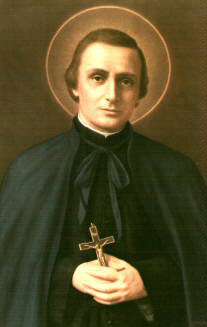 St. Peter Chanel: Saint of the Day for Sunday, April 28, 2024
 Prayer before a Crucifix: Prayer of the Day for Sunday, April 28, 2024
We ask you, humbly: don't scroll away.
Hi readers, it seems you use Catholic Online a lot; that's great! It's a little awkward to ask, but we need your help. If you have already donated, we sincerely thank you. We're not salespeople, but we depend on donations averaging $14.76 and fewer than 1% of readers give. If you donate just $5.00, the price of your coffee, Catholic Online School could keep thriving. Thank you.Help Now >


Copyright 2024 Catholic Online. All materials contained on this site, whether written, audible or visual are the exclusive property of Catholic Online and are protected under U.S. and International copyright laws, © Copyright 2024 Catholic Online. Any unauthorized use, without prior written consent of Catholic Online is strictly forbidden and prohibited.
Catholic Online is a Project of Your Catholic Voice Foundation, a Not-for-Profit Corporation. Your Catholic Voice Foundation has been granted a recognition of tax exemption under Section 501(c)(3) of the Internal Revenue Code. Federal Tax Identification Number: 81-0596847. Your gift is tax-deductible as allowed by law.
