 Hi readers, it seems you use Catholic Online a lot; that's great! It's a little awkward to ask, but we need your help. If you have already donated, we sincerely thank you. We're not salespeople, but we depend on donations averaging $14.76 and fewer than 1% of readers give. If you donate just $5.00, the price of your coffee, Catholic Online School could keep thriving. Thank you. Help Now >
Jacques Bonfrère
FREE Catholic Classes
Biblical scholar, born at Dinant, Belgium, 12 April, 1573; died at Tournai, 9 May, 1642. He entered the Society of Jesus in 1592. After having taught rhetoric, philosophy, and theology, he devoted himself to the Sacred Scriptures . He was long a professor of Scripture and Hebrew at Douai, where he was Superior of the Scots College. Sweert, in his "Athneae Belgicae," speaks of him as a man of rare virtue ; he praises his industry and prudence, as well as the penetration of his mind and the solidity of his judgment. His work in the department of Sacred Scriptures , into which, he tells us, he had been initiated by Cornelius à Lapide, has always been highly appreciated. His "Praeloquia" was, in 1839, selected by Migne as the most suitable treatise or general introduction with which to begin his "Sacrae Scripturae Cursus Completus" (I, cols. 5-242). In this work, Bonfrere deals with subjects pertaining to the Bible as a whole. He selection and treatment of topics was largely determined by the controversies of the time regarding the value of the Vulgate, the obscurity of Scripture, etc. But many of them still retain their interest; and they are all handled in a clear and interesting way. The historical methods now applied to the canon text, and hermeneutics of Sacred Scripture were not known in his time. He deals with inspiration in one chapter (ch. viii: De modo quo Deus cum hisce Scriptoribus hagiographis habuit ). The views he sets forth here do not in all respects agree with the teachings of modern theologians. He holds, for instance, that approval of a writing by God, subsequent to its composition, would suffice to make it canonical. In point of fact, though, he assures us, no book of the Bible was so composed. He then expresses the opinion that when writing on what they knew without revelation, the sacred authors only had the assistance necessary to preserve them from error. He does not make a clear distinction between inspiration and revelation. (See Pesch, De Inspiratione," Nos. 323 and 324).
We ask you, humbly: don't scroll away.
Hi readers, it seems you use Catholic Online a lot; that's great! It's a little awkward to ask, but we need your help. If you have already donated, we sincerely thank you. We're not salespeople, but we depend on donations averaging $14.76 and fewer than 1% of readers give. If you donate just $5.00, the price of your coffee, Catholic Online School could keep thriving. Thank you.Help Now >
The "Praeloquia" were published along with a commentary on the Pentateuch in a volume entitled: "Pentateuchis Mosis commentario illustatis, praemissis praeloquiis perutilibus (fol., Antwerp, 1625). This was followed by his commentary on Josue, Judges, and Ruth, to which he added a treatise on sacred geography, composed by Eusebius and translated by St. Jerome : Josue, Judices et Ruth commentario illustarti. Accessit Onomasticon" (fol. Paris, 1631). Bonfrere had undertaken to explain the Books of Kings before his work on the Pentateuch, he tells us in his preface to the latter; but he had felt the need of going back to the beginning of things. His "Libri Regnum et Paralipomenon commentariis illustrati," was given to the press in Tournai, in 1643, after his death. But the printing-house was burned, and the work did not appear. Biographers have no reference even to the manuscripts. The learned professor is said to have left commentaries on nearly all the other books of the Bible . Bonfrere's explanation of the text of scripture shows a very good knowledge of Hebrew, and pays special attention to the places mentioned. His erudition is extensive for his time. The soberness and judiciousness of his comments are generally admired.


Join the Movement
When you sign up below, you don't just join an email list - you're joining an entire movement for Free world class Catholic education.


-

-
Mysteries of the Rosary
-
St. Faustina Kowalska
-
Litany of the Blessed Virgin Mary
-
Saint of the Day for Wednesday, Oct 4th, 2023
-
Popular Saints
-
St. Francis of Assisi
-
Bible
-
Female / Women Saints
-
7 Morning Prayers you need to get your day started with God
-
Litany of the Blessed Virgin Mary


Sacrifices of Faith: The Pro-Life Legacies of St. Gianna and Jessica Hanna
-
How to love God by caring for our bodies
-
Pope Francis calls for negotiations to End Russia-Ukraine War
-
Pope Francis Contemplates Return to U.S. for United Nations Assembly Address
-
Pope Francis Calls on Faithful to Embrace Faith, Hope, and Charity in New Teaching Series


Daily Catholic
- Daily Readings for Sunday, April 28, 2024
- St. Peter Chanel: Saint of the Day for Sunday, April 28, 2024
- Prayer before a Crucifix: Prayer of the Day for Sunday, April 28, 2024
- Daily Readings for Saturday, April 27, 2024
- St. Zita: Saint of the Day for Saturday, April 27, 2024
- Prayer for the Dead # 2: Prayer of the Day for Saturday, April 27, 2024
 Daily Readings for Sunday, April 28, 2024
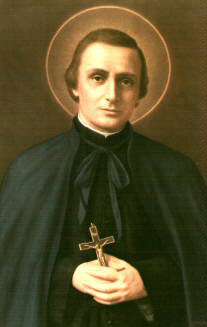 St. Peter Chanel: Saint of the Day for Sunday, April 28, 2024
 Prayer before a Crucifix: Prayer of the Day for Sunday, April 28, 2024
Hi readers, it seems you use Catholic Online a lot; that's great! It's a little awkward to ask, but we need your help. If you have already donated, we sincerely thank you. We're not salespeople, but we depend on donations averaging $14.76 and fewer than 1% of readers give. If you donate just $5.00, the price of your coffee, Catholic Online School could keep thriving. Thank you. Help Now >
Prayer before a Crucifix: Prayer of the Day for Sunday, April 28, 2024
Hi readers, it seems you use Catholic Online a lot; that's great! It's a little awkward to ask, but we need your help. If you have already donated, we sincerely thank you. We're not salespeople, but we depend on donations averaging $14.76 and fewer than 1% of readers give. If you donate just $5.00, the price of your coffee, Catholic Online School could keep thriving. Thank you. Help Now >


Copyright 2024 Catholic Online. All materials contained on this site, whether written, audible or visual are the exclusive property of Catholic Online and are protected under U.S. and International copyright laws, © Copyright 2024 Catholic Online. Any unauthorized use, without prior written consent of Catholic Online is strictly forbidden and prohibited.
Catholic Online is a Project of Your Catholic Voice Foundation, a Not-for-Profit Corporation. Your Catholic Voice Foundation has been granted a recognition of tax exemption under Section 501(c)(3) of the Internal Revenue Code. Federal Tax Identification Number: 81-0596847. Your gift is tax-deductible as allowed by law.