Beja (Beiensis)
FREE Catholic Classes
Diocese in Portugal, suffragan of Evora. It was created 10 June, 1770, and numbers 175,000 Catholics with 115 parishes, 120 priests, and 197 churches. It is the capital of the district of Baixo Alemtejo.
The city is supposed to be the Pax Julia , or Paca , of the Romans, and is still surrounded by remains of old Roman walls, which however, were partly restored during the Middle Ages. Beja was taken from the Moors in 1162 by Affonso Henriques. It stands on the summit of a high hill surrounded by beautiful and fertile valleys under cultivation, as the district is rich in agricultural products, mainly cereals, olive oil, and wine. The best example of medieval architecture still extant in Portugal is the castle built in Beja by King Dom Diniz. It is a square, massive structure 120 feet high, from the top of which the whole of the Alemtejo country and the Cintra mountains may be seen. The walls of the castle are covered with hieroglyphics. Beja was in its early days an episcopal city, but at the time of the invasion by the Moors lost its dignity. The Cathedral of Beja is an old temple, though so much modernized as to make it impossible to determine with any degree of certainty its original date. Other famous churches are those of Our Lady of the Conception, St. Iago, or Santiago, and Santa Maria de la Feira, said to have been an old Moorish mosque. The College of St. Sissenando, which belonged to the Jesuits, and was built principally at the expense of Donna Maria Sophia, in 1695, stands in the street where the saint was born. Part of this building is now occupied by the episcopal palace. The city has about 8,000 inhabitants, modern improvements, schools, banks, libraries, etc. It is said to be the richest in Roman remains of all the cities in Portugal, except Evora, which now possesses a large collection of Roman antiquities collected in Beja.

We ask you, humbly: don't scroll away.
Hi readers, it seems you use Catholic Online a lot; that's great! It's a little awkward to ask, but we need your help. If you have already donated, we sincerely thank you. We're not salespeople, but we depend on donations averaging $14.76 and fewer than 1% of readers give. If you donate just $5.00, the price of your coffee, Catholic Online School could keep thriving. Thank you.Help Now >
Join the Movement
When you sign up below, you don't just join an email list - you're joining an entire movement for Free world class Catholic education.


-

-
Mysteries of the Rosary
-
St. Faustina Kowalska
-
Litany of the Blessed Virgin Mary
-
Saint of the Day for Wednesday, Oct 4th, 2023
-
Popular Saints
-
St. Francis of Assisi
-
Bible
-
Female / Women Saints
-
7 Morning Prayers you need to get your day started with God
-
Litany of the Blessed Virgin Mary

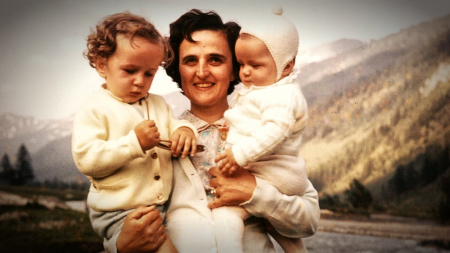
Sacrifices of Faith: The Pro-Life Legacies of St. Gianna and Jessica Hanna
-
How to love God by caring for our bodies
-
Pope Francis calls for negotiations to End Russia-Ukraine War
-
Pope Francis Contemplates Return to U.S. for United Nations Assembly Address
-
Pope Francis Calls on Faithful to Embrace Faith, Hope, and Charity in New Teaching Series
Daily Catholic
- Daily Readings for Sunday, April 28, 2024
- St. Peter Chanel: Saint of the Day for Sunday, April 28, 2024
- Prayer before a Crucifix: Prayer of the Day for Sunday, April 28, 2024
- Daily Readings for Saturday, April 27, 2024
- St. Zita: Saint of the Day for Saturday, April 27, 2024
- Prayer for the Dead # 2: Prayer of the Day for Saturday, April 27, 2024
 Daily Readings for Sunday, April 28, 2024
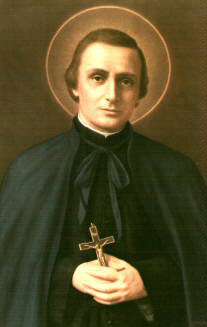 St. Peter Chanel: Saint of the Day for Sunday, April 28, 2024
 Prayer before a Crucifix: Prayer of the Day for Sunday, April 28, 2024
We ask you, humbly: don't scroll away.
Hi readers, it seems you use Catholic Online a lot; that's great! It's a little awkward to ask, but we need your help. If you have already donated, we sincerely thank you. We're not salespeople, but we depend on donations averaging $14.76 and fewer than 1% of readers give. If you donate just $5.00, the price of your coffee, Catholic Online School could keep thriving. Thank you.Help Now >

Copyright 2024 Catholic Online. All materials contained on this site, whether written, audible or visual are the exclusive property of Catholic Online and are protected under U.S. and International copyright laws, © Copyright 2024 Catholic Online. Any unauthorized use, without prior written consent of Catholic Online is strictly forbidden and prohibited.
Catholic Online is a Project of Your Catholic Voice Foundation, a Not-for-Profit Corporation. Your Catholic Voice Foundation has been granted a recognition of tax exemption under Section 501(c)(3) of the Internal Revenue Code. Federal Tax Identification Number: 81-0596847. Your gift is tax-deductible as allowed by law.
