We ask you, humbly: don't scroll away.
Hi readers, it seems you use Catholic Online a lot; that's great! It's a little awkward to ask, but we need your help. If you have already donated, we sincerely thank you. We're not salespeople, but we depend on donations averaging $14.76 and fewer than 1% of readers give. If you donate just $5.00, the price of your coffee, Catholic Online School could keep thriving. Thank you.Help Now >
Ven. Bartholomew of Braga
FREE Catholic Classes
Born at Verdela, near Lisbon, May, 1514; died at Viana, 16 July, 1590. Bartholomew Fernandez, later known as a Martyribus, out of veneration for the church in which he was baptized, came of humble parentage. He entered the Dominican Order, 11 November, 1527, and was professed 20 November, 1529. On the completion of his studies, he taught philosophy in the monastery at Lisbon, and then for about twenty years theology in various houses of his order. In 1551 he received the Master's degree at the provincial chapter of Salamanca. While teaching theology in the monastery of Batalha, he was summoned to Evora by the Infante Dom Luis to undertake the religious education of his son, Dom Antonio, who was entering the ecclesiastical state. He devoted two years to this task. In 1558, against his own desires, and only out of obedience to his provincial, Luis of Granada , he accepted the appointment to the archiepiscopal See of Braga, for which he had been chosen by Queen Catherine, and in 1559 received episcopal consecration. With true apostolic zeal he devoted himself to the duties of his new office.
On the resumption of the General Council of Trent in 1561, Bartholomew repaired to the council and took part in the last sessions. He was highly esteemed among the Fathers of the council both on account of his theological learning and the holiness of his life, and he exercised great influence in the discussions, particularly those with regard to the decrees on the reform of ecclesiastical life. On the conclusion of the council he returned, in February, 1564, to his see, and in 1566 held an important provincial synod in which excellent decrees were passed for the restoration of ecclesiastical discipline and the elevation of the moral life of clergy and people (Concilium provinciale Bracarense quartum, Braga, 1567). The archbishop now devoted himself most zealously to the task of carrying out the reforms of the Council of Trent as well as the decrees of his own provincial synod. A great famine and a visitation of the plague revealed the depths of his charity. After repeated requests, having received, on 20 February, 1582, permission to resign his see, he withdrew to the monastery of his order at Viana, to prepare in solitude for the end.
We ask you, humbly: don't scroll away.
Hi readers, it seems you use Catholic Online a lot; that's great! It's a little awkward to ask, but we need your help. If you have already donated, we sincerely thank you. We're not salespeople, but we depend on donations averaging $14.76 and fewer than 1% of readers give. If you donate just $5.00, the price of your coffee, Catholic Online School could keep thriving. Thank you.Help Now >
In 1845 Gregory XVI declared him Venerable. In the interests of a truly Christian life and the promotion of ecclesiastical discipline, he wrote: "Compendium spiritualis doctrinae ex variis sanc. Patrum sententiis magana ex parte collectum" (Lisbon, 1582); "Stimulus pastorum ex gravissimis sanct. Patrum sententiis concinnatus, in quo agitur de vita et moribus episcoporum aliorumque praelatorum" (Rome, 1564; published at the instance of St. Charles Borromeo ); "Catechismo ou Doutrina christiana" (Lisbon, 1562). All these writings have been frequently republished and translated into several languages. A collective edition is: "Opera omnia cura et studio Malachiae d'Inguinbert, archiep. Theodos." (1 vol. Fol. In 2 parts, Rome, 1734-35).

We ask you, humbly: don't scroll away.
Hi readers, it seems you use Catholic Online a lot; that's great! It's a little awkward to ask, but we need your help. If you have already donated, we sincerely thank you. We're not salespeople, but we depend on donations averaging $14.76 and fewer than 1% of readers give. If you donate just $5.00, the price of your coffee, Catholic Online School could keep thriving. Thank you.Help Now >
Join the Movement
When you sign up below, you don't just join an email list - you're joining an entire movement for Free world class Catholic education.


-

-
Mysteries of the Rosary
-
St. Faustina Kowalska
-
Litany of the Blessed Virgin Mary
-
Saint of the Day for Wednesday, Oct 4th, 2023
-
Popular Saints
-
St. Francis of Assisi
-
Bible
-
Female / Women Saints
-
7 Morning Prayers you need to get your day started with God
-
Litany of the Blessed Virgin Mary

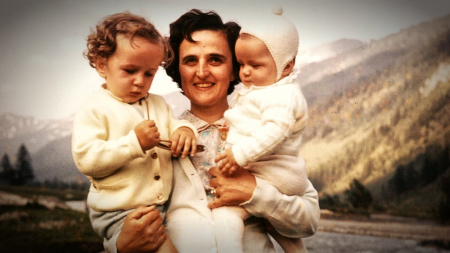
Sacrifices of Faith: The Pro-Life Legacies of St. Gianna and Jessica Hanna
-
How to love God by caring for our bodies
-
Pope Francis calls for negotiations to End Russia-Ukraine War
-
Pope Francis Contemplates Return to U.S. for United Nations Assembly Address
-
Pope Francis Calls on Faithful to Embrace Faith, Hope, and Charity in New Teaching Series


Daily Catholic
- Daily Readings for Sunday, April 28, 2024
- St. Peter Chanel: Saint of the Day for Sunday, April 28, 2024
- Prayer before a Crucifix: Prayer of the Day for Sunday, April 28, 2024
- Daily Readings for Saturday, April 27, 2024
- St. Zita: Saint of the Day for Saturday, April 27, 2024
- Prayer for the Dead # 2: Prayer of the Day for Saturday, April 27, 2024
 Daily Readings for Sunday, April 28, 2024
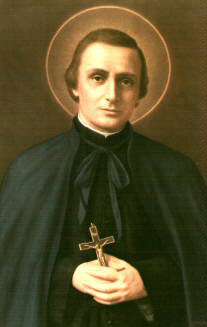 St. Peter Chanel: Saint of the Day for Sunday, April 28, 2024
 Prayer before a Crucifix: Prayer of the Day for Sunday, April 28, 2024
 Hi readers, it seems you use Catholic Online a lot; that's great! It's a little awkward to ask, but we need your help. If you have already donated, we sincerely thank you. We're not salespeople, but we depend on donations averaging $14.76 and fewer than 1% of readers give. If you donate just $5.00, the price of your coffee, Catholic Online School could keep thriving. Thank you. Help Now >

Copyright 2024 Catholic Online. All materials contained on this site, whether written, audible or visual are the exclusive property of Catholic Online and are protected under U.S. and International copyright laws, © Copyright 2024 Catholic Online. Any unauthorized use, without prior written consent of Catholic Online is strictly forbidden and prohibited.
Catholic Online is a Project of Your Catholic Voice Foundation, a Not-for-Profit Corporation. Your Catholic Voice Foundation has been granted a recognition of tax exemption under Section 501(c)(3) of the Internal Revenue Code. Federal Tax Identification Number: 81-0596847. Your gift is tax-deductible as allowed by law.