We ask you, humbly: don't scroll away.
Hi readers, it seems you use Catholic Online a lot; that's great! It's a little awkward to ask, but we need your help. If you have already donated, we sincerely thank you. We're not salespeople, but we depend on donations averaging $14.76 and fewer than 1% of readers give. If you donate just $5.00, the price of your coffee, Catholic Online School could keep thriving. Thank you.Help Now >
Blessed Baptista Mantuanus
FREE Catholic Classes
(Or SPAGNOLI). Carmelite and Renaissance poet, born at Mantua, 17 April, 1447, where he also died, 22 March, 1516. The eldest son of Peter Spagnoli, a Spanish nobleman at the court of Mantua, Baptista studied grammar under Gregorio Tifernate, and philosophy at Pavia under Polo Bagelardi. The bad example of his schoolfellows led him into irregularities. He fell into the hands of usurers and, returning home, was turned out of his father's house owing to some calumny. He went to Venice and later on to Ferrara where he carried out his resolution of entering the Carmelite convent which belonged to the then flourishing Reform of Mantua. In a letter addressed to his father (1 April, 1464), and in his first publication, "De Vitâ beatâ", he gave an account of his previous life and of the motives which led him to the cloister.
Baptista pursued his studies at Ferrara and Bologna where he was ordained priest, received his degrees, and delivered lectures in philosophy and divinity. The Duke of Mantua entrusted him with the education of his children, and the connection with the ducal family resulted in a number of poetical works, the "Trophaeum Gonzagae" and the "Fortuna Gonzagae", on the various misfortunes of the young duke; "Contra amorem" containing good advice to Sigismondo Gonzaga, and other poems celebrating the latter's elevation to dignities, even to the Roman purple. Six times (each for two years with four years interval) Baptista was nominated vicar general of his congregation, and, in 1513, general of the whole order through the exertions of his former disciples, the duke and the cardinal. The chapter, however, resenting the intervention, restricted his powers. He held the office until his death, but, broken in health and energy, he exercised but little influence beyond consolidating the congregation of Albi, a French imitation of the Mantuan Reform. Baptista Mantuanus was beatified in 1890, his feast being assigned to 23 March.

Chiefly known as one of the most prolific Renaissance poets he excelled in almost every form of Latin verse; Virgil, however, was his favourite model. A monument represents the two poets of Mantua with Poetry hesitating to whom she is to offer the crown: " Cui dabo? " Baptista exercised too little self restraint, however, to deserve it. He was bitterly attacked concerning the good taste of his earlier works printed without his knowledge, and also, but groundlessly, with reference to the legitimacy of his birth. To the end he made too free use of pagan mythology.

We ask you, humbly: don't scroll away.
Hi readers, it seems you use Catholic Online a lot; that's great! It's a little awkward to ask, but we need your help. If you have already donated, we sincerely thank you. We're not salespeople, but we depend on donations averaging $14.76 and fewer than 1% of readers give. If you donate just $5.00, the price of your coffee, Catholic Online School could keep thriving. Thank you.Help Now >
Join the Movement
When you sign up below, you don't just join an email list - you're joining an entire movement for Free world class Catholic education.


-

-
Mysteries of the Rosary
-
St. Faustina Kowalska
-
Litany of the Blessed Virgin Mary
-
Saint of the Day for Wednesday, Oct 4th, 2023
-
Popular Saints
-
St. Francis of Assisi
-
Bible
-
Female / Women Saints
-
7 Morning Prayers you need to get your day started with God
-
Litany of the Blessed Virgin Mary

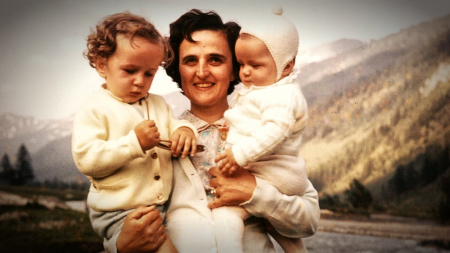
Sacrifices of Faith: The Pro-Life Legacies of St. Gianna and Jessica Hanna
-
How to love God by caring for our bodies
-
Pope Francis calls for negotiations to End Russia-Ukraine War
-
Pope Francis Contemplates Return to U.S. for United Nations Assembly Address
-
Pope Francis Calls on Faithful to Embrace Faith, Hope, and Charity in New Teaching Series


Daily Catholic
- Daily Readings for Monday, April 29, 2024
- St. Catherine of Siena: Saint of the Day for Monday, April 29, 2024
- Prayer for the Dead # 3: Prayer of the Day for Monday, April 29, 2024
- Daily Readings for Sunday, April 28, 2024
- St. Peter Chanel: Saint of the Day for Sunday, April 28, 2024
- Prayer before a Crucifix: Prayer of the Day for Sunday, April 28, 2024
 Daily Readings for Monday, April 29, 2024
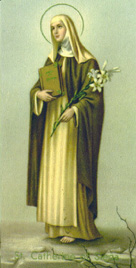 St. Catherine of Siena: Saint of the Day for Monday, April 29, 2024
 Prayer for the Dead # 3: Prayer of the Day for Monday, April 29, 2024
We ask you, humbly: don't scroll away.
Hi readers, it seems you use Catholic Online a lot; that's great! It's a little awkward to ask, but we need your help. If you have already donated, we sincerely thank you. We're not salespeople, but we depend on donations averaging $14.76 and fewer than 1% of readers give. If you donate just $5.00, the price of your coffee, Catholic Online School could keep thriving. Thank you.Help Now >

Copyright 2024 Catholic Online. All materials contained on this site, whether written, audible or visual are the exclusive property of Catholic Online and are protected under U.S. and International copyright laws, © Copyright 2024 Catholic Online. Any unauthorized use, without prior written consent of Catholic Online is strictly forbidden and prohibited.
Catholic Online is a Project of Your Catholic Voice Foundation, a Not-for-Profit Corporation. Your Catholic Voice Foundation has been granted a recognition of tax exemption under Section 501(c)(3) of the Internal Revenue Code. Federal Tax Identification Number: 81-0596847. Your gift is tax-deductible as allowed by law.