We ask you, humbly: don't scroll away.
Hi readers, it seems you use Catholic Online a lot; that's great! It's a little awkward to ask, but we need your help. If you have already donated, we sincerely thank you. We're not salespeople, but we depend on donations averaging $14.76 and fewer than 1% of readers give. If you donate just $5.00, the price of your coffee, Catholic Online School could keep thriving. Thank you.Help Now >
St. Avitus
FREE Catholic Classes
(Alcimus Ecdicius).
A distinguished bishop of Vienne, in Gaul, from 490 to about 518, though his death is place by some as late as 525 or 526. He was born of a prominent Gallo-Roman family closely related to the Emperor Avitus and other illustrious persons, and in which episcopal honors were hereditary. In difficult times for the Catholic faith and Roman culture in Southern Gaul, Avitus exercised a favourable influence. He pursued with earnestness and success the extinction of the Arian heresy in the barbarian Kingdom of Burgundy (443-532), won the confidence of King Gundobad, and converted his son, King Sigismund (516-523). He was also a zealous opponent of Semipelagianism, and of the Acacian Schism at Constantinople. Like his contemporary, Ennodius of Pavia, he was strenuous in his assertion of the authority of the Apostolic See as the chief bulwark of religious unity and the incipient Christian civilization. "If the pope," he says, "is rejected, it follows that not one bishop, the whole episcopate threatens to fall" ( Si papa urbis vocatur in dubium, episcopatus videbitur, non episcopus, vaccilare . -- Ep. xxxiv; ed. Peiper). The literary fame of Avitus rests on a poem of 2,552 hexameters, in five books, dealing with the Scriptural narrative of Original Sin, Expulsion from Paradise, the Deluge, the Crossing of the Red Sea. The first three books offer a certain dramatic unity; in them are told the preliminaries of the great disaster, the catastrophe itself, and the consequences. The fourth and fifth books deal with the Deluge and the Crossing of the Red Sea as symbols of baptism. Avitus deals freely and familiarly with the Scriptural events, and exhibits well their beauty, sequence, and significance. He is one of the last masters of the art of rhetoric as taught in the schools of Gaul in the fourth and fifth centuries. Ebert says that none of the ancient Christian poets treated more successfully the poetic elements of the Bible . His poetic diction, though abounding in archaisms and rhythmic redundancy, is pure and select, and the laws of metre are well observed. It is said that Milton made use of his paraphase [sic] of Scripture in the preparation of "Paradise Lost". He wrote also 666 hexameters "De virginitate" or "De consolatoriâ castitatis laude" for the comfort of his sister Fuscina, a nun. His prose works include "Contra Eutychianam Hæresim libri II", written in 512 or 513, and also about eighty-seven letters that are of considerable importance for the ecclesiastical and political history of the years 499-518. Among them is the famous letter to Clovis on the occasion of his baptism. There was once extant a collection of his homilies, but they have perished with the exception of two and some fragments and excerpts. In recent times Julien Havet has demonstrated (Questions mérovingiennes, Paris, 1885), that Avitus is not the author of the "Dialogi cum Gundobado Rege", a defence of the Catholic Faith against the Arians, purporting to represent the famous Colloquy of Lyons in 449, and first published by d'Achéry (1661) in his "Spicilegium" (V, 110-116). It is a forgery of the Oratorian, Jérome Viguier, who also forged the letter of Pope Symmachus (13 Oct., 501) to Avitus. The works of Avitus are found in Migne, P.L., LIX, 191-398. There are two recent editions: one by R. Peiper (in Mon. Germ. Hist.: Auct. Antiq., VI, Berlin, 1883), the other by U. Chevalier (Lyons, 1890).
We ask you, humbly: don't scroll away.
Hi readers, it seems you use Catholic Online a lot; that's great! It's a little awkward to ask, but we need your help. If you have already donated, we sincerely thank you. We're not salespeople, but we depend on donations averaging $14.76 and fewer than 1% of readers give. If you donate just $5.00, the price of your coffee, Catholic Online School could keep thriving. Thank you.Help Now >


Join the Movement
When you sign up below, you don't just join an email list - you're joining an entire movement for Free world class Catholic education.


-

-
Mysteries of the Rosary
-
St. Faustina Kowalska
-
Litany of the Blessed Virgin Mary
-
Saint of the Day for Wednesday, Oct 4th, 2023
-
Popular Saints
-
St. Francis of Assisi
-
Bible
-
Female / Women Saints
-
7 Morning Prayers you need to get your day started with God
-
Litany of the Blessed Virgin Mary


Sacrifices of Faith: The Pro-Life Legacies of St. Gianna and Jessica Hanna
-
How to love God by caring for our bodies
-
Pope Francis calls for negotiations to End Russia-Ukraine War
-
Pope Francis Contemplates Return to U.S. for United Nations Assembly Address
-
Pope Francis Calls on Faithful to Embrace Faith, Hope, and Charity in New Teaching Series


Daily Catholic
- Daily Readings for Sunday, April 28, 2024
- St. Peter Chanel: Saint of the Day for Sunday, April 28, 2024
- Prayer before a Crucifix: Prayer of the Day for Sunday, April 28, 2024
- Daily Readings for Saturday, April 27, 2024
- St. Zita: Saint of the Day for Saturday, April 27, 2024
- Prayer for the Dead # 2: Prayer of the Day for Saturday, April 27, 2024
 Daily Readings for Sunday, April 28, 2024
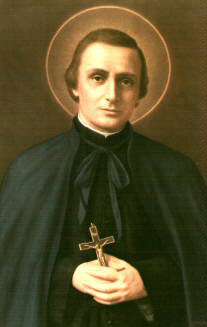 St. Peter Chanel: Saint of the Day for Sunday, April 28, 2024
 Prayer before a Crucifix: Prayer of the Day for Sunday, April 28, 2024



Copyright 2024 Catholic Online. All materials contained on this site, whether written, audible or visual are the exclusive property of Catholic Online and are protected under U.S. and International copyright laws, © Copyright 2024 Catholic Online. Any unauthorized use, without prior written consent of Catholic Online is strictly forbidden and prohibited.
Catholic Online is a Project of Your Catholic Voice Foundation, a Not-for-Profit Corporation. Your Catholic Voice Foundation has been granted a recognition of tax exemption under Section 501(c)(3) of the Internal Revenue Code. Federal Tax Identification Number: 81-0596847. Your gift is tax-deductible as allowed by law.
