François Hédelin, Abbé d'Aubignac
FREE Catholic Classes
Grammarian, poet, preacher, archeologist, philologist. Born at Paris, 4 August, 1604; died at Nemours, 27 July, 1676. He took his name from an abbey that was granted him. After completing his classical and theological studies, he was appointed by Cardinal Richelieu instructor to the latter's nephew, the young Duc de Fronsac, to whose gratitude he owed a pension of 4,000 livres . This appointment, as well as his own inclination, led him to devote his time to literary studies especially to the classics. He was drawn into the controversy between the ancients under the leadership of Boileau, and the moderns under Perrault, his philological views being used by the latter for the support of their cause. The drama had a special attraction for d'Aubignac who wrote not only a tragedy, "Zénobie," but a work entitled "Pratique du Théâtre."
The abbé interests modern scholars chiefly because of his attitude on what is known as the "Homeric Question." He was one of the first to doubt the existence of Homer; he even propounded the theory that the Iliad is made up of a number of independent ballads gathered and put together by a compiler not very much later than the supposed date of Homer, whom he took to be Lycurgus. This first compilation, however, was not final, as the poem continued to be handed down by the recitation of by the recitation of rhapsodists who again divided the work into separate songs, Pisistratus making the final redaction. These views were based partly on statements in the Greek historians, partly on reasons drawn from the poem itself. D'Aubignac dwelt on the impossibility of transmitting so long a poem without the aid of writing which he, as did Wolf, believed to be unknown to Homer. He drew arguments from the construction of the epic, its lack of unity and its multiplicity of themes, the quarrel of Achilles being treated of in only a few books. The name Iliad he considered a misnomer, since Troy is not the subject of the story. The Iliad, he contended, has no suitable ending; the reader's curiosity remains unsatisfied. It contains many cantos that might be omitted, not only without detriment but with positive advantage to the action of the story. Besides these general considerations, he adduced numerous details which constitute flaws in the poem as we possess it but which would be entirely justified in separate ballads. In short, there are few objections made to the Iliad by modern scholars on aesthetical and rhetorical grounds which are not touched upon by the French humanist. The arguments against a single author, drawn from the character of the language, the intermixture of the dialects and the like, d'Aubignac could not present, because linguistic studies in his day had not advanced sufficiently to enable him to appreciate the "Homeric Question" from this point of view. Though the abbé had on many occasions set forth in writing his opinions on Homer, it was only shortly before his death that he wrote an extended work on the theme, entitled "Conjectures academiques, ou dissertation sur l'Iliade." He died before he was able to make the final revision, and it was not published until 1715, forty years after his death. The work was known to Wolf, and though the French scholar anticipated many of his own views he does him scant justice. A German critic declare that d'Aubignac's arguments are substantially as strong as Wolf's, in some respects stronger, and that if Wolf's "Prolegomena" produced greater and more lasting results, this is due less to the character of his arguments than to the greater skill with which they are set forth.


 Hi readers, it seems you use Catholic Online a lot; that's great! It's a little awkward to ask, but we need your help. If you have already donated, we sincerely thank you. We're not salespeople, but we depend on donations averaging $14.76 and fewer than 1% of readers give. If you donate just $5.00, the price of your coffee, Catholic Online School could keep thriving. Thank you. Help Now >
Join the Movement
When you sign up below, you don't just join an email list - you're joining an entire movement for Free world class Catholic education.


-

-
Mysteries of the Rosary
-
St. Faustina Kowalska
-
Litany of the Blessed Virgin Mary
-
Saint of the Day for Wednesday, Oct 4th, 2023
-
Popular Saints
-
St. Francis of Assisi
-
Bible
-
Female / Women Saints
-
7 Morning Prayers you need to get your day started with God
-
Litany of the Blessed Virgin Mary


Sacrifices of Faith: The Pro-Life Legacies of St. Gianna and Jessica Hanna
-
How to love God by caring for our bodies
-
Pope Francis calls for negotiations to End Russia-Ukraine War
-
Pope Francis Contemplates Return to U.S. for United Nations Assembly Address
-
Pope Francis Calls on Faithful to Embrace Faith, Hope, and Charity in New Teaching Series


Daily Catholic
- Daily Readings for Sunday, April 28, 2024
- St. Peter Chanel: Saint of the Day for Sunday, April 28, 2024
- Prayer before a Crucifix: Prayer of the Day for Sunday, April 28, 2024
- Daily Readings for Saturday, April 27, 2024
- St. Zita: Saint of the Day for Saturday, April 27, 2024
- Prayer for the Dead # 2: Prayer of the Day for Saturday, April 27, 2024
 Daily Readings for Sunday, April 28, 2024
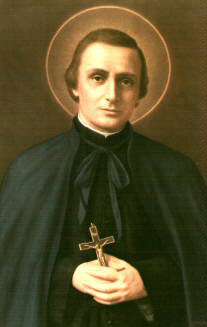 St. Peter Chanel: Saint of the Day for Sunday, April 28, 2024
 Prayer before a Crucifix: Prayer of the Day for Sunday, April 28, 2024
We ask you, humbly: don't scroll away.
Hi readers, it seems you use Catholic Online a lot; that's great! It's a little awkward to ask, but we need your help. If you have already donated, we sincerely thank you. We're not salespeople, but we depend on donations averaging $14.76 and fewer than 1% of readers give. If you donate just $5.00, the price of your coffee, Catholic Online School could keep thriving. Thank you.Help Now >


Copyright 2024 Catholic Online. All materials contained on this site, whether written, audible or visual are the exclusive property of Catholic Online and are protected under U.S. and International copyright laws, © Copyright 2024 Catholic Online. Any unauthorized use, without prior written consent of Catholic Online is strictly forbidden and prohibited.
Catholic Online is a Project of Your Catholic Voice Foundation, a Not-for-Profit Corporation. Your Catholic Voice Foundation has been granted a recognition of tax exemption under Section 501(c)(3) of the Internal Revenue Code. Federal Tax Identification Number: 81-0596847. Your gift is tax-deductible as allowed by law.